

USA’s 2012 ‘Year of the Lizard’: Advancing Conservation for North America’s Unique Species
 The Partnership for Amphibian and Reptile Conservation (PARC), a group comprised of private citizens, herpetologists, environmental organizations and others, has made great progress in the 10 years since its inception. 2011’s “Year of the Turtle” effort was especially effective in raising support for tortoise and turtle conservation. This year, the group has turned its attention to lizards, with an emphasis on North America’s many unique and imperiled species.
Lizard Conservation Overview
In the eye of the general public, lizards do not suffer the “image problem” that besets snakes, yet they lack the appeal of turtles and frogs. And so their conservation needs are, with few exceptions, not well-known. I sometimes wonder if the high visibility of a few common anoles and geckos in warm locales leads some (non-herp-oriented) people to regard lizard populations as relatively secure.
The problem is not limited to the private sector. After a lifetime of working with professional herpetologists, I have the sense that lizard specialists are not in great abundance. Even the IUCN admits that the world’s 5,000+ species require more of its attention.
Only 38 of the USA’s 110-115 lizards have been classified under the Endangered Species Act. Eleven of these, including the Dunes Sagebrush Lizard, Florida Sand Skink and Blunt-Nosed Leopard Lizard, are considered to be threatened or endangered. Certainly, others need attention, and protection given to rare lizards often benefits other creatures as well. For example, the Dunes Sage brush Lizard is endemic to a unique sand dune-Shinnery Oak ecosystem in SW New Mexico and West Texas. Surveys of the habitat are not complete, but already 14 endemic insects have been discovered.
Bringing Lizards into the Spotlight
 In light of the above, I applaud PARC’s decision to focus this year’s work on lizards. Coordinated research, conservation, and educational efforts will be utilized to protect and study a number of species while putting lizard conservation in the public eye. Periodic newsletters (sample and sign up here), which are always well-written, will highlight various projects, species and researchers. Anyone with an interest in lizard conservation can submit photos for possible use in PARC’s monthly calendar (click here for details), lizard art, articles, and educational materials.
Threats to US Lizards
Lizards everywhere are threatened by many of the same things that trouble other creatures, including habitat loss and fragmentation, over-exploitation, climate change and introduced species. PARC’s newsletters and updates do a great job of explaining exactly how and why these processes are occurring. Following are some unique examples.
Introduced Animals
The USA is home to approximately 150 lizard species – but only 110 or so are native! The 40 introduced lizards negatively affect others via competition and predation, and may introduce diseases or parasites for which US lizards have no defenses.
Introduced Fire Ants are troublesome to several horned lizard species, all of which feed nearly exclusively upon ants, in several ways. By displacing native ants, they limit the lizards’ food supply (Fire Ants are not taken as prey). Fierce predators in their own right, Fire Ants also attack lizards and their eggs. They likely affect plant communities as well, which in turn can impact horned lizard survival by altering the environment.
Introduced Indian Mongooses are driving the St. Croix Ground Lizard to the brink of extinction. I was fortunate enough to see this lizard in the wild many years ago, but have been told they are now gone from the site I visited.
The list goes on – from predatory feral cats to parrots that spread the seeds of invasive shrubs, the problems posed by introduced species are legion.
Introduced Plants
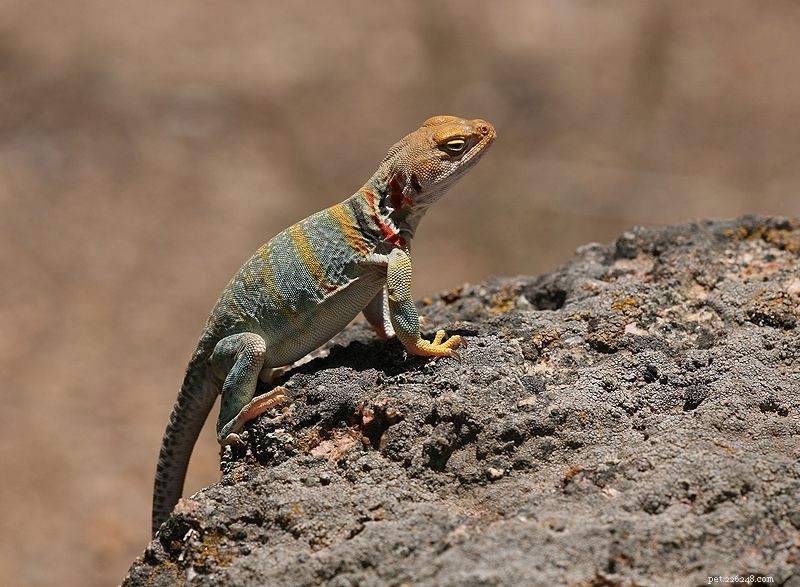
 Exotic animals are not the only introduced threats that plague lizards. Plants can be as bad, or worse, especially for those species with demanding habitat requirements and small natural ranges. In the American Southwest, invasive Bufflegrass and Cheatgrass are rendering vast tracts of land uninhabitable for Reticulate Collared Lizards and Desert Horned Lizards.
- Discover the Yellow‑Spotted Tropical Night Lizard: Facts & Care Guide
- How to Safely Re‑Capture a Pet Lizard at Home
- Mastering Lizard Breeding: Live‑Bearing Swifts (Spiny Lizards) – Beginner’s Guide Part 1
- Master Lizard Breeding with Live-Bearing Swifts (Spiny Lizards) – Part 2
- USA Reptile & Amphibian Conservation 2012: Threats, Lawsuits, and Hope
- 2013: Launching the 'Year of the Snake' – A New Era for Snake Conservation
- Optimal Feeding Guide for Pet Lizards: Balanced Nutrition & Feeding Schedules