

Protecting Reptiles & Amphibians: Legal Insights and How You Can Help
 Unfortunately, animal abuse is a serious and surprisingly common problem in the USA. The applicable laws vary from state to state, and it can be difficult to determine which agency is responsible for enforcement. Regulatory agencies are often under-funded, so many rely upon citizen complaints. It is important, therefore, that concerned people learn how to proceed when they suspect that animal abuse is taking place. This is especially true where reptiles and amphibians are concerned, as they draw less interest than mammals, and mistreatment is difficult to detect by the inexperienced. Please be sure to post your own observations below, and let me know if you need help in deciding how to report a problem.
State Law
Animal abuse is a crime every state in the USA, and most aspects of the problem are controlled by state law. This results in a confusing array of widely differing statutes and enforcement policies. Details, such as what constitutes abuse and how the laws are actually enforced, vary from state to state. Until recently (July, 2012), for example, an Indiana “festival” that allowed participants to twist off the heads of turtles for public amusement was held not to violate state law (please see below)! In some states, live Tiger Salamander larvae are legally used as fish bait (please see this article), while in others they are protected as an endangered species.
Adding to the confusion is the fact that various situations, such as pet store neglect or abused private pets, may be handled by different agencies within the same state. Fortunately, the ASPCA provides a list of enforcement agencies for in all 50 states.
Federal Law
The federal Animal Welfare Act governs the operation of breeding facilities, zoos, circuses and research labs. You can learn more about this law, and how to report violations, here.
Common Reptile/Amphibian Abuse Situations
Many people cannot recognize reptile and amphibian abuse. The input of experienced hobbyists is, therefore, very important. Following are some of the most common abuse scenarios that I’ve encountered:
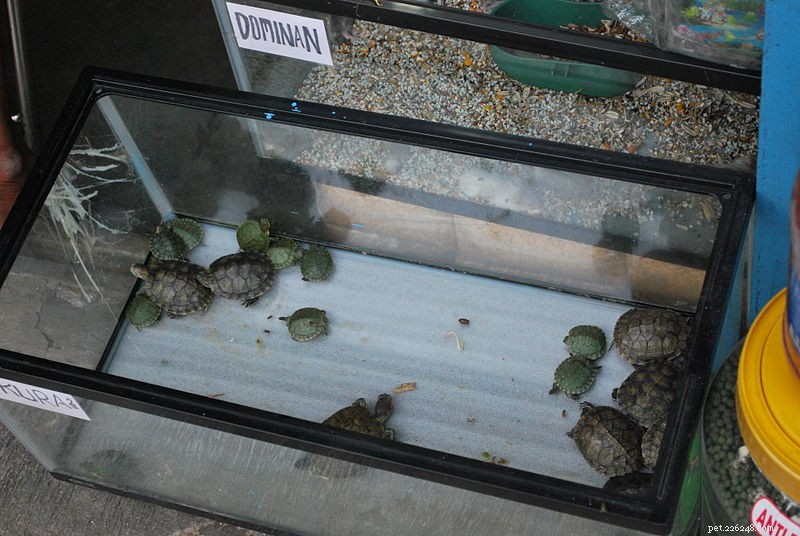
Inappropriate housing of hatchling Red-Eared Sliders: The sale of turtles under 4 inches in length is illegal in all states (please see this article). However, enforcement is spotty because these turtles are usually sold by street vendors rather than through pet stores. Since the turtles are inexpensive, they are treated more as disposable items than live animals, and very little effort is expended on their care.
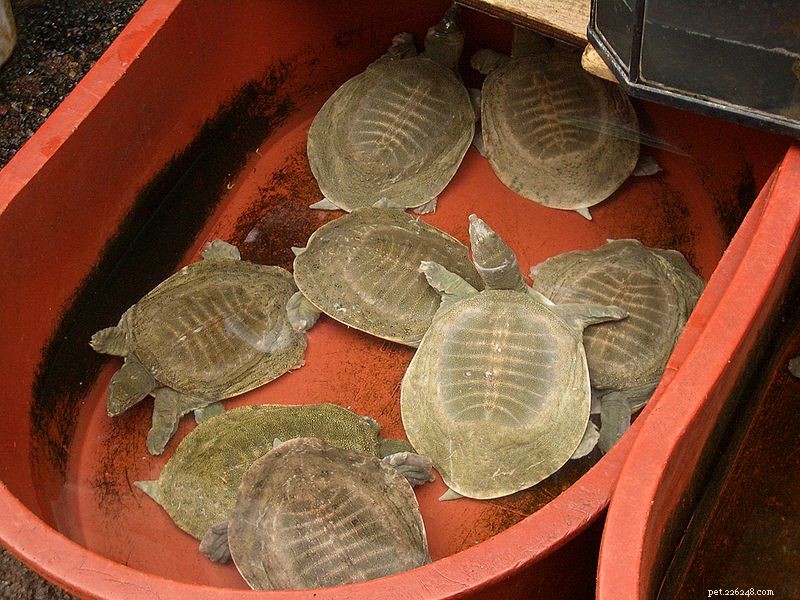
Food market turtles and frogs: The USDA classifies live food market turtles and frogs as “seafood”, and permits them to be displayed on ice and held in abominable conditions. During my years with the Bronx Zoo, I often took charge of confiscated food trade turtles and American Bullfrogs. The animals invariably suffered from a variety of diseases and injuries, and few survived.
Years ago, I spearheaded a study that investigated mercury levels in Florida Soft-shelled Turtles in NYC markets. Although high levels of mercury and atrocious conditions were documented, I was unable to make any changes in the applicable laws.
Hoarders and Rescuers: These usually well-meaning folks sometimes become over-extended, and wind up doing more harm than good. I’ve assisted the police in some unbelievable situations, including the confiscation of 5 adult Spectacled Caimans from a NYC apartment, and the investigation of several Iguana-filled Manhattan apartments. Animals removed from such situations are often in poor health and difficult to re-home.
Pet Stores and Animal Displays
Conditions are generally improving in these areas, but much work remains to be done. Under-funded “reptile zoos” still pop up from time to time. I helped to investigate several of these, and in most cases state/local authorities acted quickly. However, even where professional herpetologists stand ready to testify, red tape has sometimes resulted in numerous animal deaths.
“Entertainment”
 Thankfully, the Indiana “Snapperfest” mentioned earlier is not a common scenario, and “rattlesnake roundups” are fading fast. But the fact that large crowds will cheer as grown men pull the heads from living turtles (as in Indiana) is, to me, very scary. Upon watching a video of this horror show, I was shocked to see that the audience contained numerous young children accompanied by their parents!
Fortunately, the New York Turtle and Tortoise Society and other groups became involved, and the spectacle has now been abolished. Please see this article.
Other Sources of Information
Animal shelter staffers can often answer questions concerning the most effective means of reporting animals in distress. The ASPCA’s Nationwide Animal Shelter Directory is a valuable resource.
Police departments are required to assist in emergencies involving animals if people are at risk (dial 911) and can also advise you on how to proceed in non-emergency situations.
Personal Safety
In addition to helping animals, reporting animal cruelty can save human lives. Studies show that animal abusers are likely to engage in violent crimes against people as well. For this reason, however, police officers advise those witnessing animal abuse not to take action themselves, but rather to dial “911”.
What’s Next…What Can I Do?
Please post any questions you may have concerning abuse or related topics. I’ll do my best to guide you to local assistance.
By becoming involved with a responsible reptile/amphibian club or society, you’ll stay informed and be better equipped to influence local policies. Please check out the website of my favorite such organization, the New York Turtle and Tortoise Society, for examples of how much can be accomplished by dedicated, well-informed people.
- The Life‑Saving Ways Working Dogs Support You
- Understanding Dog Flatulence: Causes & How to Help Your Pet
- Protect Your Pet from Ringworm: Prevention Tips & Facts
- How Service Dogs Alleviate Anxiety: A Guide to Emotional Support
- Recognizing Cognitive Dysfunction in Senior Dogs: Signs & Support Strategies
- How to Ease Your Dog's Loneliness: Practical Tips for a Happier Pet
- Recognizing Aging in Rabbits: 17 Key Signs & How to Support Them