

Sap Beetles: A Reliable Alternative Food for Small Poison Frogs

Uploaded to Wikipedia Commons by Miroslav Deml
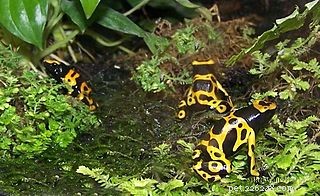
Keepers of Poison Frogs, Mantellas, newly-transformed frogs, and other tiny amphibians face difficulties in providing their charges with a varied diet. Wild frogs consume dozens to hundreds of invertebrate species, but captives are usually limited to fruit flies, flour beetles, pinhead crickets and springtails. Vitamin/mineral supplements help, but dietary variety remains critical.
Throughout my career at the Bronx and Staten Island Zoos, I have relied heavily upon wild-caught invertebrates. I recently “re-discovered” an old favorite – the various Sap or Picnic Beetles (Family Nitidulidae). I first used Sap beetles when rearing Wood Frog metamorphs decades ago, and later fed them to Spring Peepers, Red-Eyed Treefrogs, Poison Frogs and others in zoo collections. Many small amphibians will eagerly gobble up Sap Beetles, but Poison Frog and Mantella keepers will find them especially useful. Sap Beetles never fail to bring an enthusiastic feeding response, and can save us some time and money while providing nutrients missing from standard foods.
Natural History
Sap Beetles are classified in the Family Nitidulidae, which contains nearly 3,000 members. Most top out at 1/8 inch, with the largest barely reaching ¼ inch in length. Several species, commonly known as “Picnic Beetles”, show up when sweet foods are served outdoors. Some feed upon over-ripe fruits, corn and other crops, while others take nectar, sap, fungi and carrion.
Sap Beetles are rather long-lived for such small insects, and most US natives hibernate as adults. Another distinguishing characteristic is the deeply-segmented antennae, which give the impression of a club (please see photo). Were it not for these unique antennae, I’d likely still be searching my field guides for hints, as those I trap are minute!
Collecting Sap Beetles

Uploaded to Wikipedia Commons by Carl Gustav Calwer; Gustav Jäger
Sap Beetles are easy to trap in jars baited with over-ripe fruit. Banana and mango skins, strawberries and cherries all seem equally attractive. In my yard, Sap Beetles invariably arrive earlier than fruit flies, and in greater numbers. They also stay as long as the jar is in place – day or night.
I have not positively identified the species I have been using, but am leaning towards the Dusky Sap Beetle, Carpophilus lugubris, and the Strawberry Sap Beetle, Stelidota germinate. I plan to show some specimens to a friend in the entomology department at the American Museum of Natural History shortly.
Using Sap Beetles
I generally trap beetles in jars that will fit into my terrariums, so that I can merely open the tops at feeding time. I especially favor the small plastic containers in which garlic, basil and other spices are sold. These have a perforated inner top which keeps pets out while allowing beetles to exit.
Sap Beetles fly well, and can fit through the mesh on typical screen terrarium covers. When using them, I place an old towel over the terrarium top, and then secure the screen lid above. This effectively prevents escapes…I’m fond of beetles, but not in my morning fruit salad!
The tiny, yellowish larvae are also eagerly accepted by small frogs and salamanders. Earwigs, slugs and other beetles also appear in my fruit jars; these are fed to larger herps, spiders and fishes.
Keeping and Breeding
The beetles will live for quite some time in covered jars, but mold and fungus take hold rapidly. Extra beetle jars can be stored in a refrigerator…the species I collect tolerate 40 F.
Breeding and rearing seems feasible, as a mere 25-35 days elapse between hatching and adulthood. US natives produce 3-4 generations each summer. Fruit spoilage and mold would be concerns, however…perhaps jelly, or even fruit fly medium, would be workable (any experimenters out there?…please let me know).
Uploaded to Wikipedia Commons by M R G WIKI999
Wild Caught Insects: Pro and Cons
I’ve written a number of articles on the use of wild-caught invertebrates as herp food. From pit fall traps to the Zoo Med Bug Napper, there are many effective and enjoyable ways to collect food for your pets. I’m constantly finding species I’m not familiar with…even in habitats I’ve explored since childhood. Each season, I wind up keeping several insects or spiders that catch my interest. Care is needed, but the rewards are worthwhile. Collecting insects for bird and herp food was standard practice during my many years at the Bronx Zoo…please see the linked articles and post below for further information.
- Grain-Free Pet Food: A Proven Solution for Dogs Suffering from Food Allergies
- Raising Springtails for Poison Frogs, Mantellas & Small Amphibians: Expert Care Guide – Part 2
- Live Bloodworms: The Essential Protein for Small Amphibians and Their Larvae
- Optimal Diets for Poison Frogs, Mantellas, and Small Amphibians: A Care Guide
- Why Earwigs Are a Nutritious, Low‑Risk Food Choice for Pet Reptiles and Amphibians
- Homemade Dog Food Recipe for Small Breeds: Balanced, Tailored Meals
- 13 Nutritious Homemade Dog Food Recipes for Small Breeds