

Mazuri High-Calcium Cricket Diet & Complementary Foods for Feeder Crickets
My professional experience with captive reptiles, amphibians and other creatures extends back over 4 decades, with much of that time being spent at the Bronx Zoo. For the past 24 years, I’ve relied heavily upon Mazuri animal diets, as have many of my zoologist colleagues worldwide. From turtles to elephants and hamsters to cassowaries, Mazuri formulates more carefully-researched foods than does any other company. I recently had occasion to experiment with and read about Mazuri’s High Calcium Cricket Diet, and am quite pleased with the results. In the following article, I’ll also highlight some other useful products for crickets and similar feeder insects.
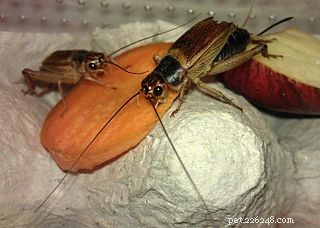
Uploaded to Wikipedia Commons by Sean Wallace
The Calcium: Phosphorus Ratio
In order to maintain optimum health and normal growth, the foods offered to reptiles and amphibians should (depending upon the species) contain calcium and phosphorus in a ratio of 1:1, 1.5:1 or 2:1. Crickets and many other feeder insects in their natural (“un-supplemented”) state have a calcium: phosphorus ratio of only 0.3:1.
Zookeepers and hobbyists have long coated crickets with high-quality powdered calcium and vitamin/mineral supplements in an effort to improve their nutritional value. This remains a useful practice, but the results delivered are somewhat unreliable. Widely-varying amounts of calcium powder stick to individual insects, and some of the supplement coating is lost as crickets groom themselves and move about. It is, therefore, very difficult to ascertain how much calcium an animal ingests when it consumes a powdered cricket.
In the late 1980’s, some animal keepers began to focus on offering calcium-enriched diets to crickets as a means of raising calcium levels. A study reported in the Journal of Zoo and Wildlife Medicine (20{1} 26-33) found that crickets consuming a diet containing 8% calcium achieved a calcium: phosphorus ratio of 1:1 within 48 hours. Radiography and spectrophotometry allowed researchers to determine calcium levels with a great deal of accuracy. With a calcium content 8-9%, Mazuri’s High Calcium Cricket Diet meets the study’s criteria.
For more on this topic, please see this 2011 study (Zoo Biology) that documented increased carotenoid (antioxidant) levels in crickets consuming tropical fish flakes, fruits and vegetables.
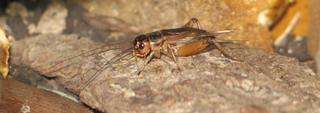
Uploaded to Wikipedia Commons by Hexasoft
Using Mazuri High Calcium Cricket Diet
Domestic Crickets (the common feeder species, Acheta domestic) accept Mazuri High Calcium Cricket Diet straight out of the box. I mix in some tropical fish flakes in order to draw their attention and add additional nutrients. I also offered this product (mixed with tropical fish flakes) to hissing roaches, earthworms, sow bugs, field crickets and earwigs, and was pleased to see that each consumed it with gusto.
Other Cricket Diets and Water Sources
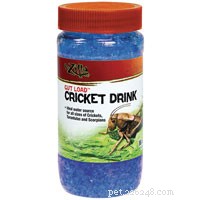 House Crickets require a water source, but unlike many related species, they do not thrive in damp surroundings. Gel-based cricket water sources, some of which are enriched with calcium, keep the enclosure dry and prevent crickets from drowning, as they often do, in water bowls (please see this article, and those linked below, for further information).
Several other leaders in the pet nutrition field have also formulated cricket diets. Products worth investigating include
Fluker’s Orange Cube and Zilla’s Gutload Cricket Food.
Please check out my posts on Twitter and Facebook. Each day, I highlight breaking research, conservation news and interesting stories concerning just about every type of animal imaginable. I look forward to hearing about your interests and experiences as well, and will use them in articles when possible.
- Walkin Wheels: Trusted Mobility Solutions for Pets and Animals
- Essential High-Protein Foods for Optimal Cat Health
- Mastering Cricket Care: A Comprehensive Guide for Reptile Keepers
- Comprehensive Frog Diet Guide: Nutritious Foods for Popularly-Kept Frogs & Toads
- Optimal Diet for Captive Newts & Mexican Axolotls: Expert Feeding Guide
- Crickets Rich in Carotenoids: New Study Boosts Herpetoculture Nutrition
- Optimal Diets for Poison Frogs, Mantellas, and Small Amphibians: A Care Guide