

Safe, Effective Cricket & Roach Control for Reptile & Amphibian Caretakers
 Almost every zoo building in which I’ve worked was home to roach (2-3 species) and House Cricket populations. In most, pesticide use was not an option. An older animal keeper whom I befriended let me in on his favorite insect pest control technique – the molasses trap. He was content to let management wonder how he did such a good job so, out of respect for him, I did not share the secret until he retired. Then, for a time, molasses traps became standard in several zoo buildings. Molasses is also useful in outdoor traps, where it never fails to turn up a variety of interesting species. I’ll expand on that below as well.
Pesticide Problems
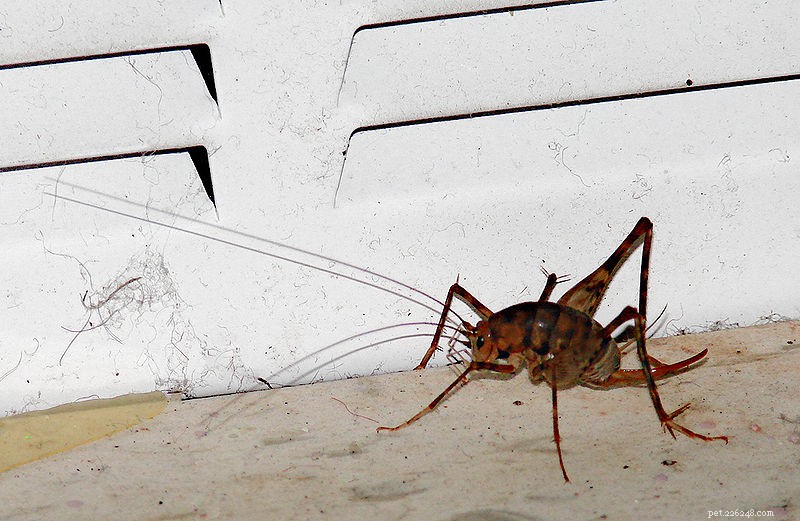
House Crickets, roaches and other escaped “feeder insects” can be problematic in private collections. In the damp basements favored by amphibian keepers, Spotted Camel Crickets (Ceuthophilus maculatus, please see photo) may also set up housekeeping. These unusual creatures are very interesting in their own right, and I’ve featured them, and a large African relative, in several exhibits. However, most folks find their size, appearance and jumping abilities quite unsettling (please see comments in the article linked below – insect fans will find them very interesting!).
Crickets usually succumb to appropriate pesticides, but roaches often develop immunities. In any event, sprayed pesticides are dangerous to both people and their animal collections. Powders and baits also have downsides. Insects travel widely, and while doing so may track powder-based pesticides into terrariums or across supplies (roaches moving between cages have been implicated in the spread of Salmonella in several zoo-based studies). Those that enter enclosures may be consumed by insectivorous pets, raising the danger of secondary poisoning.
Using Molasses Traps
A molasses trap is simply a jar or other container partially filled with molasses and leaned against a wall or other surface that provides access. Molasses’ scent apparently carries far, and is irresistible to many insects; certainly it draws crickets and roaches very quickly. I’ve even sat in the dark in various zoo holding areas to watch the effects of a molasses trap, and was amazed at how rapidly insects responded. Those that enter the trap sink into the molasses and perish in “La Brea Tar Pit style”.
If a rough wall or other climbable surface is not handy, simply wrap a rag around the molasses container so that insects are able to scale its sides. Armed only with this simple technique, I’ve rid quite sizable exhibits, holding rooms and basements of established roach and cricket populations.
Glue Traps
Molasses can also be used to lure roaches and crickets onto glue traps, but most remain alive for some time. Killing the trapped insects, as I preferred to do when glue traps were in use, is very time consuming. Molasses jars eliminate this concern.
Ants
Interestingly, ants (at least Pharaoh Ants and other species I’ve had experience with) seem easily able to evade death-by-molasses. I’ve watched them hang onto the sides of a jar and eat their fill, then simply back up, turn around, and head off to distribute the treat among their colony-mates! I’m sure that someone more imaginative than I can tweak the technique and render it effective against ants…please write in if you have any thoughts on this and I’ll be sure to share your ideas with other readers.
Observing and Collecting Native Insects
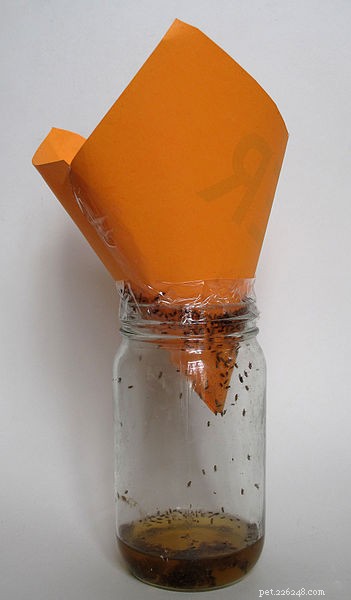 Molasses, especially if mixed with beer, will attract a wide variety of beetles, moths, bees, wasps and other insects. Entomologists have long used it to sample wild populations, occasionally discovering a new species in the process. If allowed access to the bait, as described above, the insects will perish. If you wish to collect living insects, install a cloth or fine screen barrier above the bait.
I’ve painted molasses on tree trunks, and was usually rewarded with an array of interesting visitors, including (in NY) several long-horned beetles and moths that were new to me. Please see the Mississippi Entomological Museum article below for detailed (detailed as in “which type of Keebler cookie is best for specific ant species”!) bait and trapping ideas.
The Zoo Med Bug Napper is a light-based trap that can be used to collect moths, beetles, crane flies and other flying insects.
- The Ultimate Reptile Care Checklist for New Owners
- How to Care for Amphibians & Reptiles Through Autumn & Winter
- Salmonella Prevention: Key Guidelines for Reptile & Amphibian Owners
- Safe Ant Control for Reptile & Amphibian Enclosures Using Diatomaceous Earth
- Top Hygrometers for Reptile, Amphibian, and Invertebrate Habitats
- Top Holiday Gifts for Reptile & Amphibian Enthusiasts—From Beginners to Experts
- Best Infrared Temperature Gun for Precise Reptile & Amphibian Terrarium Monitoring