

Saw‑Scaled Viper (Echis carinatus): Biology, Venom, and Conservation
Saw‑Scaled Viper (Echis carinatus)
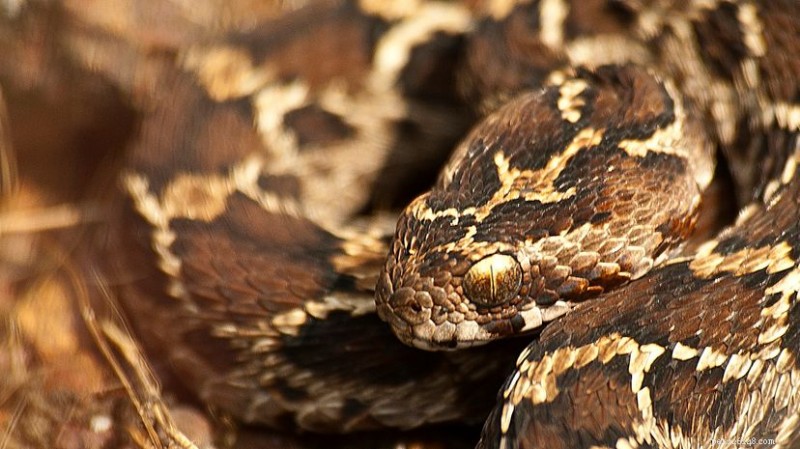
The saw‑scaled viper is one of the most frequently encountered venomous snakes in South Asia and the Middle East. Known for its rapid strikes, powerful venom, and distinctive rasping warning sound, it is a key species for both ecological research and public health awareness.
Physical Characteristics
Adult snakes measure between 12 and 30 inches (31–76 cm). Their bodies are stout and covered with saw‑like, keeled scales that rub together to produce a hissing sound. The coloration ranges from light brown to gray or reddish, with irregular dark patterns that provide camouflage in desert sand and scrubland.
Venom Profile
Despite its modest size, the saw‑scaled viper accounts for more snakebite incidents in its range than any other species. A single bite can deliver up to 12 mg of venom, more than twice the lethal dose for an adult human. The venom is a complex mixture of enzymes that rapidly immobilizes prey, disrupts blood clotting, and can cause tissue necrosis. Prompt antivenom administration is essential to prevent severe systemic effects.
Subspecies and Distribution
The genus Echis includes several subspecies. The most widespread is Echis carinatus, found across northern India, Pakistan, and parts of the Middle East. Other members, such as Echis pyramidum and Echis coloratus, inhabit North Africa and the Arabian Peninsula. All share a pear‑shaped head, vertical pupils, and an aggressive disposition.
Behavioral Traits
Saw‑scaled vipers are solitary, except during mating season, and are primarily nocturnal hunters. When threatened, they coil tightly and use their scales to generate the characteristic “sawing” warning. Their boldness and rapid striking make them especially hazardous to humans.
Diet and Hunting Strategy
These snakes feed on small rodents, insects, and occasionally small reptiles. They employ ambush tactics, striking with lightning speed once prey approaches. Their venom not only paralyzes but also pre-digests tissues, simplifying consumption. In arid habitats, they can endure long periods without food and digest prey quickly.
Habitat and Range
Geographically, Echis carinatus occupies hot, dry environments across India, the Middle East, and North Africa. Typical habitats include deserts, scrublands, rocky outcrops, and dry grasslands. Their ability to thrive in harsh climates and blend into sandy surroundings increases human encounters near settlements.
Life Cycle
Unlike many vipers, this species is oviparous. Females lay eggs in concealed locations such as under rocks or in burrows. Hatchlings emerge independent and fully venomous. The average lifespan in the wild is 5–10 years, but high reproductive rates help maintain stable populations.
Conservation Status
The saw‑scaled viper is not listed as endangered. It plays a vital ecological role by controlling rodent and insect populations. While habitat loss and human activity pose threats, overall numbers remain stable across its range. Scientific interest in its venom for medical research—particularly in anticoagulation studies—underscores its value beyond mere danger.
For more detailed information, consult peer‑reviewed journals and the Reptile Database (2023). This article was reviewed and fact‑checked by HowStuffWorks editorial staff.
- Stop Dogs from Digging Potted Plants: Easy Prevention Tips
- Professional Guide to Caring for Your Cat’s Claws: Health, Safety, and Maintenance Tips
- Top Cat Toys Every Owner Should Consider
- The Realities of Cat Parenting: More Than Just Cute Photos
- Why Dogs Bark at Night: Causes & Calming Strategies
- Identifying the Sex of Baby Sulcata Tortoises: A Practical Guide
- Senior Pet Bloodwork: What Your Vet Is Checking and Why It Matters