

7 Horned Snake Species Thriving in Desert Ecosystems
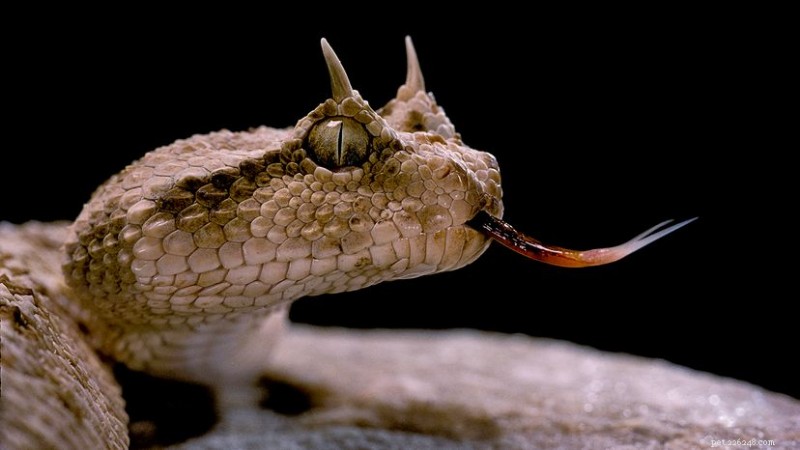
These formidable reptiles are among the most active in desert landscapes. Their horned features, along with specialized hunting tactics, allow them to thrive in arid environments.
In this guide, we explore seven horned snake species that dominate deserts and dry habitats worldwide.
1. Desert Horned Viper (Cerastes cerastes)
The Desert Horned Viper (Cerastes cerastes) is found across the Middle East and North Africa. Two recognized subspecies—C. c. hoofieni and C. c. cerastes—populate the Sahara and surrounding deserts.
It is a sit‑and‑wait predator that feeds mainly on rodents and lizards. Its ambush strategy relies on camouflage beneath shifting sand.
Notably, both horned and hornless individuals can appear within the same population, a unique trait among Old‑World vipers.
2. Arabian Horned Viper (Cerastes gasperettii)
The Arabian Horned Viper inhabits the deserts of the Arabian Peninsula, including Saudi Arabia and Oman. It burrows into the sand to ambush small rodents, birds, and lizards.
Its venom is primarily used for subduing prey rather than for defense, making human bites exceptionally rare.
3. Nose‑Horned Viper (Vipera ammodytes)
Commonly known as the Nose‑Horned Viper, this species occupies rocky hillsides, woodlands, and scrublands across Southern Europe and the Balkans.
Its prominent horn‑like scale on the snout distinguishes it from other European vipers.
Preying on small mammals, birds, and lizards, its potent venom makes it one of the most dangerous vipers in Europe, although bites remain infrequent and typically occur when the snake feels threatened.
Despite its reputation, the species plays a vital role in regulating rodent populations.
4. Matilda’s Horned Viper (Atheris matildae)
The Matilda’s Horned Viper is a rare, arboreal viper endemic to high‑altitude forests of Tanzania.
Its vivid green and black scales, combined with small horn‑like scales above the eyes, give it a striking appearance.
It hunts birds, frogs, and small mammals in the canopy.
Due to habitat loss and its limited range, it is classified as critically endangered, prompting ongoing conservation initiatives.
5. Spider‑Tail Horned Viper (Pseudocerastes urarachnoides)
The Spider‑Tail Horned Viper inhabits western Iran and is renowned for its tail, which mimics the movement and appearance of a spider.
This caudal luring adaptation attracts birds and other prey, allowing the viper to strike from a concealed position.
Its raised scales above the eyes, resembling horns, enhance camouflage in rocky, arid environments.
6. Horned Adder (Bitis caudalis)
The Horned Adder is a small, venomous snake native to the arid deserts and savannas of southern Africa.
It buries itself in loose sand, leaving only its head exposed to ambush small mammals, lizards, and birds.
Although its venom is toxic, the species is generally non‑aggressive, and bites are uncommon.
7. Desert Sidewinding Horned Viper (Crotalus cerastes)
The Desert Sidewinding Horned Viper, also called the sidewinder, is famed for its unique locomotion that allows it to move across sand without sinking.
It preys on small mammals and lizards, using its sidewinding motion to navigate the harsh desert environment efficiently.
Conservation Outlook
While species such as the Sahara horned viper face minimal threats, others—like Matilda’s horned viper—are under significant pressure from habitat destruction and human activity.
Conservation organizations are actively working to safeguard these species and their habitats, ensuring future generations can study and appreciate their ecological roles.
This article was generated with AI assistance and subsequently reviewed and fact‑checked by a HowStuffWorks editor.
- Understanding Nitrate Toxicity in Freshwater Aquariums: Prevention & Management
- 10 Essential Factors to Evaluate Before Adding a Second Dog to Your Family
- Prevent Cat Urinary Problems with Targeted Diet: Trusted Cat Food Solutions
- Do Dogs Experience Rejection? Understanding Their Emotional Capacity
- Building a Stronger Dog-Human Connection
- 5 Proven Ways to Keep Your Dog Calm this Halloween
- Ohio’s 10 Frog Species Revealed (With Photos)