

Plain‑Bellied Water Snake (Nerodia erythrogaster): Habitat, Behavior, and Conservation
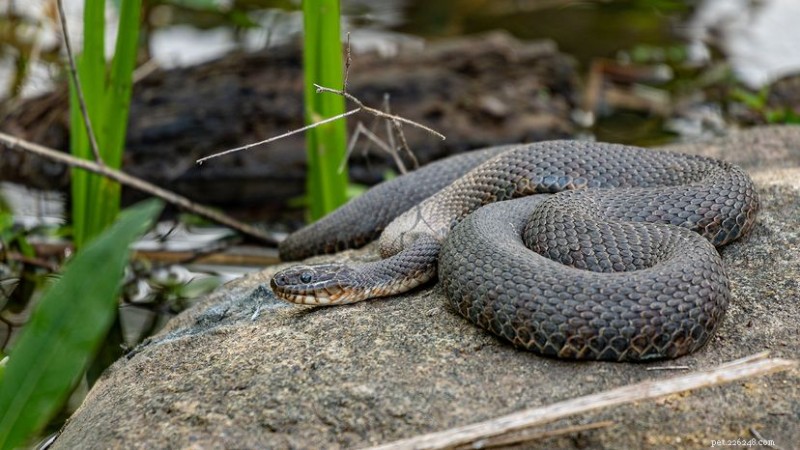
The plain‑bellied water snake (Nerodia erythrogaster) is a sleek, semi‑aquatic reptile that inhabits central North America. Known for its adaptability, it thrives in both terrestrial and aquatic environments, making it a versatile predator in wetlands, rivers, and ponds.
Physical Characteristics
Recognizable by its unpatterned belly that ranges from yellowish to red, the plain‑bellied water snake contrasts with many water‑snake relatives that display distinct undersides. Its dorsal coloration shifts from dark brown to greenish‑gray, offering excellent camouflage in both water and on land.
Adults typically measure 2 to 4 feet (0.6 to 1.2 meters), though some individuals can reach 6 feet (1.8 meters). The robust, muscular build facilitates powerful swimming and maneuvering through dense vegetation.
Subspecies Debate
Taxonomists differ on whether distinct subspecies exist. Potential variants include the copperbelly, redbelly, yellowbelly, and blotched water snakes. Current consensus treats them as a single species due to overlapping traits.
Behavior and Social Life
These snakes are solitary, spending most of their time hunting or basking alone. Diurnal and semi‑aquatic, they are most active during daylight, especially in warmer months. While generally shy, they can become defensive if threatened. Importantly, they are non‑venomous and pose no threat to humans.
Dietary Habits
As both terrestrial and aquatic predators, plain‑bellied water snakes consume a diverse diet. In water, they feed on fish, frogs, and other amphibians, striking quickly to capture prey. On land, they hunt small mammals and reptiles, demonstrating remarkable ecological versatility.
Unlike many North American water snakes, they do not constrict prey; instead, they rely on sharp teeth and rapid strikes to swallow prey whole.
Habitat and Range
These snakes are commonly found in wetlands, swamps, rivers, and ponds across central North America. They are excellent swimmers and often spend extended periods in water, yet they also traverse terrestrial habitats to hunt and bask, frequently seen sunning along riverbanks or drifting near the water’s edge.
Reproduction and Life Cycle
One of the most intriguing traits of the plain‑bellied water snake is its viviparous reproduction—females give birth to live young rather than laying eggs. After spring mating, the female carries embryos for several months, giving birth to 5–30 offspring in late summer or early fall.
Newborns are immediately independent, capable of capturing tiny prey and growing rapidly. They shed skin as they mature and reach sexual maturity in approximately two to three years.
Conservation Status
The U.S. Fish and Wildlife Service lists the copperbelly water snake as threatened, though not yet endangered. These snakes play a vital role in controlling populations of small mammals and amphibians, underscoring their ecological importance.
This article was prepared with AI assistance and subsequently edited and fact‑checked by a HowStuffWorks editor to ensure accuracy and reliability.
- Why Black Dogs Suffer: Understanding and Combating Black Dog Syndrome
- Do Larger or Smaller Dog Breeds Live Longer? Expert Insights on Lifespan Differences
- How Acupressure Helps Abandoned Dogs: A Comprehensive Guide
- Essential Details Your New Veterinarian Needs About Your Dog
- Scientists Identify Five Distinct Personality Types in Cats
- Ideal Tank Mates for Goldfish: Compatible Species & Care Tips
- 17 Adorable Pets Who Love Brushing Time