

11 Nonvenomous Racer Snakes: Quick Facts & How to Coexist
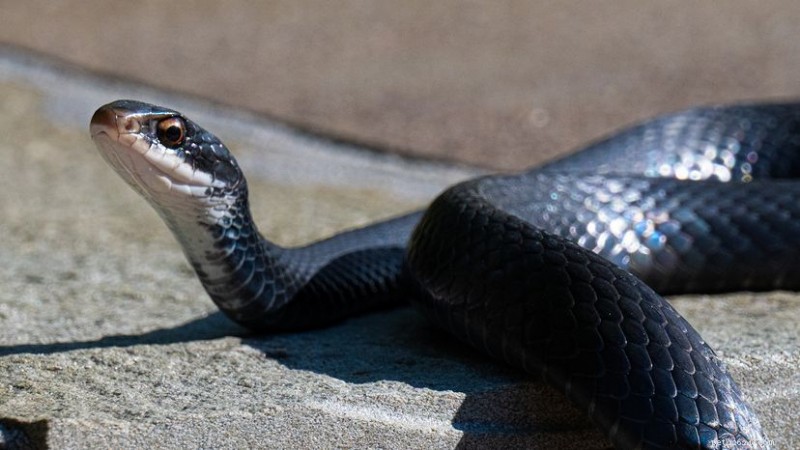
Spotting a sleek, nonvenomous racer snake on a morning stroll may startle you, but these quick‑footed reptiles are harmless and generally prefer to avoid contact. By giving them space, you and the snake can coexist peacefully.
Racer snakes (genus Coluber) are known for their speed and slender build. Though often called “constrictors,” they actually use rapid strikes to capture prey. Their coloration ranges from blue to black to greenish, yet each subspecies shares the same agile body shape.
In North America, the term “racer snake” encompasses several subspecies across the United States and parts of Canada. These snakes thrive in diverse habitats—from forests to grasslands—and exhibit an active hunting style.
1. Black‑masked Racer (Coluber constrictor latrunculus)
The black‑masked racer is a fast, agile snake found primarily in the southeastern U.S., especially Arkansas and Missouri. It earns its name from the distinct dark “mask” that extends across its eyes, giving it a stealthy look. Juveniles display brighter scales than mature adults.
With a slender, olive‑to‑gray body, it thrives in forests and open fields, hunting small mammals, birds, and insects. Its speed and coloration sometimes cause confusion with adult black rat snakes.
2. Blue Racer (Coluber constrictor foxii)
True to its name, the blue racer sports a striking blue or bluish‑gray coat. Native to the Great Lakes region, it favors open habitats such as grasslands and fields. The snake’s rapid movements aid in capturing prey and evading predators.
When threatened, blue racers may vibrate their tails in foliage to mimic a rattlesnake’s warning, a defensive tactic noted by herpetologists at the University of Michigan.
3. Brown‑chinned Racer (Coluber constrictor helvigularis)
Found in parts of Central America, the brown‑chinned racer is recognizable by its dark, sleek body and a distinctive brown or tan chin marking. It occupies tropical forests and savannas, darting through underbrush to hunt small animals.
As a nonvenomous, diurnal species, it is known for its curious nature and quick retreat when confronted, a behavior documented in the Journal of Herpetology.
4. Buttermilk Racer (Coluber constrictor anthicus)
The buttermilk racer, common in southern states like Texas and Louisiana, is notable for its marbled pattern of white, cream, and black speckles. It inhabits open grasslands and savannas.
Using agility, it captures rodents, lizards, and amphibians. Despite its striking appearance, it is nonvenomous and prefers to avoid confrontation.
5. Eastern Yellow‑belly Racer (Coluber constrictor flaviventris)
This subspecies lives in central and eastern U.S., featuring a vibrant yellow belly against a gray‑to‑greenish back. It favors meadows and fields, where its swift movements are ideal for hunting.
Its excellent camouflage and speed allow it to capture a variety of small prey, as recorded by the North American Nature Conservancy.
6. Everglades Racer (Coluber constrictor paludicola)
In Florida’s wetlands and marshes, the Everglades racer is dark gray or black with a subtle belly. It navigates tall grasses and dense vegetation to hunt small mammals and amphibians.
Its agility and stealth have been highlighted in studies of wetland herpetofauna by the University of Florida.
7. Mexican Racer (Coluber constrictor oaxaca)
Predominantly found in southern Mexico, the Mexican racer ranges from olive green to brownish‑gray, blending seamlessly into its surroundings.
It navigates forests and open fields, hunting small mammals, birds, and insects. Nonvenomous, it typically retreats when threatened, a common racer behavior noted by Mexican wildlife authorities.
8. Northern Black Racer (Coluber constrictor constrictor)
The northern black racer inhabits the northeastern and central U.S. Adult snakes are dark gray or black, while juveniles display brown or gray blotches that fade with age.
Excellent climbers, they often bask on rocks or logs. Their speed and agility help them escape predators, a trait documented by the U.S. Fish & Wildlife Service.
9. Southern Black Racer (Coluber constrictor priapus)
Living in the southeastern United States, this subspecies has a sleek, shiny black body. Juveniles may show patterned markings, but adults are jet black.
They are nonvenomous and prefer flight over fight, a behavior observed in field studies by the Smithsonian Institution.
10. Tan Racer (Coluber constrictor etheridgei)
The tan racer inhabits the southwestern U.S., sporting a sandy brown coat that blends with desert and scrubland. Its streamlined body is built for speed.
It hunts small prey while remaining camouflaged, relying on swift escape tactics—a strategy verified by the California Department of Fish and Wildlife.
11. Western Yellow‑belly Racer (Coluber constrictor mormon)
Found across the western United States, this subspecies is olive‑green above with a bright yellow belly, making it easy to spot.
They prefer open prairies and desert regions, chasing lizards, small birds, and rodents. Their rapid escape responses have been recorded by the Oregon Department of Fish and Wildlife.
We created this article with AI technology and have had it edited and fact‑checked by a HowStuffWorks editor.
- Understanding and Managing Hairballs in Cats: Causes, Prevention, and Treatment
- DIY Outdoor Cat House: Build a Safe, Weather‑Proof Shelter for Your Cat
- Guide to Creating Nutrient‑Rich Homemade Vegetarian Dog Food
- Crate Peeing: Proven Techniques to Stop Your Dog from Urinating Inside
- Designing a Safe & Fun Backyard Jungle Gym for Your Dog
- Siberian Huskies: Key Health Issues & Prevention Tips
- Sorbitol Chewing Gum and Dogs: Safety, Effects, and Veterinary Guidance