

Snake Anatomy Unveiled: Inside the Slithering Marvels
Snake Anatomy Unveiled: Inside the Slithering Marvels
Beyond their limbless bodies and silent glide lies a world of finely tuned adaptations that enable snakes to thrive across every habitat—from scorching deserts to deep oceans. This guide breaks down the key external and internal features that make snakes uniquely efficient predators and survivors.
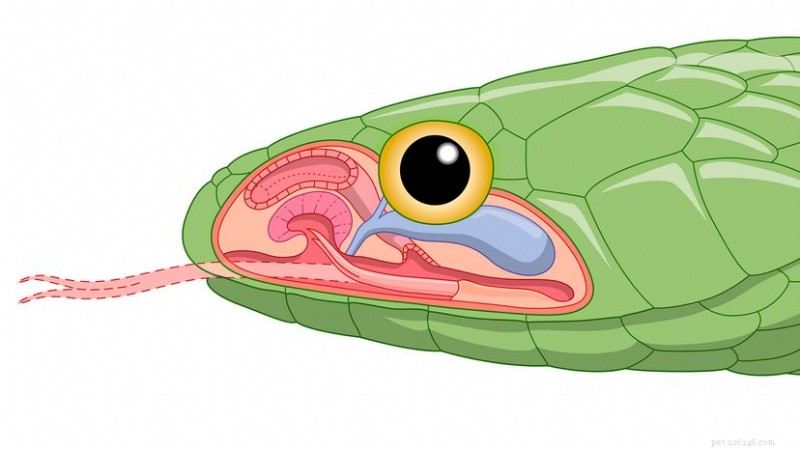
External Anatomy of a Snake
Snakes use a suite of external structures to sense, capture, and defend. Each adaptation is specialized for specific ecological roles.
Forked Tongue
The iconic forked tongue flicks rapidly to gather airborne chemical particles. These cues are relayed to the Jacobson’s organ on the roof of the mouth, allowing snakes to “smell” scents from both sides of their environment, locate prey, and find mates.
Heat‑Sensing Organs
Pit vipers, pythons, and many other species possess infra‑red pit organs that function like miniature thermal cameras, detecting warm‑blooded prey even in complete darkness.
Spectacles
Transparent scales—often called spectacles—protect the eye without compromising vision.
Nostrils
Located on the head, nostrils provide olfactory input and help regulate airflow during feeding.
Scales
- Dorsal scales: Cover the back, offering protection and facilitating locomotion.
- Ventral scales: Larger, laterally expanded scales on the belly that increase friction against the ground.
- Subcaudal scales: Found beneath the tail, often paired or single depending on species.
Cloaca
Central to excretion and reproduction, the cloaca is a single external opening near the tail base.
Tail
Following the cloaca, the tail tapers to a point and may bear specialized structures—such as the rattle of rattlesnakes—that serve defensive functions.
Teeth or Fangs
Nonvenomous snakes feature small, recurved teeth for gripping prey. Venomous species have grooved or hollow fangs that deliver toxins.
Nuchal Ridge
A pronounced ridge along the neck or back of the head, common in some burrowing or arboreal species, aids in locomotion and species identification.
Internal Anatomy of a Snake
Snakes’ internal systems are elongated and highly efficient, optimized for a diet of whole prey and extended periods of fasting.
- Glottis: Located at the front of the mouth, it opens laterally to keep the airway clear while swallowing large prey.
- Lungs: The right lung is the primary organ; the left may be reduced or absent, allowing more space for digestion.
- Digestive system: Food passes from the esophagus to a large, expandable stomach; nutrients are absorbed in the small intestine, while the large intestine processes waste.
- Jaws and skull: The lower jaw is unfused, enabling a remarkable expansion of the gape. Each side of the jaw can move independently, guiding prey down a “walking” motion.
- Vertebrae and ribs: Snakes may have up to 400 vertebrae, each paired with a rib that provides both protection and muscle attachment.
- Muscular system: Longitudinal muscle bands run the length of the body, powering slither, constriction, and the mechanical work of swallowing.
- Brain and nervous system: Though proportionally small, the brain coordinates complex behaviors, while the spinal cord transmits signals along the body’s length.
- Heart: A three‑chambered organ positioned near the head; it pumps blood efficiently throughout the elongated body.
- Kidneys and ureters: Two elongated kidneys filter blood; waste is transported via ureters to the cloaca.
- Reproductive system: Males possess paired hemipenes; females have paired ovaries and oviducts that carry eggs to the cloaca for laying.
- Jacobson’s organ: Repeats the external function of chemical detection, processing signals from the tongue.
- Lymphatic system: Mirrors other vertebrates in supporting immune function and fluid balance.
What Distinguishes Snakes From Other Reptiles?
While snakes share the reptilian lineage, several key traits set them apart:
- Limbless locomotion: Without legs, snakes rely on muscular undulation and scale friction.
- Internal ear: Lacking external pinnae, snakes detect vibrations through the jawbone and ground.
- Jaw flexibility: Their unique jaw mechanics allow them to swallow prey many times their head size.
- Environmental specialization: From the heat‑sensing pits of desert vipers to the burrowing snouts of hognose snakes, adaptations are tuned to niche habitats.
This article was crafted with AI assistance and rigorously fact‑checked by HowStuffWorks editorial staff to ensure accuracy and clarity.
- Mastering Dog Training: A Step‑by‑Step Guide for Owners
- Desmond the Tabby Cat Returns Home for Christmas After 195‑Mile Search
- Cannabis for Pets: What U.S. Pet Parents Must Know About the Emerging Industry
- The Congolese Giant Toad: A Masterful Snake Mimic
- Understanding Canine Hyperthyroidism: Symptoms, Diagnosis, and Treatment
- Mastering Beagle Training: Proven Techniques for a Well-Behaved Companion
- 20 Strong & Sturdy Dog Names for Tough Breeds