

Killer Whale vs. Great White Shark: Which Apex Predator Prevails?
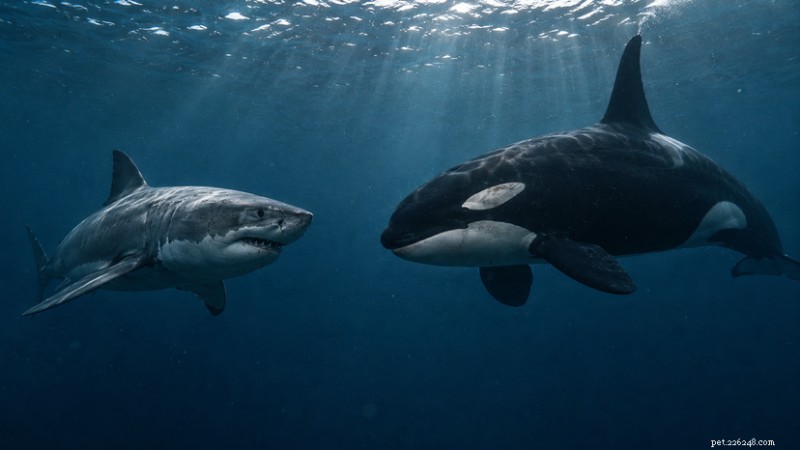
When the ocean’s two most iconic predators— the mighty killer whale (orca) and the fearsome great white shark—face off, the answer is rarely a close call. A blend of size, intelligence, teamwork, and tactical versatility gives the orca a decisive edge.
Sizing Up the Competition
Adult great whites can reach 20.9 ft (6.4 m) on average, with some individuals reported up to 23.5 ft (7.2 m) and weighing as much as 7,500 lb (3,402 kg) (Monterey Bay Aquarium). Killer whales, the largest dolphins, exceed these figures: male orcas can grow to 32 ft (9.8 m) and weigh up to 22,000 lb (9,979 kg) (NOAA Fisheries), while females reach about 28 ft (8.5 m) and 16,500 lb (7,484 kg).
In a direct confrontation, an orca can be three times heavier than a great white, a disparity that amplifies in water where mass translates to ramming power, bite leverage, and durability.
Weapons: Teeth, Bite, and Body Design
The great white’s torpedo‑shaped body, serrated rows of teeth, and explosive bite make it a lethal ambush predator. Its strategy hinges on speed, surprise, and a single devastating strike that can incapacitate prey.
Orcas counter with conical teeth, a muscular tail, and a body engineered for powerful ramming, biting, rolling, and drowning. Their mammalian physiology grants precise breath control and the ability to position themselves strategically during a hunt.
Intelligence and Tactics
While great whites exhibit sophisticated hunting skills, orcas are renowned for their high cognitive ability and complex social structures. Different pods specialize in distinct prey, and coordinated attacks—such as chasing, herding, or isolating a target—are common (NOAA Fisheries).
Documented encounters confirm orcas selectively targeting great white livers for their high energy content. A 2025 genetic study in Australian waters revealed clear evidence of orca predation on great white sharks (Scientific American).
Tonic Immobility and the Shark’s Weakness
Many sharks, including great whites, can enter a state of tonic immobility when turned upside down, leaving them vulnerable. Orcas have been observed flipping or manipulating sharks into this state, effectively neutralizing the shark’s primary defense of rapid swimming and evasive maneuvering.
Speed and Maneuverability
Great whites excel in short bursts of acceleration, ideal for ambush attacks from below. However, orcas match or exceed this speed while offering superior agility: they can pivot, circle, and coordinate with pod members to outmaneuver a lone shark.
Stamina and Durability
Both species are capable of long‑distance travel, but the orca’s mammalian physiology—efficient oxygen use, larger body mass, and social support—provides a stamina advantage in prolonged confrontations.
Open‑Water vs. Coastal Encounters
In open ocean, the orca’s size, intelligence, and tactical options dominate. A great white’s chances improve only if it lands a decisive first bite before the orca reacts—an unlikely scenario in a direct, aware encounter.
In shallow coastal waters, reduced vertical space can limit a great white’s ambush tactics, while an orca can use its bulk to force the shark into disadvantageous positions or toward the surface.
Pod vs. Solo Scenario
When an orca pod engages a great white, the odds shift even further in favor of the marine mammals. Coordinated flanking, harassment, and isolation tactics overwhelm a solitary shark, which is not adapted to fight a team of intelligent hunters.
One Orca vs. One Great White
Even a single orca has been documented killing a great white. A 2024 South African observation recorded a lone orca consuming a white shark’s liver, and a 2025 Australian study confirmed similar predation patterns.
Final Verdict
While the great white remains an elite predator with a formidable bite, the killer whale’s superior size, strength, intelligence, and tactical flexibility give it the decisive advantage in a realistic matchup. Empirical evidence and documented encounters substantiate this conclusion.
We produced this article with AI assistance and ensured thorough fact‑checking by a HowStuffWorks editor.
- Cold Front Forces Florida Iguanas to Fall From Trees
- Discover Italy's Finest 12 Dog Breeds: From Lapdogs to Guardians
- Essential Gear for Sporting Dogs: Boost Performance & Bonding
- Exploring the Truth: Are Any Dog Breeds Truly Hypoallergenic?
- Is Twine Safe for Bird Nesting? Expert Insights
- Why Does My Cat’s Breath Smell Like Fish? Here’s What You Need to Know
- Lovebird Lifespan: Minimum & Maximum Years You Can Expect