

Saltwater Crocodile vs. Komodo Dragon: Who Wins the Ultimate Reptile Face‑Off?
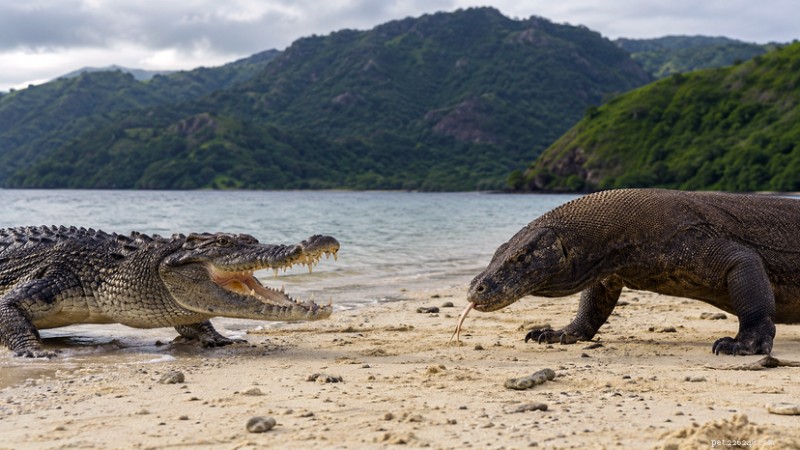
Picture a saltwater crocodile, the world’s largest living crocodile, locked in combat with a Komodo dragon, the largest living lizard. Which would come out on top?
Sizing Up the Competition
According to National Geographic, adult male saltwater crocodiles can reach about 17 ft (5.2 m) and weigh up to 1,000 lb (454 kg). In contrast, the largest male Komodo dragons, as noted by the Smithsonian Institution, grow to roughly 10 ft (3 m) and 300 lb (136 kg). This weight disparity—often three to five times—means the crocodile dominates the battlefield with mass, leverage and a crushing frame designed for ambush.
Weapons: Bite, Teeth and Armor
The Komodo dragon’s arsenal includes serrated teeth, powerful claws, thick dermal armor and a venomous bite that lowers blood pressure and disrupts clotting—an advantage confirmed by a 2009 study on predation strategies. However, the saltwater crocodile’s skull, jaws, teeth, tail and armored skin are engineered for immediate, catastrophic damage: a clamp that can crush, twist, and drag prey into the water.
Size and Strength Matters
A single Komodo dragon may easily give up several hundred pounds of body weight when confronting a large male saltwater crocodile. The crocodile’s dense osteoderms and heavy, low‑to‑ground profile provide resilience against clawing and biting, while its muscular tail adds force on land and in water.
Venom Versus Instant Damage
While Komodo venom can weaken and kill prey over time, a direct bite from a crocodile delivers immediate, lethal crushing force. In a head‑to‑head fight, the crocodile’s mechanical advantage often outpaces the dragon’s venomous strategy.
Fighting on Land
On dry terrain, the Komodo dragon’s agility—its ability to walk, lunge and use claws—offers a tactical edge. It can avoid the crocodile’s jaws and target limbs or tail. Yet this advantage is narrow; a single misstep could allow the crocodile to seize a head or neck and end the encounter.
Fighting in Water
The crocodile excels in aquatic environments, using stealth, tail power and rotational force to ambush and drown its opponent. Although Komodo dragons can swim, they lack the same hydrodynamic efficiency and escape options.
Fighting on a Muddy Shoreline
A muddy shoreline presents a realistic overlap arena. While the Komodo may move more effectively on firm ground, proximity to water tilts the odds decisively toward the crocodile, which can exploit its ambush tactics and drag the dragon into a lethal zone.
Final Verdict
The Komodo dragon is a formidable, venomous predator capable of taking down large prey. Nevertheless, the saltwater crocodile’s superior size, armor, and unparalleled bite force give it the decisive advantage in any direct confrontation.
This article was co‑authored with AI, then fact‑checked and edited by a HowStuffWorks editor.
- DIY Chemical-Free Fly Repellent for Dogs
- The True Cost of Owning a Pet Rabbit: A Complete Guide
- 6 Proven Strategies to Boost Animal Networking Success
- Understanding Your Cat’s Play Style: Social, Solo, and Beyond
- Is Halloween Candy Safe for Dogs? A Comprehensive Guide
- Preventing Pet Theft: Essential Tips for Safe Walks and Errands
- Professional Pet Sitting in Grayson, GA: Caring for Your Beloved Cats