

Why Every Hamster Needs a Wheel – Choosing the Safe, Silent, and Proper Size
New to hamster ownership? Understanding the role of a running wheel is crucial—hamsters rely on it for exercise, mental stimulation, and overall well‑being.
In the wild, hamsters cover many miles each night while foraging. A wheel lets them satisfy this natural instinct within the confines of their cage, preventing boredom and promoting healthy habits.
To ensure your hamster’s well‑being, it’s best to have all the necessary supplies—including a wheel—ready before bringing your new pet home. If your hamster has already settled in without one, acquire a suitable wheel as soon as possible.
While the market offers a variety of wheels, not all are safe. Below we outline the key criteria for a safe, effective wheel and what to avoid.
Hamsters spend enormous amounts of time running and foraging for food in the wild, and they shouldn’t be denied the option to run whenever they want in their cage. Running comes naturally to them, and they would get bored and depressed without an option to run. Not to mention the health toll inactivity takes on them – as it does on humans.
Prevents Boredom
Hamsters cover several miles of distance every night in the wild. It’s natural for hamsters to run around a lot, and it’s only ethical to allow our pets to do the same in captivity. Without a wheel, your hamster wouldn’t have much to do in the cage but eat and sleep, which gets tedious with time.
Provides Exercise
Like all living creatures, hamsters need to move and be active to be healthy and happy. No matter how big it might be (and it should be as big as possible), an enriching cage can’t replace the level of activity a wheel can provide. A wheel is a fun way to fulfill their natural desire for running.
Research has shown that wheels are not only used by pets in captivity – even wild animals like to run on wheels. This means that our pets enjoy it, and it’s not just something they do due to a lack of better things to do.
Weight Management & Physical Health
Running is a perfect way to burn calories. Without a wheel, hamsters would mainly spend their time eating and sleeping, and it wouldn’t take long to start gaining excess weight.
Lack of activity can cause many health issues, such as arthritis or bone and joint problems. By keeping your hamster active, he’ll be able to exercise all his muscles and joints, which keeps his body healthy.
Improves Mental Health
Having a wheel is essential for your hamster’s mental health. Boredom and lack of exercise will lead to stress and anxiety in your pet. Having a wheel to occupy themselves and have something fun to use up their energy is beneficial for their mental health and helps prevent stress.
What Kind of Wheels Do Hamsters Need?
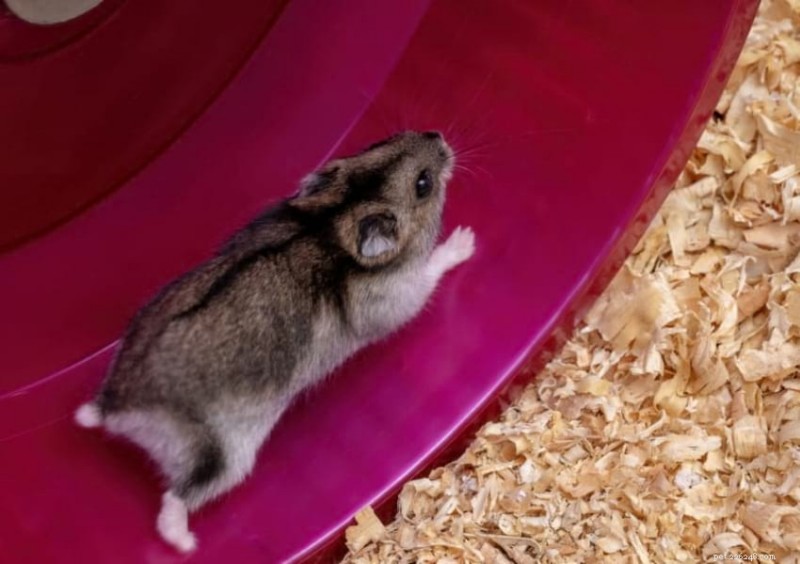
Hamsters need a wheel, but is any wheel good? Can you buy the first one you see at the pet store? The truth is that not all wheels are safe for hamsters.
Here are the factors to consider when buying a wheel.
Wheel Size
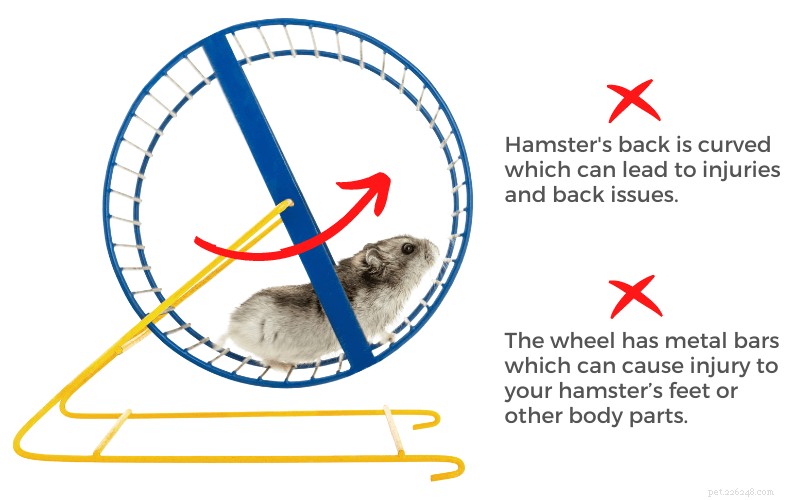
Many hamster cages come with a built‑in wheel that is far too small for even the smallest dwarf species. A wheel that is too small causes your hamster to curve their back while running, which can lead to injuries, back issues, and other long‑term health problems.
The minimum wheel size should be:
- 8″ (20 cm) for dwarf species
- 10″ (25 cm) for Chinese hamsters – slightly larger than dwarfs, so a bigger wheel is recommended
- 11″ (28 cm) for Syrian hamsters
Wheel Safety
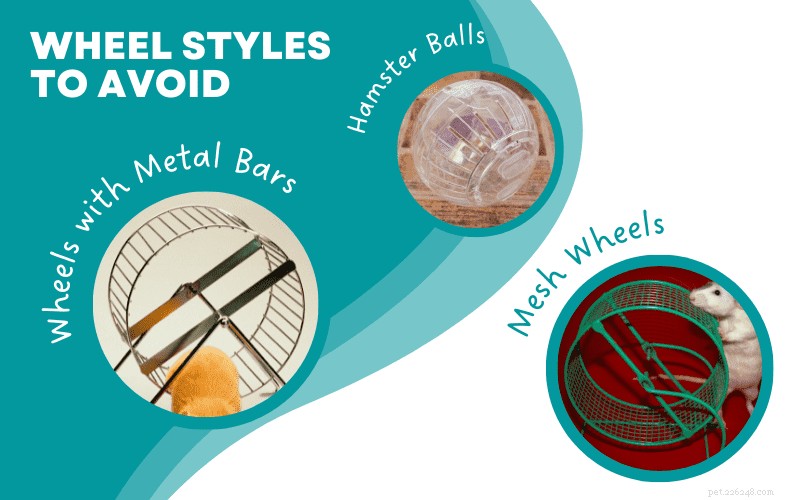
Some types of wheels are not safe for hamsters and should never be used:
- Wheels with metal bars can injure your hamster’s feet or other body parts if they get stuck.
- Mesh wheels are also to be avoided for the same reason.
- Hamster balls pose multiple hazards—pinch or break toes, restrict ventilation, and cause disorientation and anxiety.
When buying a wheel for your hamster, opt for one with a solid surface. It can be made of plastic, wood, or metal. Solid parts provide firm footing, so there’s no risk of getting their toes or feet trapped.
Flying Saucer or Upright Wheels
Flying saucers can occasionally be used during free‑roam time in a playpen, but they are not a good substitute for a regular upright wheel.
Flying saucers cause hamsters to run at an unnatural angle, so they shouldn’t be used as the primary wheel. Running on a saucer daily could lead to injuries and pain; an upright wheel is the safest choice.
Noise
If your hamster lives in your bedroom, consider getting a silent wheel. Hamsters can be active at night and do most of their running while you sleep, so the wheel’s noise is an important consideration.
When buying a wheel, look for one labeled as silent.
The Best Hamster Wheel That Fits the Criteria
If there’s one wheel I can recommend, it’s the Niteangel Super Silent Hamster Wheel.
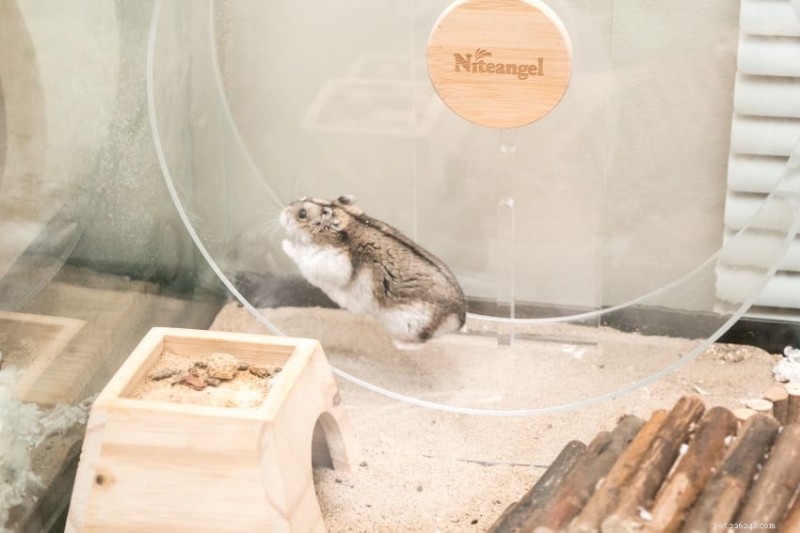
It comes in four sizes, perfect for Syrians, Chinese hamsters, and dwarfs:
- 8.2″ – Dwarf species
- 10″ – Dwarf species or Chinese hamsters
- 11″ – Syrians, dwarf, or Chinese hamsters
- 12.82″ – Syrians, dwarf, or Chinese hamsters
What makes this a good hamster wheel:
- Ultra‑quiet operation
- Large enough to support a healthy stride
- Solid, non‑porous surface
- Durable construction that stands up to heavy use
Other safe options include the Silent Runner and Kaytee Silent Spinner Wheel. Always read user reviews and product specifications before purchasing.
Do Hamsters Need a Wheel at Night?
You might be tempted to remove the wheel from your hamster’s cage at night to avoid noise. Unfortunately, that isn’t an option—hamsters need continuous access to a wheel. They tend to use their wheel the most during dusk, dawn, and at night.
If your hamster is waking you up, switch to a silent wheel or relocate the cage to a different room. Removing the wheel entirely will leave your pet frustrated and deprived of its natural exercise.
When Is It OK to Not Have a Wheel in a Cage?
The only situation you might consider removing the wheel is if your hamster has a medical condition—such as swollen or injured feet—and the veterinarian has advised rest. Always follow professional veterinary guidance.
Why Do Hamsters Like Running on Wheels?
While there’s no definitive scientific explanation, the evidence suggests that running is instinctual for hamsters. Wild populations run continuously to forage, and a wheel replicates this activity. Exercise also boosts endorphin production, making the behavior rewarding.
What to Do if Your Hamster is Obsessively Running on the Wheel?
Obsessive running can signal stress or a lack of enrichment. This may happen if the cage feels unsafe (e.g., near a cat or dog) or if the hamster lacks stimulation.
To alleviate this behavior, try the following:
- Keep the cage away from other pets.
- Provide diverse enrichment—tunnels, chew toys, and climbing structures.
- Scatter feed throughout the cage to keep the hamster engaged.
- Use deep bedding so the hamster can burrow.
- Upgrade to a larger cage if space is limited.
Conclusion
In short: a wheel is essential for every hamster and should remain in the cage 24/7. Choose a solid, appropriately sized upright wheel—avoid metal‑bar or mesh models and flying saucers. If noise is a concern, select a silent wheel. With the right wheel, your hamster will stay active, healthy, and happy.
- Why Dogs Dislike Having Their Faces Blown On
- Male vs Female Pit Bull Terriers: Key Differences Explained
- 146 Star Trek‑Inspired Dog Names: Classic & Fun Choices for Your Furry Friend
- May the Fur Be With You: 10 Star‑Wars Dog Toys & Accessories Everyone Loves
- Eurasier Dogs: German Small Breed Traits, Size, and Care Guide
- The Meaning Behind Rabbits Touching Noses: A Guide to Their Social Signals
- Why Dogs Are Drawn to Fireplaces: Comfort, Warmth, and Natural Instincts