

Eliminate Guinea Pig Odors: Proven Cleaning & Care Tips
Welcome to your definitive guide for keeping your guinea pig’s habitat fresh and odor‑free. While these tiny companions are not naturally smelly, an unclean environment can create unpleasant scents. By addressing the key drivers—cage hygiene, diet, and health—you can maintain a clean, comfortable space for both you and your pets.
Good cage hygiene is the cornerstone of odor control. Frequent waste buildup, damp bedding, and unbalanced diets are the most common culprits. With a few simple adjustments to your cleaning routine, you’ll keep odors at bay and your guinea pigs thriving.
Daily spot‑cleaning is essential. Remove soiled bedding and food scraps each day, and wipe food bowls with warm water. Weekly, perform a deeper clean using pet‑safe products. A vinegar‑water solution neutralizes stubborn smells without harsh chemicals—just mix equal parts white vinegar and warm water in a spray bottle.
Diet significantly influences scent. Feed primarily fresh hay, limit watery vegetables, and always provide clean water. If unusual odors persist, consult your veterinarian to rule out infections or digestive issues.
By understanding these core principles, you’re already on the path to a happier home. Let’s explore practical solutions that make odor management effortless and effective.
Understanding Guinea Pig Odors and Their Causes
Owners often discover that a well‑maintained habitat keeps a guinea pig’s natural scent mild. Odors usually arise from three areas: cage conditions, dietary choices, or underlying health issues. Let’s break down what triggers these unwelcome smells and how to address them.
Why a Clean Cage Is Essential
The cage acts as a biofilter. Urine waste releases ammonia, while damp bedding and uneaten veggies create bacterial breeding grounds. These factors combine to produce sharp, lingering odors.
Proper airflow is crucial. Enclosed cages trap humidity, accelerating odor formation. Replace bedding weekly and spot‑clean daily to prevent organic matter from breaking down. Paper‑based bedding absorbs moisture better than wood shavings, reducing sour smells.
The Role of Health and Diet in Odor Formation
What your guinea pig eats directly affects their waste. High‑calcium veggies like spinach can intensify urine odor, while Timothy hay promotes healthy digestion. Remove uneaten food within four hours to avoid fermentation.
Sudden odor changes often signal a problem. Musty smells may indicate fungal infections, while overly pungent droppings could point to gut imbalances. Male guinea pigs naturally produce muskier scents due to active scent glands near their hindquarters—regular gland checks help manage this.
Recognizing When Your Guinea Pig Cage Needs Attention
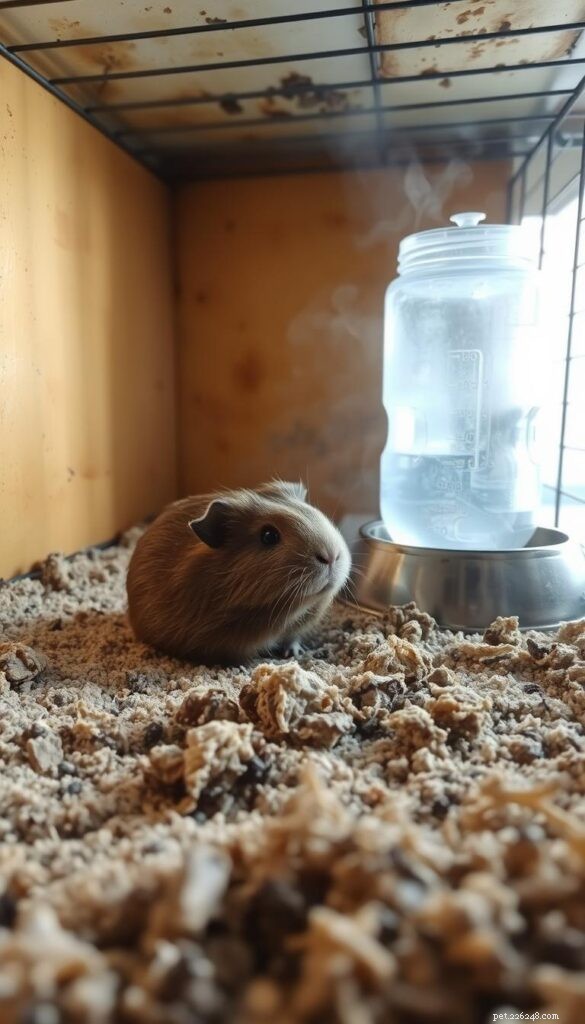
Spotting early signs of a dirty habitat prevents odors from overwhelming your space. Daily checks and weekly refreshes keep the environment fresh. If a strong ammonia scent hits you upon entering the room, it’s time to act.
Key Indicators of a Compromised Habitat
A strong ammonia scent means urine has built up in the bedding. Check corners where your pets often relieve themselves—damp or discolored areas need immediate cleaning. Uneaten veggies turning mushy? Remove them quickly to avoid mold growth.
Watch the water bottle zone. Leaks create soggy patches that trap odors. If your pets avoid certain cage sections, those spots likely need attention. Healthy cavies stay active; lethargy may mean their space feels unclean.
| Warning Sign | What It Means | Quick Fix |
|---|---|---|
| Eye‑watering smell | High ammonia levels | Replace all bedding |
| Clumped, damp material | Excess moisture | Spot‑clean & dry hay |
| Wilting food pieces | Decomposing matter | Remove within 4 hours |
Regular checks take just minutes but make a huge difference. Your nose—and your pets—will thank you!
Importance of Regular Cage Hygiene
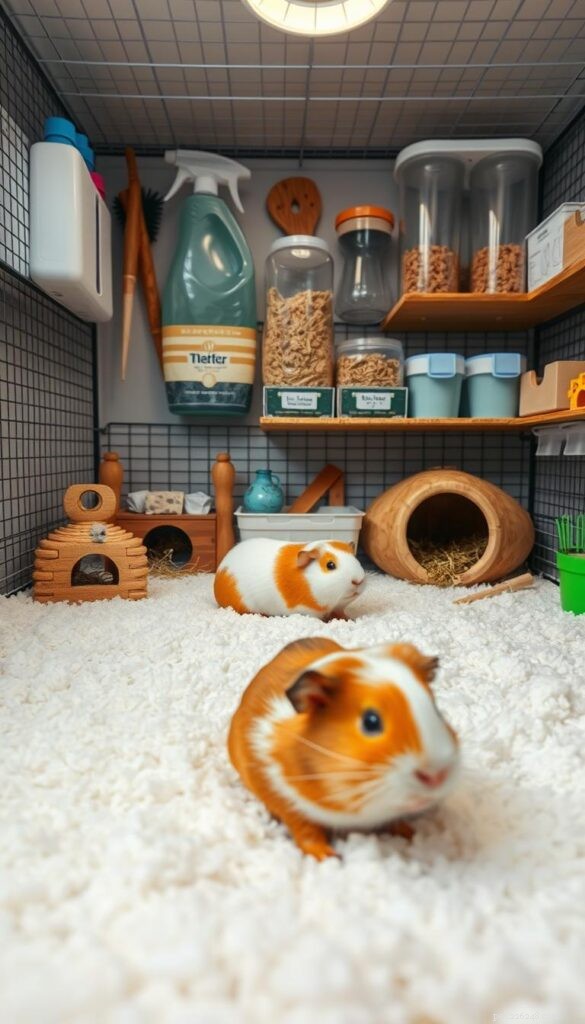
Maintaining a clean cage isn’t just about odor control—it’s a lifeline for your guinea pig’s health. Unclean environments foster bacteria that can lead to respiratory distress, skin infections, and painful foot conditions.
| Health Risk | Caused By | Prevention Tip |
|---|---|---|
| Respiratory Issues | Ammonia fumes | Daily waste removal |
| Urinary Infections | Bacterial growth | Weekly bedding changes |
| Bumblefoot | Wet surfaces | Dry hay layer |
| Stress Behaviors | Unsanitary conditions | Stable routine |
Your pets show stress through unusual actions like over‑grooming or aggression. A clean habitat keeps them calm and social. Studies show that proper cleaning routines reduce vet visits by up to 60% over the long term.
Investing time in maintenance pays off with healthier, happier companions. Spot‑clean soiled areas daily and perform full bedding swaps weekly. Your efforts create a safe space where guinea pigs can thrive.
How To Clean a Guinea Pig Cage Daily
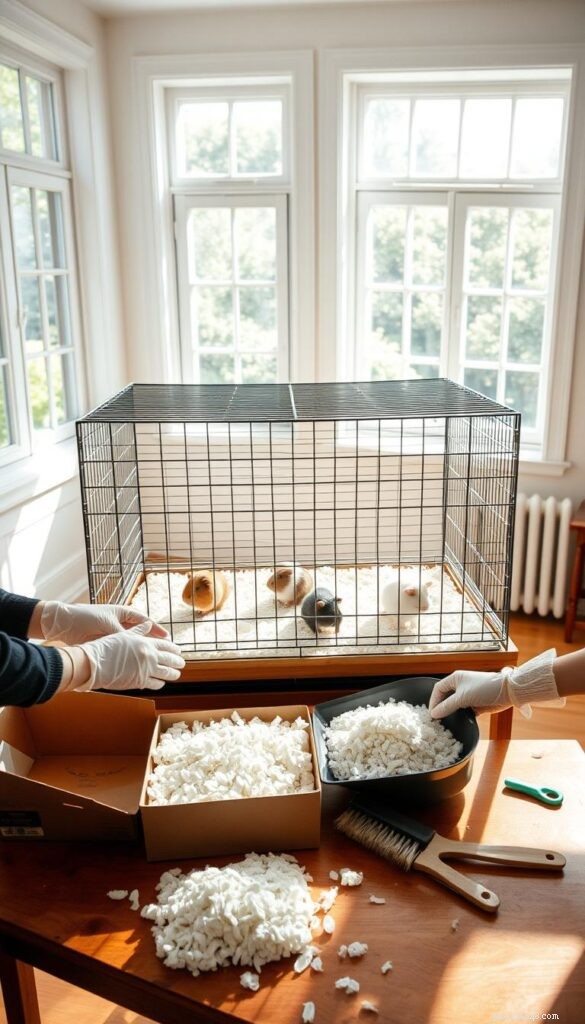
Consistency turns cage care into a quick, rewarding habit. A five‑minute morning routine keeps your pet’s home fresh and prevents odors from taking root. Gather supplies: gloves, a handheld broom, and a dedicated waste bin.
Daily Spot‑Cleaning Tips
First, scoop soiled bedding—focus on corners and hideouts where waste collects. Use a small brush to sweep stray hay or pellets into a dustpan. Pro tip: Place a washable mat under the cage to catch scattered debris.
Remove leftover veggies immediately. Spoiled produce creates stubborn smells and attracts pests. Wipe food bowls with warm water, refill water bottles to prevent algae buildup, and dry damp areas thoroughly to discourage mold.
Managing Soiled Bedding Effectively
Replace wet bedding patches daily using odor‑absorbing paper‑based materials. Layer fresh hay over clean sections to encourage natural foraging. For multi‑level cages, check ramps and platforms for hidden messes.
Rotate toys and accessories weekly to prevent urine saturation. If odors persist despite daily care, consider switching bedding types. Some owners find success with pet‑safe odor‑control solutions, but always verify safety for cavies first.
Finish by vacuuming around the habitat. This prevents stray hay from becoming tripping hazards or dust sources. Your quick efforts create a healthier space and strengthen your bond with your pets through attentive care.
Deep Cleaning Techniques for a Fresh Environment
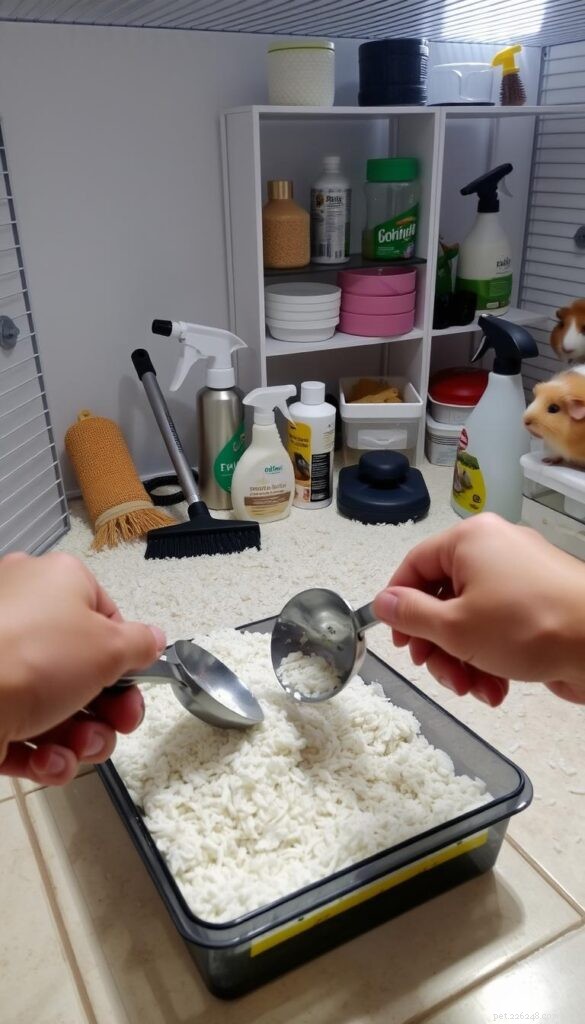
Weekly deep cleaning transforms your pet’s habitat from manageable to minty‑fresh. This process tackles hidden grime and stubborn odors that daily spot‑cleaning can’t address. With the right approach, you’ll create a sanctuary that’s both clean and comfortable.
Step‑by‑Step Deep Clean Process
1. Move your guinea pigs to a temporary playpen.
2. Remove all bedding, toys, and accessories—this exposes every nook for thorough scrubbing.
3. Mix equal parts white vinegar and warm water in a spray bottle for a pet‑safe cleaning solution.
4. Spray surfaces generously and let sit for 5–10 minutes.
5. Scrub corners and ramps with a soft‑bristle brush.
6. Rinse thoroughly with warm water (repeat if using vinegar).
7. Wash food bowls and bottles with unscented soap.
8. Air‑dry all components completely before reassembly.
Pro tip: Use separate brushes for cage cleaning and dishwashing to prevent cross‑contamination.
Essential Cleaning Supplies to Use
| Safe Product | Purpose | Avoid These |
|---|---|---|
| White vinegar | Disinfect surfaces | Bleach |
| Unscented soap | Clean accessories | Scented sprays |
| Microfiber cloths | Dry surfaces | Baking soda |
Always double‑rinse after using vinegar—its sharp smell can bother sensitive noses. For plastic parts, a toothbrush works wonders on crevices. Remember: moisture breeds bacteria, so never skip the drying step!
Choosing the Right Bedding to Control Odors
Your pet’s comfort and your home’s freshness depend heavily on bedding choices. The ideal material absorbs moisture, neutralizes odors, and supports respiratory health. Let’s explore options that balance practicality with safety.
Top‑Performing Bedding Solutions
Fleece liners lead the pack for reusable systems. When paired with absorbent layers like towels or u‑haul pads, they create a dry surface that traps odors effectively. Washable options save money long‑term and reduce waste.
Paper‑based products shine for convenience. Recycled paper pellets or shredded bedding offer quick cleanup and minimal dust. For natural texture, aspen shavings work well—just change them more frequently to maintain freshness.
Hazardous Materials to Exclude
Steer clear of pine or cedar shavings. Their aromatic oils irritate sensitive airways and may cause liver issues over time. Crystal cat litter poses choking risks and digestive blockages if ingested accidentally.
Always prioritize dust‑free, chemical‑neutral bedding. Your pet’s breathing comfort matters as much as odor control. With smart choices, you’ll create a healthier habitat that stays fresh between cleanings.
FAQ
Why is a clean cage essential for controlling odors?
A tidy habitat prevents bacterial buildup, which causes bad smells. It also reduces respiratory or skin issues, keeping your pet healthy.
Can my guinea pig’s diet affect cage smells?
Yes! Low‑fiber or sugary foods lead to smelly waste. Prioritize hay and fresh veggies to support digestion and minimize odors.
What are the signs my guinea pig’s cage needs cleaning?
Watch for strong ammonia smells, damp bedding, or visible waste. Sneezing or itching may also signal poor air quality.
How often should I clean my guinea pig’s cage?
Spot‑clean daily, replace bedding every 3–4 days, and deep‑clean weekly. Adjust based on cage size and number of pets.
What’s the best way to spot‑clean a guinea pig cage daily?
Remove wet bedding and droppings promptly. Wipe food bowls and water bottles to prevent mold. Use gloves for quick, hygienic cleanup.
How do I handle soiled bedding without spreading odors?
Seal used bedding in a bag and take it outside immediately. Avoid shaking it to limit dust. Replace with absorbent paper‑based options.
What’s the proper method for deep‑cleaning a guinea pig cage?
Empty the cage, scrub with a vinegar‑water mix, rinse thoroughly, and dry completely. Disinfect toys and hideouts to eliminate bacteria.
Which cleaning products are safe for guinea pig habitats?
Stick to white vinegar, mild soap, or pet‑safe disinfectants. Avoid bleach or harsh chemicals that irritate sensitive respiratory systems.
What bedding types help reduce guinea pig odors?
Opt for paper‑based bedding, aspen shavings, or washable fleece liners. These materials absorb moisture and limit bacterial growth.
Are there bedding materials that make smells worse?
Cedar or pine shavings release harmful oils and trap odors. Avoid clumping litters, which pose ingestion risks and worsen smells.
- Master Clicker Training: 5 Simple Steps to a Well‑Behaved Dog
- How to Protect Your Cat After You Pass Away
- French Bulldog Profile: Traits, Care, and Family Fit
- What Pregnancy and a Newborn Mean for Your Cat: Tips & Safety Guide
- Decoding Your Cat’s Tail: The Ultimate Guide to Feline Body Language
- Why Cats Love Catnip: Science, Benefits, and Practical Uses
- Turtle & Tortoise Shell Care: Spotting and Preventing Common Issues