

Are Christmas Trees Safe for Guinea Pigs? A Vet‑Approved Guide
Pet owners often wonder how holiday décor affects their small companions. While evergreen trees add festive cheer, they can pose serious risks to guinea pigs’ delicate digestive systems. Common species—pine, spruce, and fir—contain natural resins that can irritate sensitive mouths and stomachs.
Needles are not just an aesthetic concern. Their sharp points can damage a guinea pig’s soft throat or cause internal blockages if ingested. Even untreated, organic trees carry danger due to dense foliage and sap content.
Decorations amplify the threat. Fire‑resistant coatings, artificial snow sprays, and metallic tinsel add toxic layers to branches. For a comprehensive safety overview, check our holiday greenery safety guide covering tree varieties and preventive measures.
During celebrations, keep a vigilant eye on your pet’s environment. Set up physical barriers around decorated areas and offer safer chewing alternatives. Responsible pet ownership means prioritizing health over holiday aesthetics.
Can Guinea Pigs Eat Christmas Trees? Examining the Facts
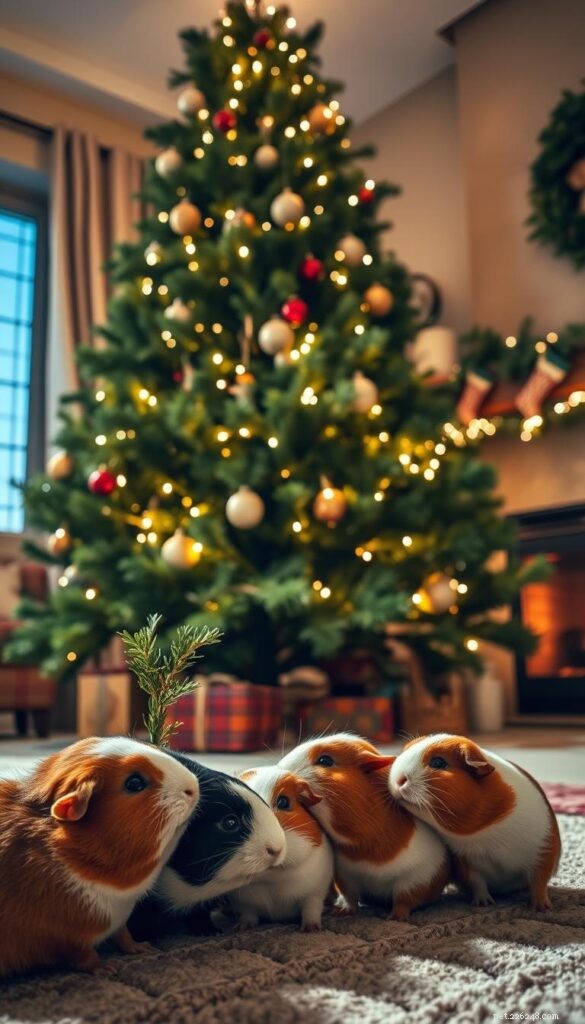
Christmas décor may seem harmless, but its components can create multiple hazards for curious noses.
Nature’s Hidden Threats
Needles can puncture delicate mouths or paws. One owner noted, “After finding blood spots near our tree, we realized our guinea pig had stepped on fallen spikes.” The sticky resins within needles also upset sensitive stomachs if nibbled.
Electrical cords wrapped around trunks tempt chewers, while glass ornaments shatter into lethal shards. Metallic tinsel can cause intestinal blockages.
Lessons From Experienced Owners
Many caregivers report unexpected challenges during the holidays. A viral post showcased a determined pet named Kenny removing paper chains from his enclosure overnight. The owner added, “They’ll find anything chewable—glittery wraps, adhesive tapes, even wrapped gift boxes.”
These stories underline the importance of supervision. Create designated play areas away from decorated zones, sweep fallen debris regularly, and provide untreated applewood sticks as safe chewing alternatives.
Ensuring Holiday Safety for Your Furry Friend
Holiday celebrations bring unique challenges for small‑animal care. Hidden dangers lurk in festive setups, demanding proactive measures to protect your curious companion. Begin by evaluating your décor through a pet‑safety lens.
Smart Lighting and Decoration Choices
Twinkling lights attract nibblers like magnets. Use cord covers and elevate wires at least 12 inches above floor level. A veterinary technician notes: “We see more electrical burns in December than any other month.” Avoid these common hazards:
| Risk | Solution | Effectiveness |
|---|---|---|
| Exposed cables | Plastic tubing covers | Blocks 95% of chewing attempts |
| Fragile ornaments | Plastic or fabric decorations | Reduces injury risk by 80% |
| Loose needles | Daily vacuuming | Prevents 90% of paw injuries |
Designing Protective Zones
Use baby gates or playpens to create clear boundaries. Ensure your guinea pig’s living area remains undisturbed by holiday traffic. Place water bottles and hideouts in quiet corners away from noisy gatherings.
Replace risky wrapping materials with plain paper and cotton twine. Store gifts in closed closets until the celebration begins. Conduct regular floor checks—scan for pine spikes every 2‑3 hours during peak activity.
Key steps to keep your pet safe:
- Restrict tree access using physical barriers
- Apply bitter apple spray to lower branches
- Provide extra hay racks for safe chewing
Involving Your Guinea Pig in the Christmas Festivities
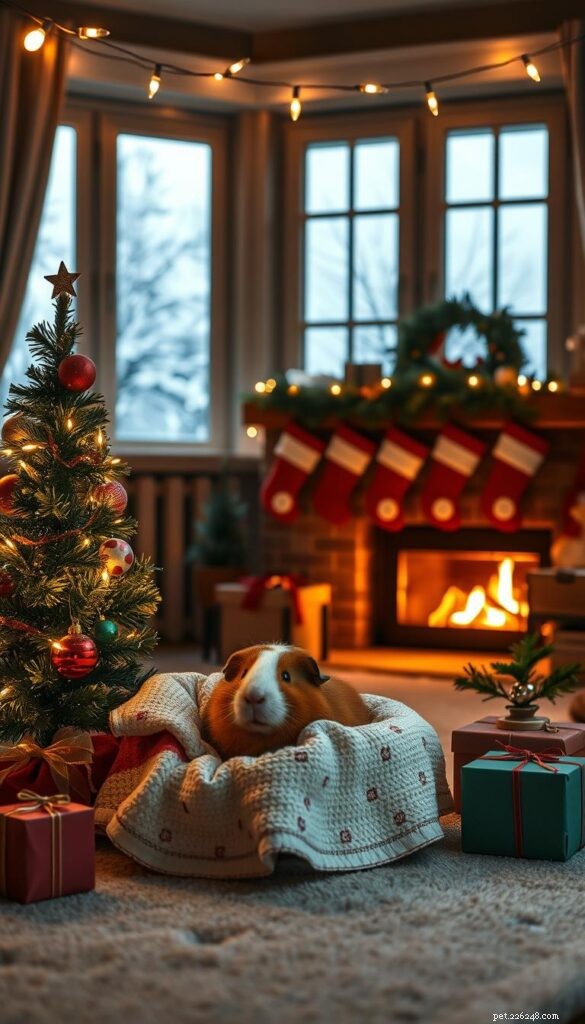
Your small friend deserves festive fun without risky greenery. Transform their space with creative adaptations that celebrate the season safely. Observe their favorite activities—tunneling, chewing—and use those preferences to craft personalized holiday experiences.
Designing Festive Safe Spaces
Swap dangerous décor for cardboard castles wrapped in plain paper. One owner shared: “We built a mini winter village using toilet paper rolls—our pets popcorning through it became our new tradition!” Add untreated wooden ornaments or hay‑stuffed stockings for interactive play.
Stress‑free celebration ideas:
- Fill a tiny stocking with nutritionally balanced treats
- Arrange bell peppers and cilantro into wreath shapes
- Use fleece blankets with snowflake patterns as cage liners
Keep festivities calm by maintaining feeding schedules. Soft holiday music can mask loud gatherings. Pro tip: Photograph your guinea pig during their active morning hours using felt antlers placed nearby—never directly on your pet.
Watch for happy popcorning jumps or contented rumbling to gauge comfort. Thoughtful interactions create magical memories without compromising safety.
Best Practices for Feeding and Treating Your Guinea Pig During the Holidays
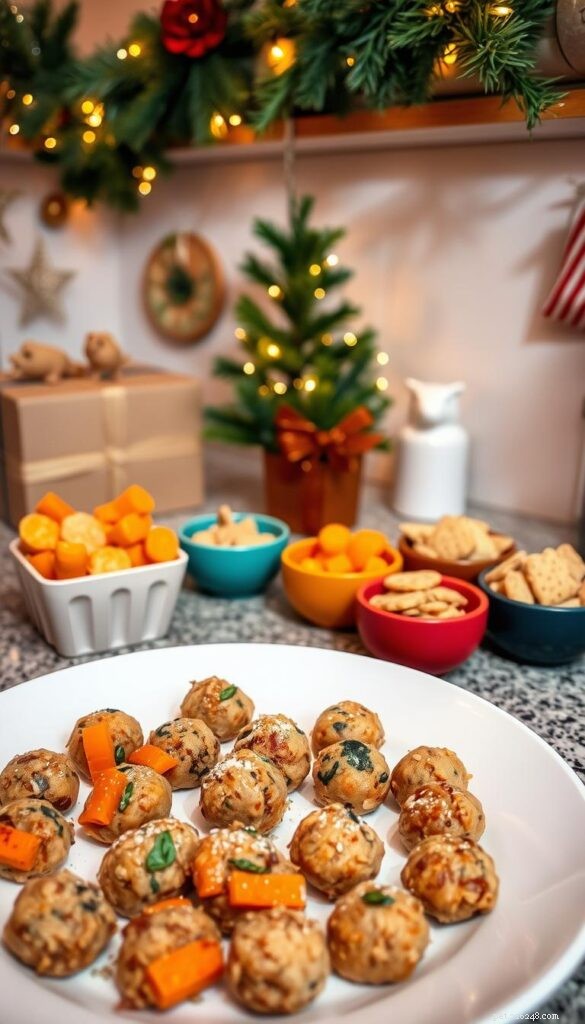
Holiday meals inspire sharing, but your small companion needs tailored care. Smart treat selection and portion control keep celebrations joyful without tummy troubles.
Safe Foods and Treat Options for Your Pet
Stick to familiar veggies like bell peppers and celery for holiday snacks. Avoid sugary or fatty foods—even small amounts can upset sensitive stomachs. Timothy hay‑based treats satisfy chewing urges while supporting dental health.
Popular options include:
- Freeze‑dried herbs mixed with hay
- Unsprayed rose petals (rinsed thoroughly)
- Commercial sticks with apple and cranberry
Monitoring Portions and New Food Introductions
Limit special snacks to 1‑2 teaspoons daily. Introduce new items over 3 days—watch for soft stools or reduced appetite. One owner reported: “Our pair loved parsley sprigs until we found orange‑tinted bedding—now we stick to their regular greens.”
Follow these guidelines for stress‑free feeding:
- Serve treats early when pets are most active
- Remove uneaten food within two hours
- Keep water bottles freshly filled
Remember—holiday indulgences aren’t worth risking your companion’s health. Their favorite gift remains your attentive care and consistent routine.
Wrapping Up Holiday Safety Tips for a Joyful Season
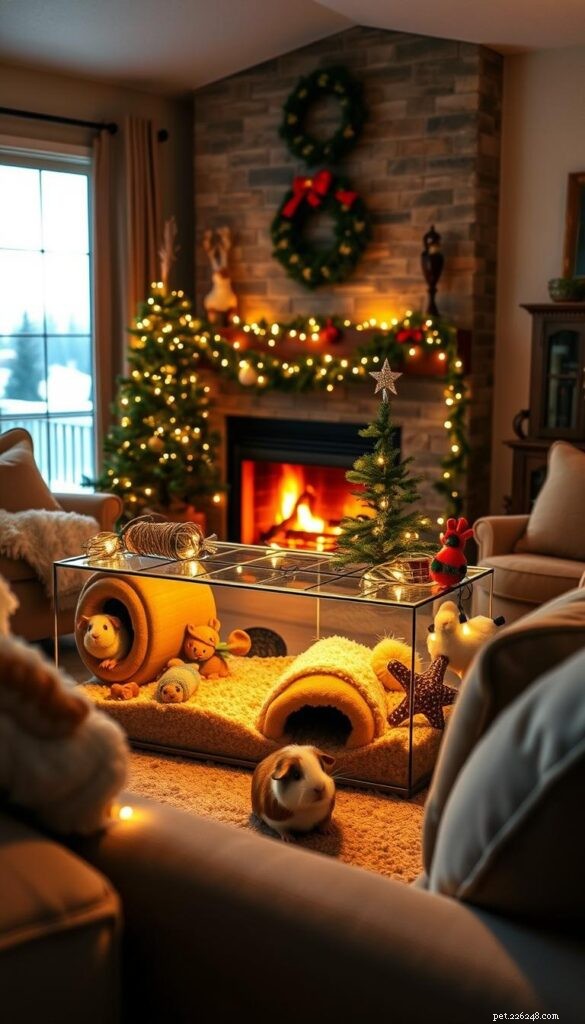
Balancing holiday cheer with pet safety ensures memorable celebrations for everyone. Outdoor companions need stable environments—sudden moves indoors can stress their systems. If housing them outside, check water supplies twice daily and add non‑tip ceramic bowls as backups.
Maintain familiar routines despite festive chaos. Designate quiet zones away from gift‑wrapping areas or noisy gatherings. One owner noted: “Our pets thrive when snack times match the regular schedule—chaos confuses them.”
Focus on thoughtful adaptations rather than exclusion. Swap risky décor with veggie wreaths or hay‑stuffed stockings placed in their space. Rotate chew toys shaped like seasonal symbols to spark interest without danger.
Remember—seasonal plants belong far from curious nibblers. Use elevated stands for festive arrangements and sweep fallen needles immediately. Your efforts create a harmonious home where both traditions and tiny friends flourish.
FAQ
Are pine needles harmful to small pets?
Yes! Pine needles can puncture delicate digestive systems or cause blockages. Even a few dropped needles near their habitat pose risks, so keep your tree well out of reach.
How can I decorate safely with pets in the house?
Skip tinsel, edible ornaments, or loose ribbons. Opt for unbreakable decorations placed higher up. Secure cords for lights, and avoid dangling items that curious critters might nibble.
What holiday treats are safe for my furry companion?
Stick to fresh veggies like bell peppers or leafy greens. Avoid sugary or fatty human foods. Introduce new items slowly to prevent stomach upset.
Can I let my pet explore the tree area?
Supervised playtime is okay if the space is hazard‑free. Use a playpen to block access to fallen needles, water additives, or electrical wires. Always prioritize their health over festive fun.
Do artificial trees pose fewer risks?
While safer than real trees, fake ones still have plastic parts or flocking that could cause issues if chewed. Monitor interactions closely, and choose non‑toxic materials when possible.
How do I balance celebrations with my pet’s routine?
Maintain their feeding schedule and cage cleanliness. Loud noises or sudden changes can stress them, so designate a quiet zone away from gatherings.
- Stress-Free Dog Training: A Guide for New Owners
- Effective Clumber Spaniel Training: Proven Techniques for Smart, Gentle Hunters
- Preventing Pet Dehydration and Kidney Failure: A Guide for Responsible Owners
- How to Distinguish Male from Female Turtles: A Practical Guide
- Choosing Chenille Bath Mats for Guinea Pigs: Benefits, Drawbacks, and Care Tips
- 15 Must-Know Horse Bit Mouthpieces for Every Rider
- Norwegian Elkhound: Classic Spitz Heritage & Hunting Excellence