

How Guinea Pigs See Color: What Their Eyes Really Perceive
Ever wondered how your guinea pig perceives the world? Their vision is not as vivid as ours, but it is perfectly adapted for survival. Researchers show they are dichromatic, perceiving mainly blue and yellow wavelengths, which helps them locate food and avoid predators.
These color preferences shape how a pet interacts with toys, bedding, and even its human companion. Although their palette is narrower than ours, it is finely tuned to the cues that matter most in the wild. Studies reveal that blue and green shades attract their attention, while bright reds appear muted.
By tailoring a cage to their visual strengths, you can create a more stimulating environment. Blue‑tinted toys or yellow‑colored bowls can enhance engagement, whereas red décor may feel dull to them. Understanding these nuances deepens the bond you share and supports their overall wellbeing.
How Guinea Pigs See Color
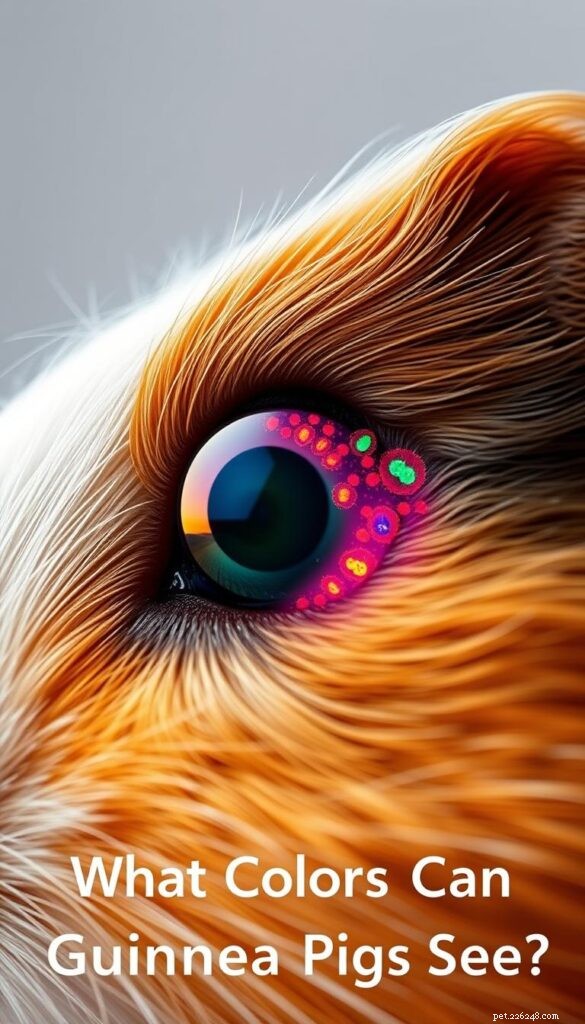
Unlike humans, who use three types of cone cells, guinea pigs rely on two—blue and yellow. Laboratory tests using lettuce placed in colored bowls showed that even when the bowls were shuffled, the animals consistently chose the bowls that matched their detectable hues. This confirms their ability to distinguish colors despite having fewer receptors.
| Feature | Human Vision | Guinea Pig Vision |
|---|---|---|
| Color Receptors | 3 (Trichromatic) | 2 (Dichromatic) |
| Primary Colors | Red, Green, Blue | Blue, Yellow |
| Detail Clarity | High | Moderate |
They often gravitate toward bright blue items and away from red ones. This tendency stems from an evolutionary need to detect fresh vegetation and evade threats.
Dichromatic Vision and the Color Spectrum
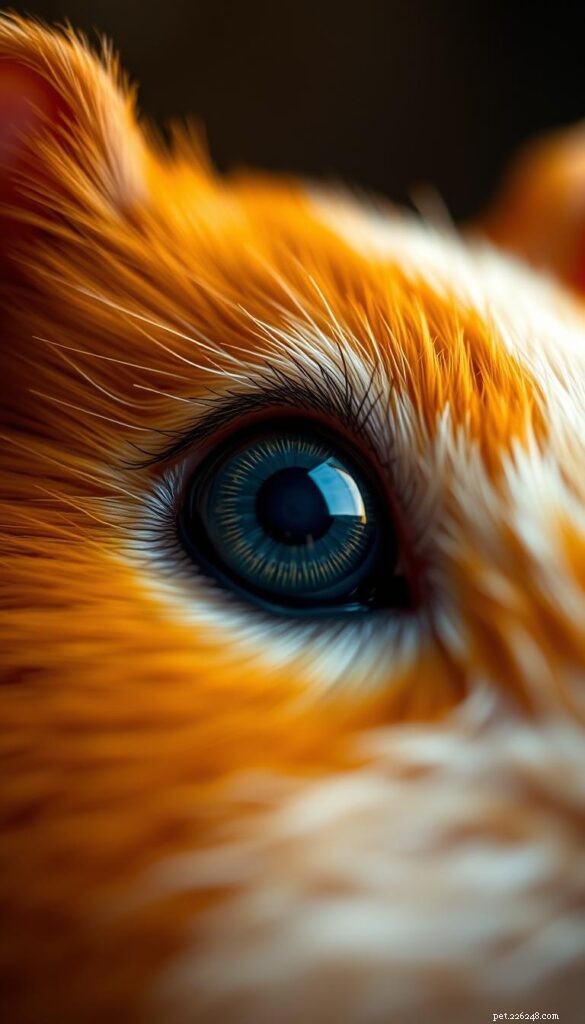
Guinea pigs experience the world through a visual system that focuses on blue and yellow wavelengths. This adaptation enables them to spot nutritious plants and potential predators efficiently.
Research Insights
When offered food in containers of varying colors, guinea pigs reliably selected those within their detectable spectrum, particularly orange‑yellow patterns that mirror natural plant hues.
Comparing Color Range to Humans
While humans perceive a full spectrum including reds and purples, guinea pigs see a softer palette. Below is a side‑by‑side comparison:
| Aspect | Guinea Pig | Human |
|---|---|---|
| Color Receptors | 2 types | 3 types |
| Best‑Detected Hues | Blue/Yellow | Red/Green/Blue |
| Detail Sharpness | Moderate | High |
Their streamlined perception is not a limitation; it speeds up visual processing, an evolutionary advantage honed over generations. When selecting toys or hideouts, favor blue and yellow hues to match their natural visual strengths.
Beyond Color: Guinea Pig Vision Capabilities
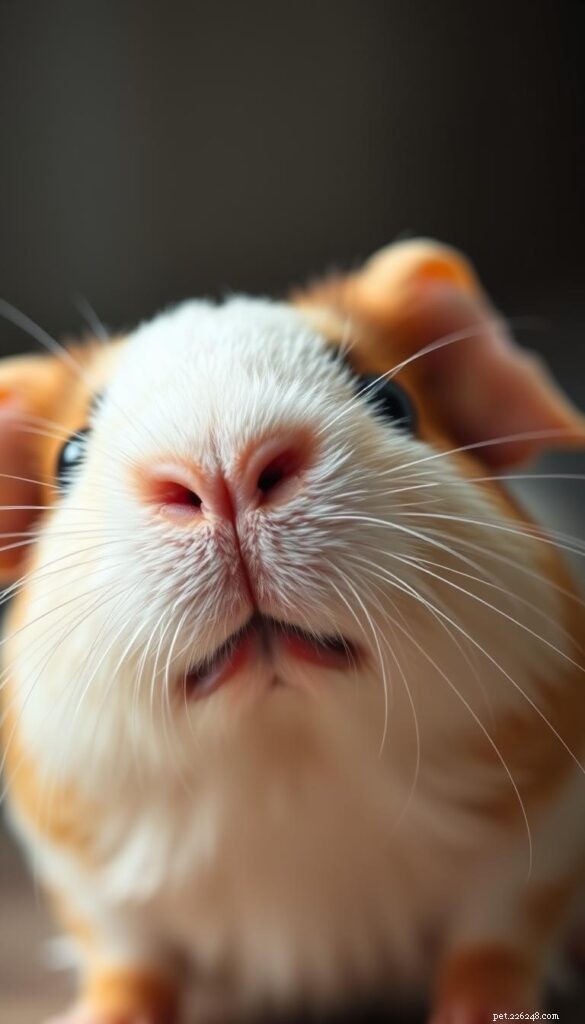
Color perception is just one facet. Guinea pigs possess a panoramic view of nearly 340°, far wider than the 180° humans can see. This wide field allows them to detect predators while feeding without turning their heads.
Field of Vision and Depth Perception
Their wide‑angle vision makes them adept at spotting motion. Details fade beyond 16 inches; at 5–6 feet, objects appear as indistinct blobs, yet movement still captures their attention. Clear object recognition occurs only within about a foot of their face, which explains why they sniff new items thoroughly—vision confirms shape, the nose confirms identity.
| Aspect | Humans | Guinea Pigs |
|---|---|---|
| Field of View | 180° | 340° |
| Clear Vision Range | 20/20 | 12–16 inches |
| Depth Perception | Strong | Weak |
Their limited depth perception can make ledges appear safe. A study found guinea pigs confidently step off edges that humans would avoid. Keep cages single‑level and handle them close to the floor to prevent accidental falls.
Other Sensory Abilities
While vision has its limits, other senses are highly refined.
Hearing
Guinea pigs detect sounds up to 50,000 Hz, far beyond the human range of ~20,000 Hz. They react to crinkling treat bags from across the room, and sudden noises trigger instant alertness. Familiar voices provide comfort; soft speech is reassuring.
Smell and Whiskers
Their noses are 25 times more sensitive than ours, enabling them to identify favorite foods, detect stress hormones, and map their environment via scent trails. Whiskers act as built‑in measuring tapes, gauging tunnel widths and distances. When whiskers brush an object, they adjust their position to avoid injury.
Navigation and Instincts
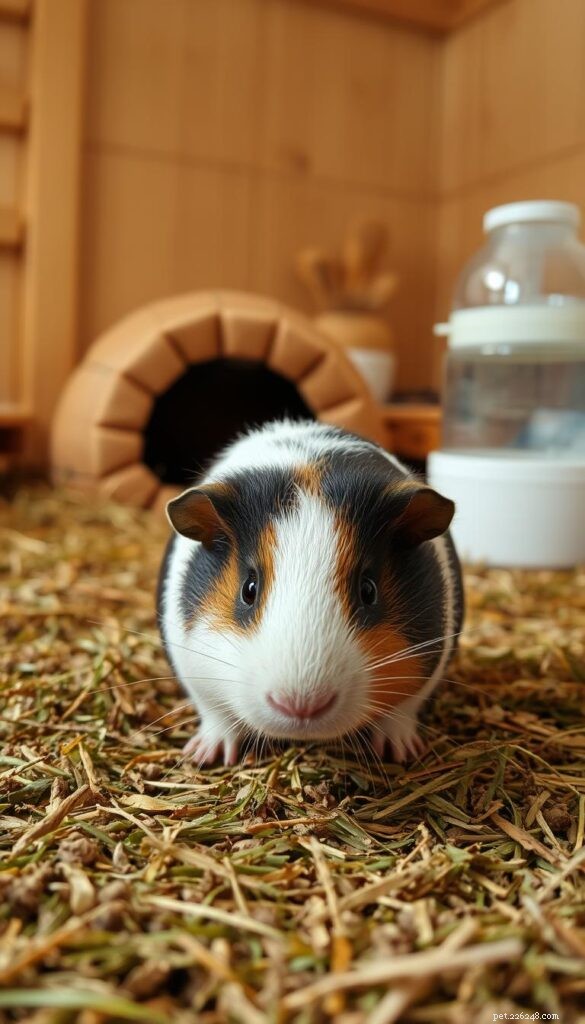
Guinea pigs build detailed mental maps of their surroundings, memorizing food locations and safe pathways. Even in dim light, whiskers and scent trails guide them efficiently around obstacles. Their 340° vision functions like a security system, scanning for predators from all angles. New objects or unfamiliar voices trigger cautious behavior; consistent cage layouts provide a sense of security.
Dispelling Common Myths
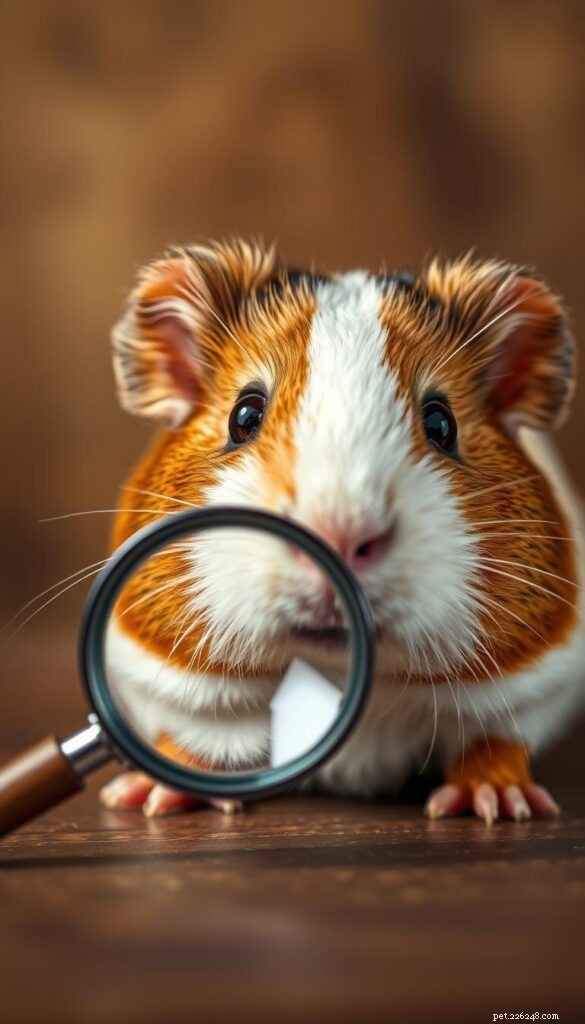
Myth: They’re Color Blind
Calling guinea pigs color blind is incorrect. Studies confirm they recognize blue and yellow hues, which are crucial for locating safe foods. Their limited color range is not blindness but a specialization.
Myth: They’re Deaf
Guinea pigs hear well—up to 50,000 Hz—exceeding human hearing limits. Sudden loud noises can startle them, so keeping their environment quiet is important.
These myths persist because limited color vision can be mistaken for blindness and quiet behavior for deafness. Understanding their true capabilities helps you:
- Select toys in detectable shades.
- Prevent startling noises.
- Build trust through scent recognition.
Evolution and Color Preference
Evolution has fine‑tuned guinea pig visual preferences over millennia. Many owners notice their pets gravitate toward orange‑yellow items, such as a well‑loved striped shirt. This preference likely echoes ancestral instincts to spot edible vegetation.
When Instinct Meets Domestic Life
An orange blanket might trigger memories of sunlit meadows rich in edible plants. Researchers note that wild ancestors relied on yellow‑green detection to find nutritious vegetation, explaining modern preferences for these hues.
| Evolutionary Trait | Modern Behavior | Practical Implication |
|---|---|---|
| Yellow‑green sensitivity | Prefers orange toys | Use yellow food bowls |
| Motion detection | Chases rolling items | Choose moving blue toys |
| Predator awareness | Avoids red objects | Skip crimson bedding |
While texture may also influence preferences, studies placing identical fleece squares in different colors found guinea pigs consistently slept on blue fabrics, suggesting hue matters more than we thought.
Practical Tips for Sensory‑Friendly Care
Building a Sensory‑Friendly Space
Minimize loud sounds such as thunderstorms or vacuum cleaners, which stress guinea pigs. Keep cages away from TVs and busy areas. Soft background music can mask sudden noises and maintain calm.
Choose bedding that absorbs odors without strong perfumes. Paper‑based options work better than cedar shavings, which irritate sensitive noses. Spot‑clean daily and replace materials weekly to prevent overwhelming their keen sense of smell.
| Ideal Habitat Features | Potential Risks |
|---|---|
| Single‑level platforms | Multi‑level cages |
| Blue/yellow hideouts | Red/purple accessories |
| Fleece‑lined areas | Slippery surfaces |
Schedule regular vet checkups to spot early signs of hearing or vision changes. Pair visits with habitat photos for tailored care advice.
Rotate toys in detectable colors to stimulate natural behaviors. A yellow tunnel or blue chew block encourages exploration while respecting their visual strengths. Always place new items at ground level—their depth perception won’t warn them about ledges.
Conclusion
Guinea pigs possess a sophisticated sensory toolkit: dichromatic vision, acute hearing, powerful smell, and whisker‑guided spatial awareness. By aligning their habitat with these strengths—using blue and yellow colors, quiet sounds, and scent‑rich environments—you create a space where curiosity and comfort coexist.
FAQ
Do guinea pigs see the same colors as humans?
No—they have dichromatic vision, perceiving blues and greens more vividly but struggling with reds and pinks. Their eyesight prioritizes movement over fine detail.
How does their vision affect daily behavior?
Limited depth perception and a wide field of view help them spot predators. They rely on movement cues and whiskers to explore new objects and navigate their cage.
Can they hear well compared to other pets?
Yes! Their hearing is highly sensitive. Loud noises like vacuums or barking dogs can stress them. Soft, consistent sounds—like your voice—are comforting. Keep their cage in a quiet area.
Are they truly color blind?
They are not color blind. While their color range is narrower than yours, studies confirm they distinguish blues and yellows. Avoid using red toys, as these may appear dull or gray to them.
Do they rely more on smell than sight?
Absolutely. Their sense of smell helps identify food, recognize owners, and detect danger. Combined with whiskers, they navigate their environment efficiently.
How can I create a sensory‑friendly habitat?
Use soft bedding like Kaytee Clean & Cozy for comfort. Add hideouts and tunnels for exploration. Offer colorful (blue/green) toys and rotate them weekly to stimulate curiosity without overwhelming them.
Do they have a favorite color?
Research suggests they’re drawn to blue and green hues. In the wild, these colors mimic safe vegetation. Try offering leafy greens in a blue bowl—it might make mealtime more enticing!
Are they sensitive to loud noises?
Yes—their hearing evolved to detect subtle sounds in the wild. Sudden noises can startle them. Use a white noise machine or place their cage away from TVs to reduce stress.
- Caring for Jackson's Chameleons: A Complete Guide to Health, Habitat, and Longevity
- Why I Only Own One Dog: A Commitment to My Loyal Companion
- CBD for Dogs: The Complete Guide to Safe Use & Benefits
- Why This Dog's Appetite Outshines Most Humans
- Do Dogs Experience Tinnitus? Understanding Hearing Discomfort in Canines
- Top 10 Cat Breeds Dog Lovers Will Love
- Can Dogs Detect Human Strokes? The Surprising Ability of Canine Companions