

Guinea Pigs and Hamsters: Why They Must Live Separately
Planning to house both guinea pigs and hamsters in the same room? While these cuddly companions may appear compatible at first glance, their distinct biology and behavior patterns demand careful separation. This guide explains the science behind their incompatibility and offers practical tips for keeping each species happy and healthy.
Understanding Species Differences
Guinea pigs and hamsters may share the same family of small mammals, but their social instincts, activity schedules, and dietary needs diverge sharply. Understanding these differences is the first step toward safe and effective care.
Temperament Differences
Guinea pigs are herd animals that thrive on daily interaction with conspecifics. When isolated, they can develop anxiety, depression, and a range of behavioral problems. Hamsters, in contrast, are solitary and territorial. Even a brief encounter with another animal can trigger stress, leading to defensive behaviors such as teeth chattering or retreat.
Dietary Considerations
Guinea pigs require constant access to fresh hay to maintain gut health and must receive vitamin‑C‑rich pellets and vegetables daily. Hamsters store food in cheek pouches and prefer grain blends and protein‑rich seeds; sugary foods can upset their sensitive digestive systems. These opposing feeding habits can create conflict over shared resources.
| Trait | Guinea Pigs | Hamsters |
|---|---|---|
| Social Behavior | Group‑oriented | Solitary |
| Activity Time | Daytime | Nighttime |
| Feeding Habits | Constant grazing | Food hoarding |
These mismatched routines and instincts make shared habitats stressful for both species.
Assessing Space Requirements
Cage Size and Layout
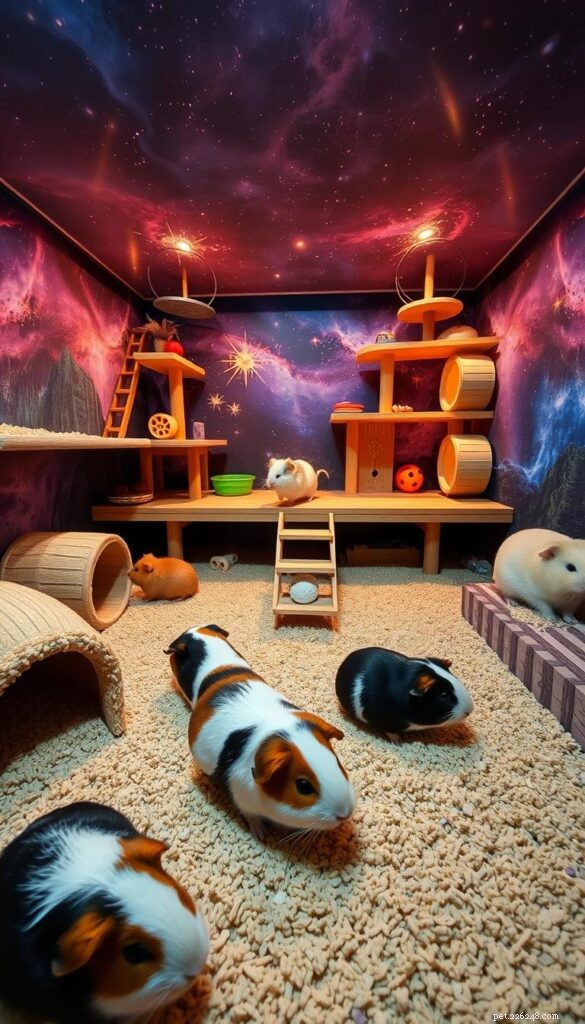
The Humane Society recommends at least 10.5 square feet for two guinea pigs—a space roughly three times larger than a typical hamster enclosure. Guinea pigs need an open floor plan for grazing and group play, whereas hamsters thrive in compact, vertically oriented habitats with tunnels and nesting areas.
Personal Space Needs
Even in large cages, hamsters may perceive a guinea pig as an intruder. Their nocturnal activity can disturb a guinea pig’s daytime rest, while the guinea pig’s constant movement can create anxiety for the hamster. Separate enclosures eliminate these territorial tensions and allow each animal to thrive in its preferred environment.
Nutrition and Feeding Strategies
Guinea Pig Essentials
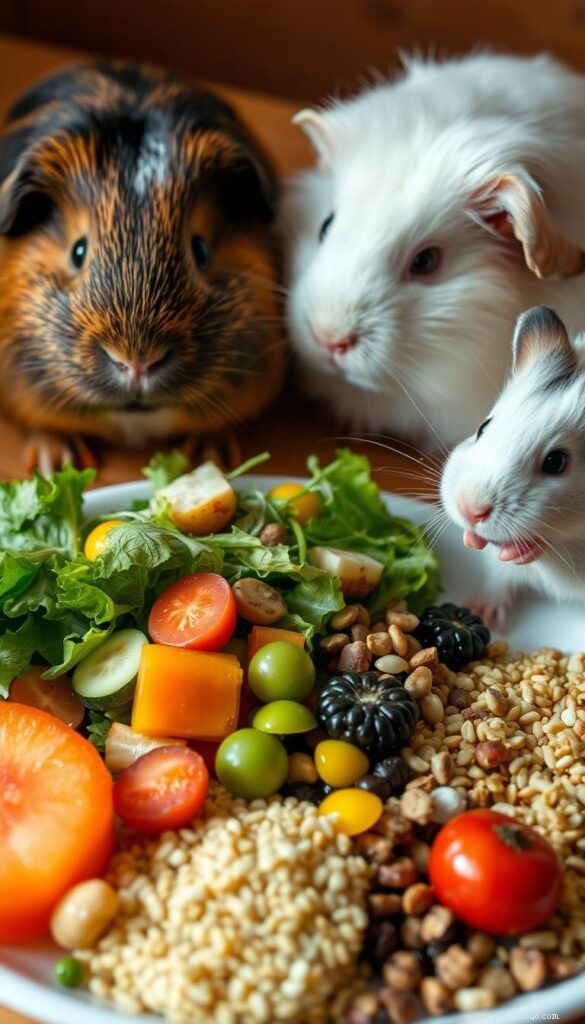
Timothy hay should be available 24/7, supplemented with fresh vegetables like bell peppers, kale, and carrots. Vitamin‑C‑rich pellets (e.g., Oxbow Essentials) complete their diet. Avoid feeding hamsters’ seed mixes to guinea pigs, as the nutritional balance is inappropriate.
Hamster Preferences
Hamsters favor grain blends and protein‑rich seeds (e.g., Kaytee Forti‑Diet). They store food in cheek pouches, making them protective of their stash. Occasional fruit treats are fine, but sugary foods can lead to metabolic issues. Separate feeding stations and scheduled meal times help prevent resource guarding.
Behavioral Dynamics in Shared Spaces
Social vs. Solitary Interaction
Guinea pigs communicate with vocalizations and gentle nudges; hamsters rely on scent marking and subtle body language. A guinea pig’s friendly nudge may be interpreted by a hamster as an intrusion, triggering defensive bites. The mismatch in communication styles can quickly lead to stress or injury.
Sleep Cycle Conflicts
Guinea pigs are diurnal, while hamsters are nocturnal. This opposite rhythm means that each species’ peak activity can disrupt the other’s rest periods, compounding stress.
Safety and Compatibility Concerns
Signs of Stress and Aggression
Watch for changes such as excessive hiding, refusal to eat, teeth chattering, or sudden lunging. One owner recounted, “Our guinea pig approached the hamster’s cage, and the hamster’s bite left us all startled.” Such incidents underscore the risk of accidental injury.
Monitoring and Prevention
Direct interaction between the two species is strongly discouraged. If you must keep them in the same room, use a double‑cage system with a solid divider. According to rodent behavior studies, separate habitats prevent 97% of conflicts. Prevention is always preferable to treatment.
Enrichment and Activity Planning
Species‑Specific Enrichment
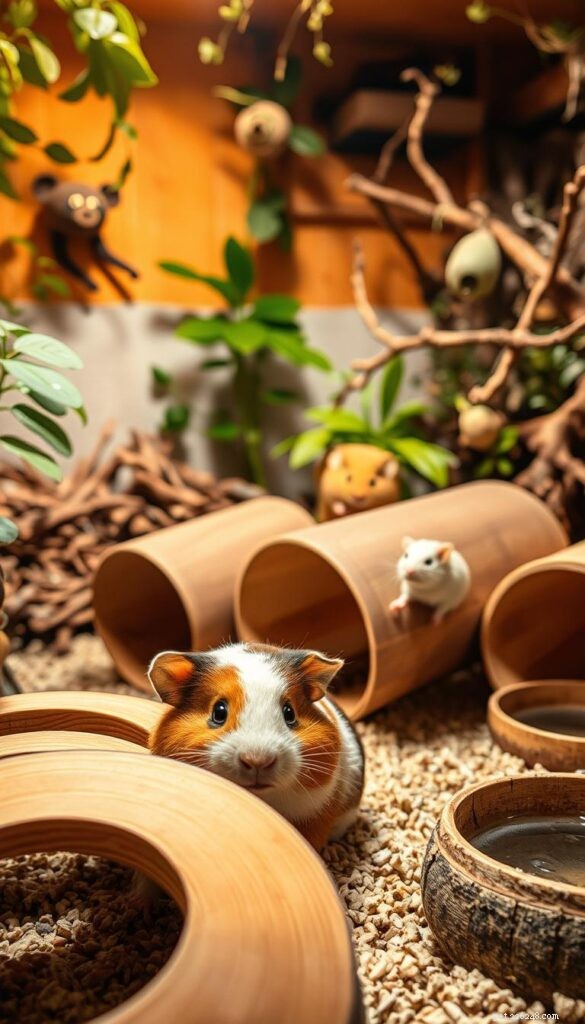
Guinea pigs benefit from floor tunnels, chewable toys, and open play areas. Hamsters enjoy multi‑level platforms, exercise wheels, and vertical tunnels that allow them to climb and burrow without disturbing the guinea pig. Avoid shared toys that could become hazards—for example, paper tubes that a hamster might chew on but a guinea pig could accidentally pull down.
Frequently Asked Questions
Are guinea pigs and hamsters compatible as cage mates?
No. Their social structures and environmental needs are too different for shared housing, leading to stress, aggression, or injury.
What cage setup works best for both animals?
They should never share a single enclosure. Guinea pigs require large, open spaces; hamsters need compact, multi‑level habitats. Separate cages eliminate territorial conflicts.
Can they eat the same type of food?
Both enjoy fresh veggies, but guinea pigs need vitamin‑C‑rich pellets, while hamsters need protein‑heavy seed mixes. Mixing diets can cause nutritional imbalances.
Do they enjoy social interaction with other species?
Guinea pigs are social and bond with their own kind; hamsters are solitary and territorial. Introducing them triggers stress behaviors such as teeth chattering or hiding.
What risks arise from mixing these pets?
Size and temperament differences create safety issues. A guinea pig’s curiosity can provoke a hamster’s bite, leading to injuries during feeding or play.
How can you monitor their interactions safely?
Avoid direct contact. If they share a room, use escape‑proof enclosures placed apart. Observe for stress indicators and consult a veterinarian if unusual behaviors persist.
What enrichment activities suit both species?
Use separate play areas: guinea pigs enjoy tunnels and chew toys; hamsters prefer wheels and climbing structures. Rotate toys weekly to maintain engagement without cross‑species conflict.
- 5 Essential Questions to Evaluate Any Dog Food
- Manx Cat: A Charming, Affectionate Companion for Families
- What Drives You to Start a Pet Business? Profit, Purpose, and Passion
- How Snakes Hear: Debunking Myths About Their Auditory System
- Comprehensive Guide to Caring for a Teddy Guinea Pig
- Cats and COVID-19: What Owners Need to Know
- How to Care for a Pet Tarantula: Housing, Diet, and Safety Tips