

Flamingos: What a Group Is Called and Why They Stand on One Leg
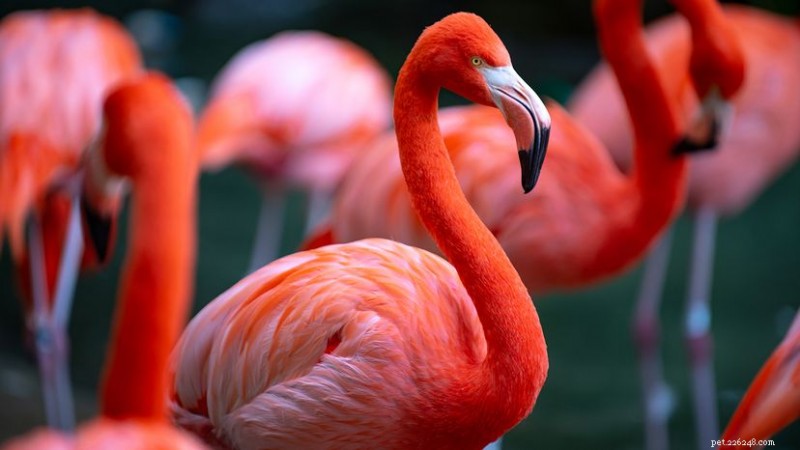
Have you ever watched a cluster of tall pink birds gather by a waterbody and wondered, “What is a group of flamingos called?” The answer is as vivid as the birds themselves: a flamboyance.
Flamingos: Masters of Visual Impact
With their long legs, S‑shaped necks, and plumage ranging from blush to fiery coral, flamingos are the living highlighters of the avian world. Their striking coloration comes from a diet rich in carotenoids—primarily brine shrimp and blue‑green algae—causing chicks that hatch gray to turn the iconic pink over time.
Flamingos have evolved a specialized bill that allows them to sift mud from food. Feeding with their heads upside down, they filter algae and small crustaceans in a motion that resembles underwater vacuuming—efficient, elegant, and often performed in perfect synchrony by the flock.
A Flamboyance of Flamingos
The collective noun “flamboyance” is more than a playful term; it reflects the birds’ dramatic display. Other descriptors such as “colony” or “stand” are also used, but all refer to the same concept: multiple flamingos gathered in one location for nesting, feeding, or migration.
Flamingos are highly social, forming colonies that can reach tens of thousands of individuals. This social structure enhances their ability to locate food, evade predators, and raise chicks successfully. Zoos and wildlife reserves replicate these groupings to maintain the birds’ health and mental well‑being.
Six Species of Flamingos
- Greater Flamingo – Tall, pale, found across Africa, southern Europe, and South Asia.
- Lesser Flamingo – Smaller, more vibrant, common in East Africa and India.
- American Flamingo – The most colorful, native to the Caribbean and parts of South America.
- Chilean Flamingo – Found as far south as Patagonia.
- Andean Flamingo – Resides in the Andes, often at high‑altitude lakes.
- James’s Flamingo – Also native to the Andes, sharing similar high‑altitude habitats.
Whether a stand of Greater Flamingos in Kenya or a flamboyance of Chilean Flamingos in Argentina, the group dynamic remains central to their survival.
Why Flamingos Stand on One Leg
Standing on a single leg is a hallmark of flamingo behavior. One hypothesis suggests this posture conserves energy by allowing the leg muscles to rest. Another theory proposes it helps retain body heat by keeping one leg tucked beneath the body, reducing heat loss in cold water. Some researchers also speculate that it may reduce exposure to waterborne parasites, though this has yet to be conclusively proven.
While other bird species occasionally adopt a similar stance, flamingos are the most iconic example, often seen doing so even while resting or sleeping.
Flamingo Chicks and Parenting
Flamingos lay a single egg on a raised mud mound in shallow water. Parents alternate incubation duties and later feed the chick a nutrient‑rich fluid called crop milk, produced by the lining of the upper digestive tract and rich in fat and protein.
Young flamingos form crèches—groups that provide protection while they grow and learn to forage. During these early weeks, they stay close to adults, mimicking their movements and behaviors.
Unlike many species that hatch nearly independent, flamingo chicks require extensive parental care and time to develop their iconic appearance.
Flamingos Around the World
Flamingos inhabit wetlands, lakes, and lagoons in some of the planet’s most extreme environments. From the saline lakes of East Africa to high Andes lakes in South America and coastal mudflats in the Caribbean, they thrive where few other animals can.
For instance, Lesser Flamingos breed in the scorching, highly saline waters of Lake Natron in Tanzania—a habitat inhospitable to most species. The Andean and James’s Flamingos live at elevations where oxygen is thin and temperatures fluctuate dramatically between day and night.
Flamingos in Culture and Language
The term “flamboyance” encapsulates not only the birds’ appearance but also how humans perceive them—creative, flamboyant, and slightly theatrical. While many animals have their own collective nouns, flamingos are among the few for whom the collective name directly mirrors the bird’s character.
This article was produced with the assistance of AI and subsequently fact‑checked and edited by a HowStuffWorks editor to ensure accuracy and reliability.
- Find the Best Vet in Columbus, OH: Comprehensive Guide
- Top Dog Breeds Loved by Families with Children
- 15 Essential Cat Behaviors Every Owner Should Know
- Abyssinian Cats: Energetic, Intelligent, and Height‑Loving Companions
- How Your Brain Responds to Cute Animal Photos: The Science Behind the Fuzz
- Cats Protection Rehomes Polydactyl Kitten 'Fingle' and His Family in Taunton & Wellington
- 4 Expert Tips to Strengthen Your Dog’s Gut Health