

15 Stunning White Bird Species Spanning Continents
 \n\n
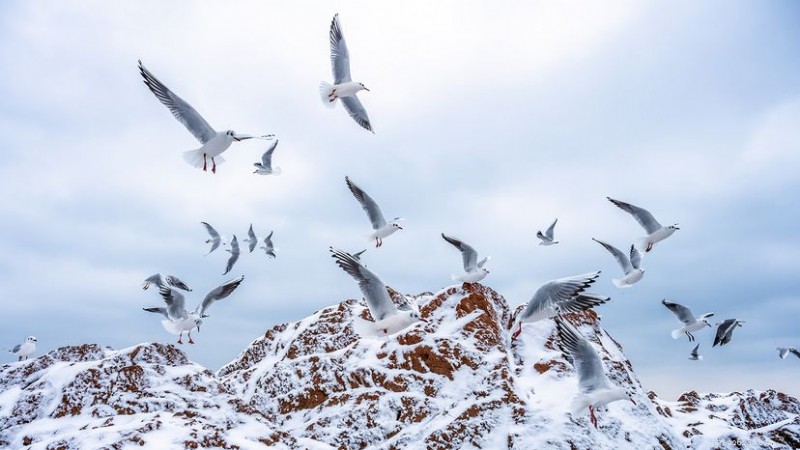
\n\nWhite birds are among nature's most elegant creatures, capturing our imagination whether they glide over tranquil lakes, wade through lush wetlands, or perch in bustling city skylines.
\n\nAcross cultures, the pristine plumage of these species is often associated with hope, purity, and even mystical qualities.
\n\nFrom the snowy owls of Canada to the cattle egrets of Central America, these birds have evolved to thrive in diverse ecosystems, hunting fish, amphibians, berries, or even capitalizing on the movements of large mammals for easy prey.
\n\n1. Snowy Egret
\n\nSnowy egret. Daniela Duncan / Getty Images
\n\nThe snowy egret is celebrated for its immaculate white feathers, striking black legs, and bright yellow feet. These waders frequent wetlands, lakes, and ponds, using their agile footwork to disturb fish and amphibians for feeding.
\n\nDuring breeding season, males develop long, wispy plumes that were once prized in the fashion industry.
\n\n2. Great Egret
\n\nGreat egret. Raimund Linke / Getty Images
\n\nThe great egret is one of the largest egret species, boasting long legs that allow it to wade through shallow waters in search of fish.
\n\nFound across the Americas, Europe, Asia, and Africa, these birds were historically hunted for their feathers. Today they are protected and a common sight in wetlands, frequently captured in nature photography.
\n\n3. Cattle Egret
\n\nCattle egret. japatino / Getty Images
\n\nOriginating in Africa, the cattle egret has expanded its range to Central America, the southern United States, and beyond.
\n\nThese adaptable birds are often seen in fields or near barns, following cattle and other large mammals to snatch insects disturbed from the ground. Unlike other egrets, they typically nest in trees rather than wetlands.
\n\n4. White Cockatoo
\n\nWhite cockatoo. Rafael Ben-Ari / Getty Images
\n\nNative to Australia and surrounding islands, the white cockatoo is a highly intelligent and social parrot. Known for their loud calls and playful antics, these birds are popular as pets, though they demand substantial care and attention.
\n\nTheir striking white plumage, expressive crest, and mimicry of human speech make them a favorite among bird enthusiasts.
\n\n5. Snowy Owl
\n\nSnowy owl. pchoui / Getty Images
\n\nThe snowy owl is a powerful Arctic predator and one of the most recognizable white birds in wildlife photography.
\n\nUnlike most owls, snowy owls are diurnal, often perched on open tundra to scan for small mammals and other birds, all while sporting vivid yellow eyes.
\n\nTheir dense plumage insulates them against freezing temperatures, making them superbly adapted to northern environments.
\n\n6. Seagull
\n\nSeagull. Tara Moore / Getty Images
\n\nSeagulls are ubiquitous along coastlines, lakes, and even urban settings, where they scavenge a varied diet.
\n\nThese opportunistic birds eat everything from fish to human leftovers, showcasing their adaptability and contributing to their global prevalence.
\n\n7. American White Pelican
\n\nAmerican white pelican. Dennis Govoni / Getty Images
\n\nOne of North America's largest flying birds, the American white pelican features a massive wingspan and a distinctive throat pouch.
\n\nUnlike other pelicans, they do not dive for fish; instead, they scoop prey while swimming in shallow waters. They migrate seasonally, gathering in large flocks at lakes and wetlands during summer.
\n\n8. White Ibis
\n\nWhite ibis. Zocha_K / Getty Images
\n\nThe white ibis is a wetland bird common to the southeastern United States, Mexico, and Central America. Its long, curved beak is ideal for probing mud and shallow water for crustaceans and small fish.
\n\nThese birds nest in large colonies and are frequently observed foraging in parks, ponds, and marshes.
\n\n9. Trumpeter Swan
\n\nTrumpeter swan. Stan Tekiela Author / Naturalist / Getty Images
\n\nAs one of the heaviest flying birds, the trumpeter swan is renowned for its impressive size and pristine white plumage. Once nearly extinct, conservation efforts have restored their populations.
\n\nFound in Canada and the northern United States, they are often seen in lakes and wetlands during breeding season.
\n\n10. White Tern
\n\nWhite tern. Darrell Gulin / Getty Images
\n\nNicknamed the “fairy tern,” this delicate seabird thrives in tropical regions, including Hawaii and the South Pacific. Unlike many birds, white terns do not build nests; they lay eggs on bare tree branches.
\n\nTheir pure white color and graceful flight make them a mesmerizing sight over the ocean. For sailors, spotting a white tern signals proximity to land, as they rarely drift far from their take‑off point.
\n\n11. Whooping Crane
\n\nWhooping crane. Diana Robinson Photography / Getty Images
\n\nOne of North America's rarest birds, the whooping crane has made an extraordinary comeback from near extinction. Conservation programs have rebuilt its population, turning it into a symbol of hope for endangered species recovery.
\n\nThese tall birds wade through wetlands in search of amphibians, fish, and insects.
\n\n12. Gyrfalcon
\n\nGyrfalcon. Javier Fernández Sánchez / Getty Images
\n\nThe gyrfalcon, a powerful raptor, is one of the largest falcon species and thrives in Arctic regions. Some individuals are entirely white, blending seamlessly into snowy landscapes while hunting birds and mammals. These formidable hunters have been prized in falconry for centuries.
\n\n13. Eurasian Spoonbill
\n\nEurasian spoonbill. Martin Harvey / Getty Images
\n\nRecognizable by its distinctive spoon‑shaped bill, the Eurasian spoonbill is a wading bird found across Europe, Asia, and Africa.
\n\nThese birds nest in colonies and play a vital role in wetland ecosystems, using their specialized beak to sweep through water and capture small fish and aquatic invertebrates.
\n\n14. Royal Spoonbill
\n\nRoyal spoonbill. Hal Beral / Getty Images
\n\nNative to Australia and New Zealand, the royal spoonbill is known for its large bill and striking white feathers. During breeding season, males develop long head plumes, adding to their dramatic appearance.
\n\nThey are frequently found in shallow wetlands, foraging for fish and crustaceans.
\n\n15. Rock Ptarmigan
\n\nRock ptarmigan. Javier Fernández Sánchez / Getty Images
\n\nA master of camouflage, the rock ptarmigan shifts its plumage from brown in summer to white in winter, allowing it to blend into snowy environments and evade predators.
\n\nThese hardy birds inhabit northern regions, feeding on plants, seeds, and berries.
\n\nWe crafted this article with AI technology and subsequently fact‑checked and edited it by a HowStuffWorks editor.
- The Paradise Flying Snake: A Gliding Marvel of Southeast Asian Forests
- Essential Items for a Dog Crate: Comfort, Safety, and Success
- Optimal Timing for Breeding a Dog During Her Heat Cycle
- Expert Care Guide for the Greenbottle Blue Tarantula (Chromatopelma cyaneopubescens)
- Male vs. Female Sulcata Tortoises: Key Differences Explained
- Can Over‑Affection Harm Your Puppy? A Guide for New Owners
- Do Cats Recognize Human Faces? Insights into Their Perception