

Is Your Bird Exhibiting Hormonal Behavior or Just Acting Oddly?
By Diane Burroughs Published On: Feb 4, 2026
Last updated on: Feb 04, 2026
Hormonal behavior in parrots is normal—just not always obvious. The soft cooing, wing flapping, and focused attention you observe in an adult Sun Conure are classic signs of heightened reproductive drive, especially at eight years old. This is not a mysterious phase but a predictable biological response that can be managed with the right guidance.
The good news: You don’t need to panic or shut your bird down. Instead, channel the excess energy into positive outlets so it doesn’t turn into fixation, frustration, or long‑term behavior problems.
Key Takeaways for Concerned Owners
- Brief hormonal episodes are expected; chronic patterns warrant attention.
- Redirection outperforms suppression for lasting behavioral health.
- Human well‑meaning actions often unintentionally reinforce hormone‑driven behaviors.
Recognizing Hormonal Signals
Typical Displays
- Gentle cooing or murmuring sounds
- Wing flapping without propelling off the perch
- Puffed posture and intense focus on a specific person
Why Smaller Parrots Seem More Dramatic
Smaller species mature quickly and breed more often, keeping their bodies in a near‑constant “ready‑to‑reproduce” state. Consequently, they exhibit hormonal behaviors more frequently than long‑lived species such as macaws.
When Is It Normal?
Expected Occasional Displays
Hormonal displays can occur during particular seasons or contexts. Notably, small parrots may become hormonally primed before one year old, whereas larger species might not mature until ages 7‑8.
When Hormonal Behavior Becomes Problematic
- Daily or prolonged episodes
- Increasing frequency, forming a habit
- Leading to frustration, screaming, nipping, or feather damage
- Failure to self‑regulate; the bird remains keyed in to you, ignoring toys, food, or its environment
Impact of Chronic Hormonal Activity
Persistent hormonal “switched‑on” states can trigger repeated egg‑laying in females and sustained sexual frustration in males. This propels irritability, fixation, and a decline in overall health.
Effective Management Strategies
1. Reward Independent Behavior
- Encourage calm chewing, preening, or relaxed play—natural parrot behaviors.
- Use quiet praise or a small favorite treat to reinforce calm moments.
- If the bird begins sexual begging or mate‑like behavior, disengage calmly and walk away. Behaviors that receive any reaction tend to persist.
2. Channel Excess Energy into Natural Activities
- Provide shreddable toys, chewable wood or palm for small birds; tougher fibers for larger ones.
- Introduce foraging toys or paper‑wrapped treats.
- Offer simple problem‑solving toys to stimulate the mind.
3. Start Inside the Cage
Begin calming activities within the cage; once the bird calms, progress to a play stand or training perch.
What to Avoid
Common Pitfalls
- Rewarding courtship displays with extra attention or closeness.
- Petting under wings, along the back, or near the tail.
- Speaking excitedly or leaning in during the display.
Other Misconceptions
- Assuming the bird will “grow out” of daily behaviors.
- Believing more time alone automatically improves behavior.
Why Proper Management Matters
Hormonal energy does not dissipate on its own. Without proper redirection, the behavior intensifies, leading to self‑sabotage and chronic stress. Positive reinforcement teaches the bird which calm behaviors earn attention, shifting the default response from self‑propelled excitement to self‑regulated calmness.
Using Treats Wisely
Immediate Follow‑Up
Keep a stash of preferred treats handy. Reward settled, grounded moments immediately; walk away during hormonal displays. Treats must serve as feedback, not mandatory bribery.
Clear Learning Signals
- Bird self‑regulates over time.
- Calm behavior becomes the new baseline.
- Hormonal displays lose their payoff.
- Show the desired behavior.
- Consistently reinforce it.
- Let unwanted behaviors fade.
When to Seek Veterinary Care
Behavioral outbursts are data points, not moods. According to 2026 clinical findings by Dr. Rob Marshall and Tailai O’Brien, reproductive hyperactivity is a leading cause of health complaints in pet birds.
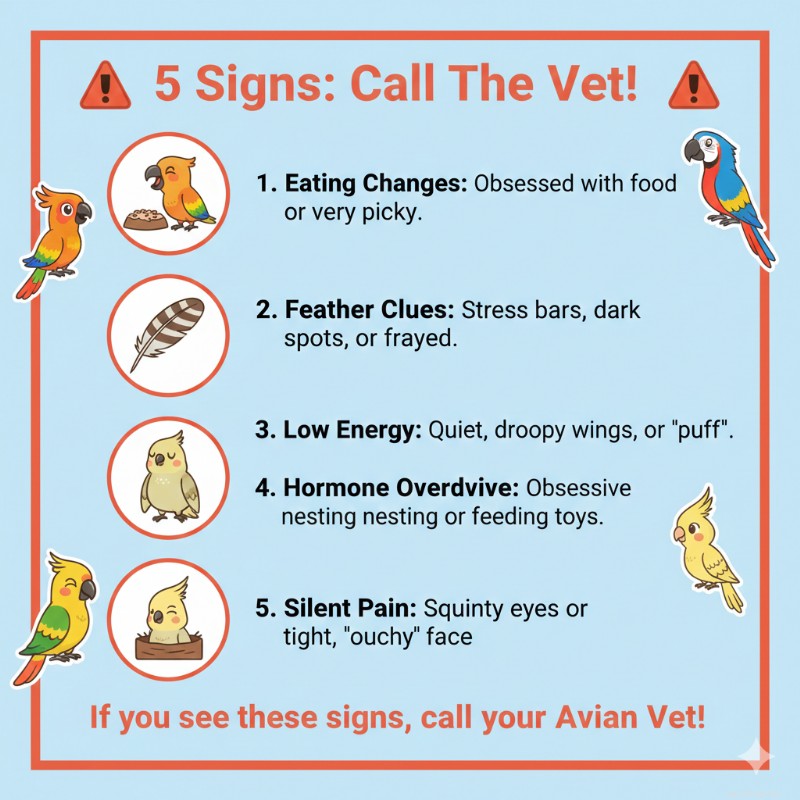
Follow this 5‑point protocol to assess if your bird’s behavior has crossed the Risk Threshold from normal antics to a medical priority:
- Eating Habits: Watch not just whether the bird eats, but whether it becomes obsessive or suddenly picky—often a hormone‑stress sign.
- Feather Condition: Look for stress bars or dark spots—scars indicating past hormonal distress.
- Power Down Signs: A sudden quiet or submissive posture can indicate pain; look for flat feet or drooping wings.
- Hormone‑Driven Behaviors: Nesting or toy‑nurturing behaviors may signal long‑term health issues.
- Silent Pain Indicators: Squinting eyes or a tight face; if your plan stalls after 14 days, physical pain may be the culprit.
Bottom Line
Self‑control is not the bird’s fault. Chronic hormonal behavior rarely resolves on its own and can worsen health. Consistently rewarding calm, independent actions and eliminating reinforcing triggers helps your bird adopt a healthier, more livable routine.
For reference: Burroughs, D. (2026, February 4). Is my bird being hormonal or just acting weird? BirdSupplies.com. https://birdsupplies.com/is-my-bird-being-hormonal-or-just-acting-weird/
Related Posts Bird Owners Often Find Helpful
- Is my bird being hormonal or just acting weird?
- Bird nesting behavior: clear signs it’s hormonal
- Hormonal bird behavior vs normal—what owners misread
- Your bird laid an egg: what’s normal and what’s not
- Sudden biting in birds: hormone season or real issue?
- Mirrors and bird hormones: why obsession escalates
References
- Male hyper-sexual behavior and female ovarian hyperactivity [Video]. YouTube. https://www.youtube.com/watch?v=14xD_OUrZNA
- Do Cats Consume Flies? Health Impacts and Safety Considerations
- 834 Unique Cat Names to Perfectly Name Your Feline
- Akbash Dog Breed: History, Traits, and Care Guide
- Comprehensive Guide to Your Cat’s Annual Health Check
- Why Australian Shepherds Love Digging: The Surprising Reasons
- Vince, Hampshire’s Unlucky Rescue Cat, Seeks a Forever Home
- Is Pumpkin Safe for Dogs? Expert Nutrition Tips