

Ragdoll Cats: Traits, History, and Personality Insights
Want to know more about Ragdoll cats? They’re a stunning breed with some clear defining characteristics. Although, remember that while the physical characteristics of a cat will determine whether it is a purebred Ragdoll, each cat is an individual when it comes to personality. So while these Ragdoll cat facts will apply to most Ragdolls, they aren’t universal when it comes to their nature or personality.
Do you know how Ragdoll cats got their name? Ragdolls earned their unusual name because these cats will go limp and relaxed when they are picked up and held. This is just one delightful attribute of these beautiful, social cats. Here are some more facts about Ragdoll cats that you might like to know if you are thinking about adopting one!
Ragdoll Cat Colors
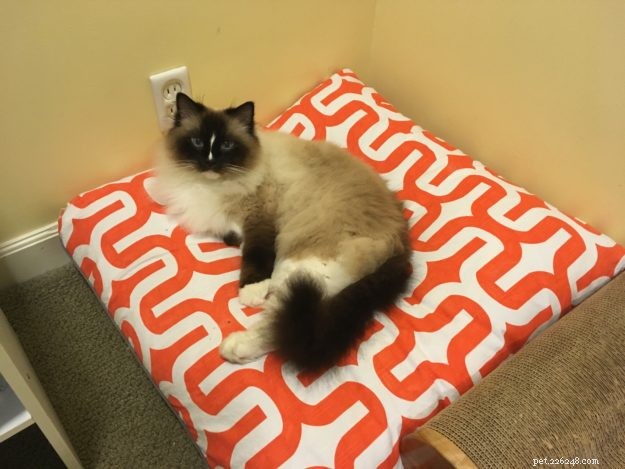
Ragdoll cats have a very distinct look, with bright blue eyes, a semi-long coat, and fairly large bodies. Their typical coloring is a lighter-colored body with darker fur on the face, ears, tail, and legs. Ragdolls come in three different patterns:
- Colorpoint Ragdolls
- Mitted Ragdolls
- Bicolor Ragdolls (Van, True, Mid High White, High Mitted)
Ragdolls’ silky coats are shorter on the face, turn into a ruff around the neck, shorten again on the body, and end in a plume-like tail. Their fur can come in many different colors:
- Seal
- Blue
- Lilac
- Chocolate
- Cream
- Tortie
- Mink
- Solid
- Red or flame
Ragdoll kittens are born pure white, with the color and pattern developing over the first few weeks of their life. Distinctions between the purity of certain colors or patterns only matters if you want a Ragdoll for the show-ring. Otherwise, these cats all have the same mild, loving personality regardless of coloring.
Ragdoll Blue Eyes
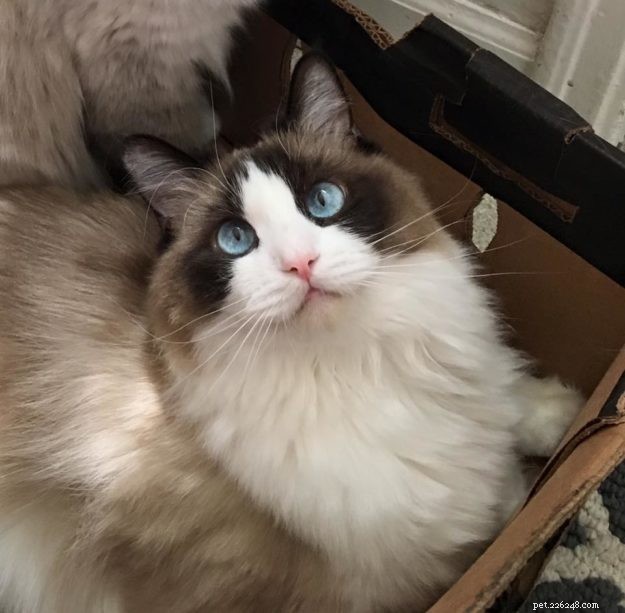
All purebred Ragdoll cats will have bright blue eyes – it’s considered one of the defining characteristics of the breed. Mixed breed Ragdoll cats may have different colored eyes, including dark blue, green, or gold.
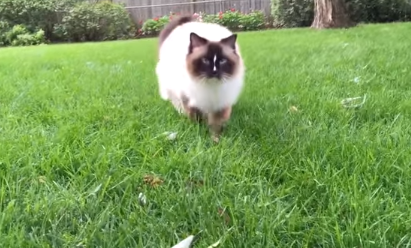 Ragdoll cats can make great show cats or simply great companions. They are beautiful, docile, and well suited to family life. Click To Tweet
Ragdoll Cat Size and Build
Ragdolls continue to grow and their coat coloring continues to develop until they are about three or four years old. Female Ragdolls usually weigh around 10-15 pounds, and male Ragdolls can weigh more than 20 pounds—they are some of the largest domesticated cats! According to the Cat Fanciers Association breed standard, Ragdolls who are suitable for show should have a large head in a modified wedge shape with a gently rounded muzzle. Their eyes are bright blue ovals, and their medium-sized ears should tilt forward and round at the tips. Their bodies are solid and heavy-boned, with hind legs that are longer than their front legs. Their paws are round with fur tufts, and their tail should be fully furred.
Ragdoll Cat Personality
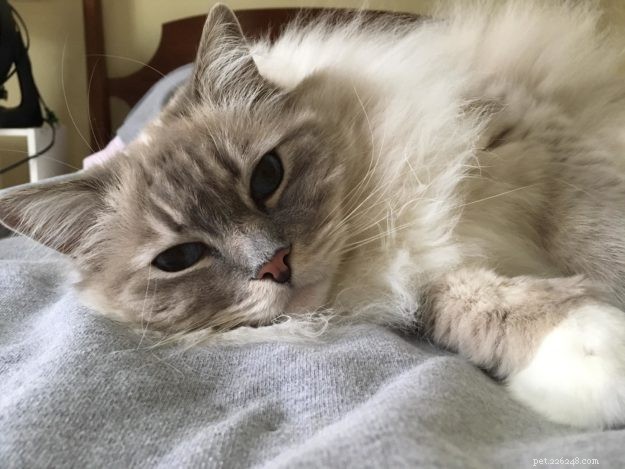
As previously mentioned, Ragdolls are known for relaxing into the arms of someone who holds them—even if they are held on their backs like a baby. They have a love for their owners usually associated with dogs—they like to greet them at the door, trail them around the house, and snuggle with them whenever they sit down.
Though Ragdolls are known for being docile, that doesn’t mean they don’t like to play. Ragdolls enjoy being a part of family activities and playing with a variety of puzzles and toys. Some owners have even had success training them to “fetch” toys. They learn quickly and respond well to praise and treats, so they can actually pick up on a variety of tricks or be trained to exhibit good behaviors and stop unwanted ones.
Ragdolls make especially good pets for families with children because they are so social, yet relaxed. They rarely extend their claws during playtime, and they will tolerate activities like being dressed up or incorporated in a child’s game of “house”!
Ragdolls generally get along with dogs as well—although introductions to both children and other pets should be thoughtful and controlled. Teach children how to properly hold a Ragdoll (one arm under the front legs and the other supporting the hind legs), and give pets plenty of time to get used to each other before giving them the run of the house together.
Ragdolls – Quiet by Nature
Ragdoll cats are generally quite a quiet breed by nature, although remember not all cats are the same. While this has its perks – especially if you don’t want a cat that makes a lot of noise – it can have its downsides too.
Some Ragdoll cats may be quiet even if they’re in pain or distress. It’s important you monitor the behavior of your cat if they’re normally quiet, and look out for any pattern changes, such as using the litter tray more often.
Ragdolls – Water Lovers?
While many cat breeds don’t like water, a lot of Ragdoll cats actually love it. If you buy a Ragdoll cat you might find that you have to shoo them out of the shower, and if you own a pool then they might enjoy some supervised swimming sessions. Again, not all cats are the same, but Ragdolls are generally much more fond of water than other breeds of cats.
Not ALL Ragdolls are Floppy or Snugglers
Not to labor the point, but while Ragdoll cats are generally known to be friendly, snuggly cats that go floppy when you pick them up, that isn’t guaranteed. Every cat is an individual and should be loved for its own personality.
If you only want a Ragdoll cat that has these personality traits, then you should consider looking into a rescue organization to find an older cat whose personality has developed, so you know that the cat behaves in this way. If you’re buying a kitten from a breeder then you can get information about the parent cats, which will help, but be prepared to love your cat even if they develop a more aloof personality.
Where to Find a Ragdoll Cat for Sale
There are a few different places you can look to buy a Ragdoll cat:
- Rescue Organizations
- Breeders
- Websites like Craigslist or Petfinder
With all of these places, it is important to ask the right questions to make sure you are getting a healthy cat with all of the correct documentation. A Ragdoll cat price can vary depending on where you buy the cat, as well as what expenses the breeder or the previous owner has already taken care of (i.e. vaccinations or other veterinary visits). Ragdoll cats can make great show cats or simply great companions. They are beautiful, docile, and well suited to family life. To start the process of bringing a Ragdoll cat into your home, give a breeder or organization a call to start asking about their available Ragdolls and discussing a timeline!
FAQs
How to identify a Ragdoll cat?
Purebred Ragdoll cats are normally larger cats with a medium-long coat and bright blue eyes. They have a large head with a gently-rounded muzzle, and a solid body with long hind legs. Ragdoll cats come in a variety of patterns and colors.
They are generally docile, friendly cats who will go floppy when picked up (hence the name of this website!). They are social, and will often greet their owners at the door and follow them around the room.
Do Ragdoll cats have health problems?
Ragdoll cats don’t have many health problems that are specific to the breed, although they can be more prone to a heart condition called hypertrophic cardiomyopathy. This is a heart disease that weakens the pulmonary muscles and can lead to heart failure if left untreated.
Ragdoll cats have a medium-long coat that needs regular grooming with a comb, especially when they are shedding, otherwise, it can get matted which can lead to skin conditions if left untreated.
Do Ragdolls get more affectionate with age?
Every cat is different, but Ragdoll cats can get more affectionate with age. During their early kitten years they will be more inquisitive and playful, although they don’t lose that sense of play as they get older either – they’re a breed that normally likes to have fun and play with toys. Ragdoll cats may get more affectionate as they get used to their owner more too.
Are Ragdoll cats friendly?
One of the characteristics of Ragdoll cats is that they are generally a friendly, social cat. They will enjoy time spent playing with their owner and will follow them and snuggle up to them when they can.
What is a Ragdoll cat’s personality?
Ragdoll cats have a tendency to be gentle and calm, often compared to dogs (sometimes called a puppy cat) for the affection and loyalty they show their owners. They are smart cats, often in tune with the emotions of their owner, and they can be very loving and friendly, known to be lap cats that love cuddles.
Why are Ragdoll cats so friendly?
Because the Ragdoll breed has Sphynx-like roots, they are genetically predisposed to being calm and social. Being friendly is literally in their genes! Ann Baker was the person who first bred Ragdoll cats in Riverside, California in the 1960s, carefully selecting felines that were larger, docile and would go limp to create a friendly and calm breed from her longhaired cat Josephine.
What other questions do you have about the Ragdoll cat breed? What do you love best about Ragdolls? Related reading on Ragdolls: Why Is My Cat Sneezing?Ragdoll Cats – EVERYTHING You Need to Know about Ragdoll Cats
- Pet Behavior
- Pet Breeds
- Pet Names
- Pet Adoption
- Pet Training
- Cat Stories
- Pet Health
- Adorable Pets
- Cats
- 12 Surprising Facts About Ragdoll Cats You Should Know
- Ragdoll Cat Colors: A Comprehensive Guide to Their Elegant Patterns
- Everything You Need to Know About Ragdoll Cats
- The Distinctive Appearance of Ragdoll Cats: What to Expect
- Red (Flame Point) Ragdoll Cats: Colors, Care, and CFA Standards
- Discover 11 Adorable Ragdoll Cats: Stunning Photos & Loving Profiles
- Ragdoll Cats: The Ultimate Guide to Their Loving, Lax Personality