

How Cats Communicate: Body Language, Scent, and Vocal Cues
Cat behaviour experts help you understand cat language
Owners often engage in a dialogue with their pets, replying to a meow with a reassuring promise or soothing a purr with a gentle chin scratch. Yet the question remains: do cats converse with one another the same way we do?
Clinical Animal Behaviourist Daniel Warren‑Cummings has spent decades decoding feline communication, offering insights that reveal how cats truly talk to each other.
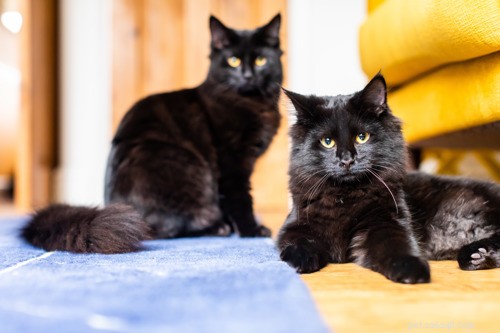
Do cats speak to each other?
It’s rare for cats to use meows and other vocalisations to talk to one another. Domestic cats descend from the solitary African wildcat, so they haven’t evolved the same social vocal repertoire as dogs or humans.
Instead, cats rely on subtle body language and scent cues to communicate. This silent system lets them convey intent at a safe distance—and scent marking can even bridge gaps of several miles.
Pet cats typically meow only to communicate with humans. They’ve learned that we respond to meows with food, attention, or affection.
1. Body language
- Posture. Cats communicate a wealth of information through their body position. A crouched stance that makes the cat appear smaller signals anxiety, while an arched back with puffed fur indicates threat. Learn how to read your cat’s body language.
- Ears, whiskers, and eyes. Though feline facial expressions differ from ours, the orientation of ears, the shape of whiskers, and eye contact all provide clues to a cat’s mood. Refer to our body‑language guide for deeper insights.
- Tail position. A tail held upright conveys confidence and happiness; a tucked or flicking tail can signal fear or stress. Explore tail meanings.
2. Scent
Cats possess a highly refined sense of smell, far superior to humans. The vomeronasal organ on the roof of their mouth lets them detect pheromones—chemical signals invisible to us. When a cat opens its mouth slightly, curling the lips—known as the Flehmen response—it actively samples these pheromones.
- Cheek rubbing. Cheek glands produce pheromones; rubbing cheeks on objects deposits these scents, marking territory and signalling familiarity.
- Scratching. Scent glands beneath the toes release pheromones when a cat scratches, marking safe zones and reinforcing territorial boundaries.
- Spraying. Urine marking serves multiple purposes: territory delineation, mate attraction, or a sign of stress. Learn more about spraying.
3. Touch and grooming
While cats generally avoid close contact, bonded individuals may engage in:
- Rubbing against one another
- Touching noses
- Intertwining tails
- Grooming each other
- Sleeping in close proximity
These behaviours signal trust and shared safety, transferring pheromones that mark each other as friendly. If you observe such interactions, it’s a strong indicator that your cats are friends.
4. Vocalisation
While vocal communication between adult cats is uncommon, certain situations do elicit sound:
- Mother‑kitten bonding. Soft mews, chirrups, and trills facilitate early bonding and communication.
- Mating behaviour. Unneutered males and females may yowl to attract mates.
- Conflict. A hiss or growl warns an intruder to back off; failure to comply can lead to confrontation.
How do mother cats communicate with their kittens?
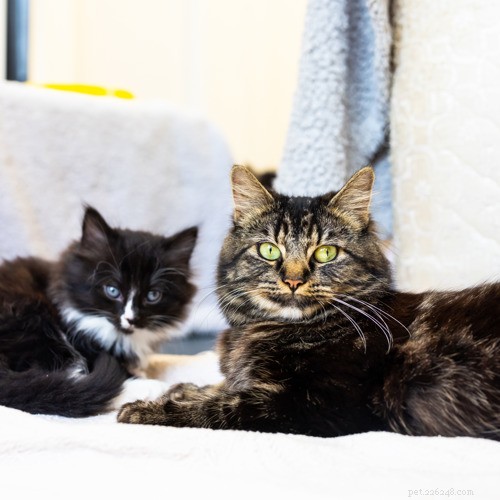
Mother cats and kittens use two primary methods:
- Vocalisation. Kittens mew for attention; mothers respond with chirrups and trills. Once kittens mature, vocal exchanges become rare.
- Scent. Both release pheromones that help them recognise one another and gauge emotional states. Kittens can even identify their preferred teat by scent alone.
For more on cat pregnancy and kitten care, click here.
Do cats understand when other cats meow?
Cats may respond to specific sounds from other felines, such as:
- Mate calling. An unneutered cat hearing another’s yowl may seek out the source for mating.
- Hissing or growling. This is a clear cue to back off; some cats respect the warning, others may stand their ground, potentially leading to conflict.
- Mother‑kitten communication. Mum cats and their kittens understand each other’s chirrups, ensuring close companionship.
Outside these scenarios, cats seldom vocalise to one another.
Why is my cat meowing at my other cat?
Neutered cats meowing at each other often signals discord. Ensure each cat has its own space; confinement can precipitate aggression. Find out how to help cats get along.
Unneutered cats may meow to court. If breeding is unwanted, separate unneutered cats until neutering is performed. Remember, even related cats can mate.
Can cats communicate telepathically?
No scientific evidence supports telepathic communication in cats or any other animal. Instead, cats rely on body language and scent marking to convey messages without sound.
- Pet Behavior
- Pet Breeds
- Pet Names
- Pet Adoption
- Pet Training
- Cat Stories
- Pet Health
- Adorable Pets
- Cats
- Why Cats Close Their Eyes When Petting: The Science Behind Their Relaxed Response
- Craigslist Dog Listings: Responsible Trading & Adoption Opportunities
- Create a Stress‑Free Home for Your Cat: Meet Their Environmental Needs to Prevent Urinary Problems
- Sphynx Cat: Characteristics, Care, and Family Compatibility
- Moby: The Heartwarming Story of a Rescued Ragdoll Cat
- Find Out Which Classic TV Pet Matches Your Zodiac Sign
- Explore 35 Duck Species Native to Maine – Illustrated Guide