

Cold Therapy Revives Severely Ill Amphibians: Bronx Zoo Observations
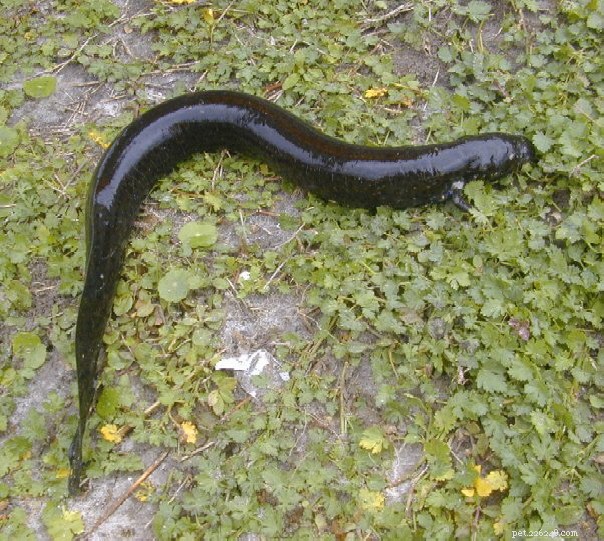 During my years with the Bronx Zoo, I have twice observed cold temperatures to revive salamanders (a Hellbender and a Greater Siren, please see photo) that seemed, by external appearances, to be quite dead. A recent paper caused me to think back on these events, and to other examples of low temperatures being used to “treat” ailing Axolotls, Leopard Frogs and other amphibians …I would greatly appreciate your own observations and thoughts on this topic.
Cold Tolerant Amphibians
Many amphibians are well-adapted to surprisingly low temperatures. On Long Island, NY, Eastern Tiger Salamanders may migrate to breeding ponds in February, and Spotted and Alpine Salamanders will cross snow for the same purpose. Wood Frogs occur within the Arctic Circle, and I’ve found Gray Tree Frogs hibernating beneath a mere 2” of leaf litter in NYC. Several Fire Salamanders under my care remained active at 38 F.
Early Experience with Cold Treatments
Back when I began keeping amphibians, little was known about treating their ailments. As an eager 12-year-old “working” (largely without pay, other than an occasional slice of pizza!) for an animal importer in NYC, I was frustrated by the losses common in shipments of newts and frogs.
Calls to the Bronx Zoo and American Museum of Natural History were (uncharacteristically) not very productive. I then contacted Wards and Carolina Biological, whose biological supply catalogs I had drooled over for years. A kindly soul took the time to put me in touch with a lab that housed Leopard Frogs. I learned that when bacterial diseases (“red leg”) struck, the frogs were refrigerated at 36-40 F for varying periods. Chilled frogs often survived, while those kept a room temperature perished. Neither my boss nor my mother appreciated the sickly amphibians stored in their refrigerators that followed this revelation, but both showed patience that I remain grateful for today!
Recent Experiences
The salamanders I mentioned as being “brought back to life” by the cold certainly did appear to be dead. I believe the Hellbender went on to live for years after its “near-death experience”.
Other interesting experiences have involved Mexican Axolotls. An individual in my collection became bloated and was unable to submerge. A veterinarian who worked with me at the Bronx Zoo prescribed Itraconizole and other medications, but the infection proved resistant to all. I refrigerated the animal at 40 F, whereupon the swelling abated. I removed her for feeding once weekly, and left her out for 2 days following. The swelling (gas from bacterial action) would recur after 2 days at room temperature. A friend maintained an Axolotl under similar conditions for several months.
I also had some success while treating 100+ American Bullfrog tadpoles that had been stranded when their pond was drained. Although most suffered severe abrasions, many recovered after being held at 40 F for several weeks. They were initially treated with Methylene Blue as well; please see article below.
Conflicting Results: Cold Hinders Recovery
However, cool temperatures are not the answer to every amphibian health issue. My veterinarian co-workers sometimes suggest keeping medicated animals at optimal temperatures for normal activity, the theory being that the immune system will function best under these conditions. There may be a fine line, especially where cold-adapted species are concerned. Perhaps certain micro-organisms do not cope well with low temperatures, and can be more easily killed by amphibian immune systems when the hosts are chilled.
In one study, mortalities increased when Australian Barred Frogs (Mixophys fasciolatus) suffering from Chytridiomycosis were chilled to 62 F. And keeping American Bullfrogs at 38 F was found not to affect the survival of 4 species of harmful bacteria, but it did impede the frogs’ abilities to fight off infections. Each species and health problem must be evaluated individually…please write in to discuss specific situations.
Observation: Snapping Turtle in February
 Slightly off-topic: just last week (February 17, 2012) I came across a large male Common Snapping Turtle who was out and about in a small woodland pool in northern New Jersey. While this species is perhaps the most cold-tolerant of all turtles, I’ve not seen one active this early in the year. As you can see from the photo, he tried to respond to the indignity of being photographed in true snapper fashion, but was too slow to scare my intrepid little hiking partner (please see photo).
- Understanding and Managing Gas Bubble Disease in Aquatic Amphibians
- Amphibian Behavior & Natural History: Highlights from Current Field Research
- Optimal Shelter Placement for Reptiles & Amphibians: A Practical Guide
- 2010 Amphibian Breakthroughs: New Species, Revived Extinct Finds & Insightful Discoveries – Part 1
- Veterinary Care for Emperor Scorpions: Challenges & Emerging Treatments
- 2012's Newly Discovered Reptile & Amphibian Species—Snakes, Frogs, and Lizards
- Explore Frog Facts, Natural History & Behavior: Your Expert Guide to Amphibian Pets