

Inside the Life of the Terrestrial Hermit Crab: From Ocean Plankton to Popular Pet
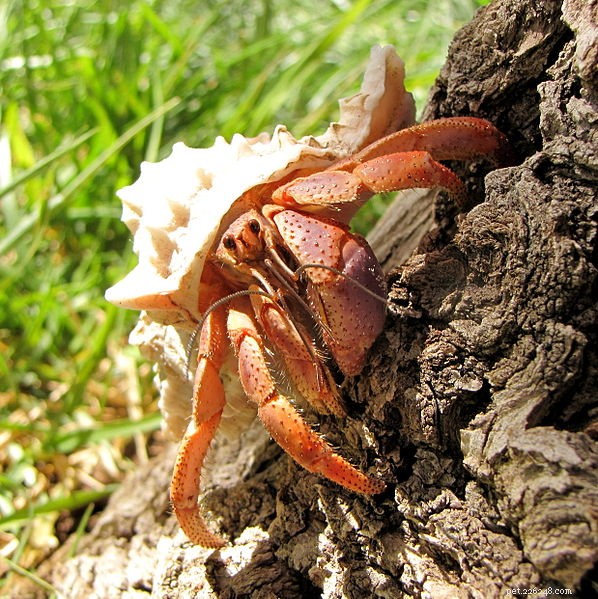 The Purple-Pincher Hermit Crab (Coenobita clypeatus, a/k/a Terrestrial Hermit Crab), is so commonly available that owners are often surprised to learn that the droll little crustaceans in their terrariums have quite unusual histories – they began life as microscopic plankton floating about in the ocean!
Mating
The species most commonly seen in the pet trade ranges throughout the Caribbean, as far north as Florida and Bermuda. At mating time, both sexes emerge partially from their shells so that the female can receive the male’s sperm on her gonophores – unique organs located on her 4th pair of legs. She then remains on land carrying her fertilized eggs for a month or so before heading to the sea.
In most populations, all gravid (egg-bearing) females march seaward at the same time, resulting in quite a spectacle. This may be an extensive trip, as they have been found living on hills over 3,000 feet high!
Ocean-Going Larvae
Upon reaching the shore, the female Hermit Crabs enter the water and the eggs burst open immediately. The larvae, termed zoea, look nothing at all like crabs. They are invisible to the naked eye, and become part of the plankton, swirling about the sea with billions of other such creatures for 2 months or so. During that time, they go through many changes in appearance and may be carried far away from their hatching site, but most are consumed by other animals.
Those that survive enter the megalopa (final larval) stage. The megalopa live on both land and in shallow water for about 1 month, then molt, take on the adult appearance, and leave the sea for good. Amazingly, most young crabs wind up in the same area where they began life – although how this happens after 2 months at the mercy of ocean currents is difficult to understand.
A Long-Lived Pet, if….
Hermit Crabs are often sold as “trouble-free” pets, but actually they have very specific needs which must be met if they are to live out their 20+ year life spans. At molting time, for instance, the crabs need sea water, a substrate in which they can burrow, and the ability to avoid others lest they be consumed while the new exoskeleton is hardening. Please write in for care details.
A Crustacean Behemoth
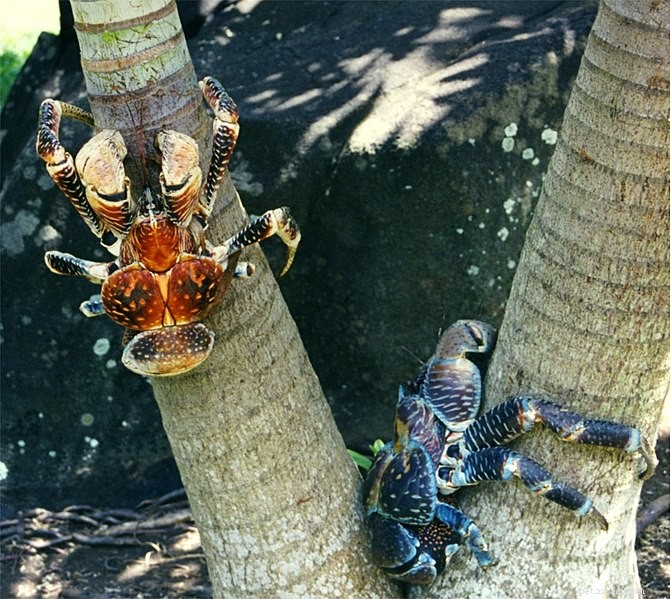 I had the good fortune of caring for the Terrestrial Hermit Crab’s enormous relative, the famed 10-pound-plus Coconut Crab (Birgus latro). Please look for my future article on these largest of all terrestrial invertebrates.
- Top Quiet Pet Birds for Low‑Noise Homes
- Pet Hermit Crab Care Guide 2022: Expert Tips for Healthy, Happy Crabs
- Navigating Grief: How to Cope After Losing Your Beloved Pet
- How to Identify Molting Hermit Crabs: Signs & Tips
- Terrestrial Hermit Crab Care: Why Saltwater Is Essential
- Hermit Crab Care: Expert Guide to Coconut Crabs & Other Species
- Inside the World of Toucans: Colorful Birds of the Tropical Canopy