

The Chuckwalla: A Resilient Desert Lizard – Part 2
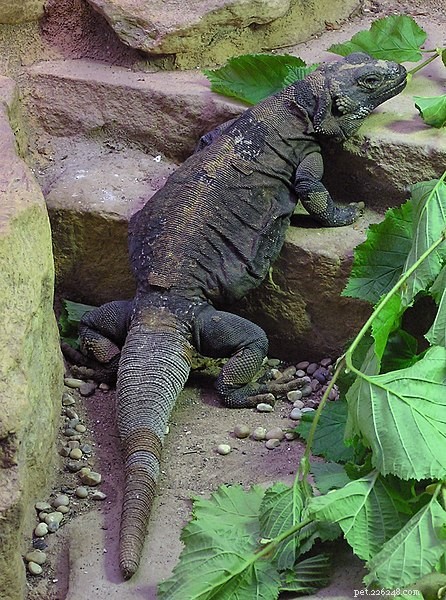 Please see Part I of this article for more on the natural history of North America’s second largest lizard, the Chuckwalla (Sauromalus obesus).
Status in the Wild
Population levels appear stable as their preferred habitat is largely unsuitable for development. The species S. varius, however, is limited in distribution to 3 islands in the Gulf of California and is listed on CITES Appendix I.
Reproduction
Mating takes place in May-June, with 5-16 eggs being laid (buried in the sand) in June-August. In the wild, females usually breed every other year, but captives may lay a clutch yearly.
Diet, Natural and Captive
Chuckwallas are largely herbivorous, consuming the leaves, buds, flowers and fruits of desert plants. Beetles, ants, caterpillars, spiders and other invertebrates are occasionally taken. In common with similar lizards, juveniles consume somewhat more invertebrate prey than do adults.
Captives fare best on a varied diet of kale, collard greens, turnip greens, bok choy, romaine, carrots, yams, peas, beans and seasonally available vegetables, along with occasional feedings of crickets, mealworms, beetles and other insects.
I’ve found dandelion flowers to be a great favorite, and usually mix some soaked Tortoise Pellets into the salad as well.
A Unique Defense
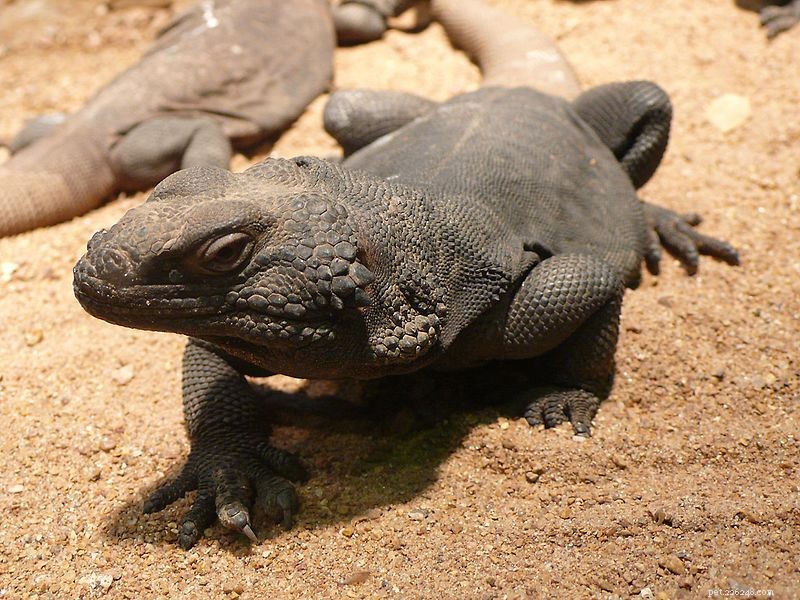 Chuckwallas spend a good deal of time basking on rocks to achieve their preferred body temperature of 100 F.
They rarely forage far from a rock pile, into which they retreat when threatened. Once secure within a crevice, the Chuckwalla gulps air and inflates its body, thereby wedging itself tightly against the rocks. Certain Native American peoples utilized the Chuckwalla as food, and extracted it from the rocks by piercing the body with a sharp stick to deflate the lungs.
I’ll cover the care of these most interesting lizards in the future.
- The Chuckwalla: A Reliable, Low-Maintenance Companion for Desert Terrariums
- The Ultimate Guide to Selecting the Perfect Substrate for Reptiles, Amphibians & Invertebrates – Part 1
- Choosing the Ideal Substrate for Reptiles, Amphibians & Invertebrates: Expert Guide – Part 2
- Keeled Box Turtle (Pyxidea mouhotii): A Resilient Species in Urgent Need of Captive Breeding
- Keeled Box Turtle: Conservation & Captive Breeding Strategies – Part 2
- Top 10 Steps to Launch a Successful Herpetology Career – Part 1
- 10 Proven Steps to Launch a Career in Herpetology – Part 2