

The Essential Role of Houseflies and Maggots in Reptile, Amphibian, and Invertebrate Nutrition
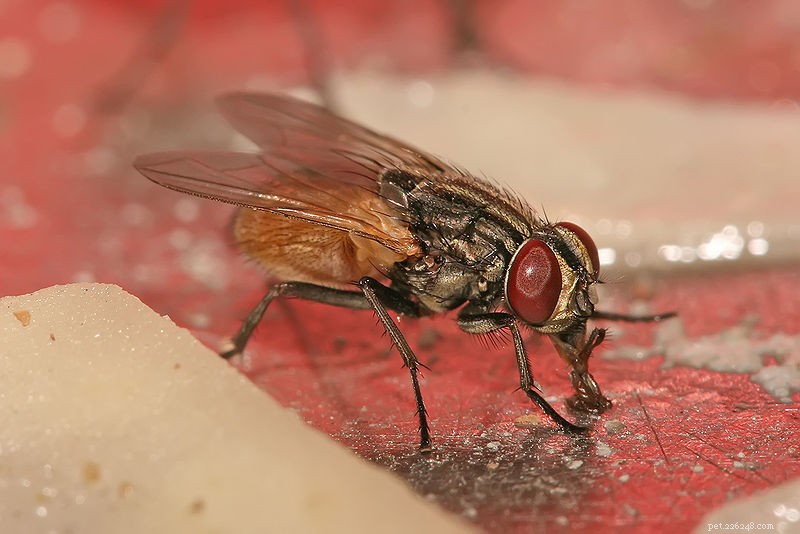 The world’s 250,000+ fly species figure importantly in the diets of a wide range of smaller creatures…this makes sense, as approximately 1 in every 10 animal species is a fly!
My first attempt at culturing Houseflies began with a fish-baited jar and ended with a house full of buzzing flies and an enraged mother! I quickly learned to chill the little beasts before using them, and was soon happily involved in fly-farming (I fed them moist dog biscuits, evaporated milk and orange juice, instead of the less-agreeable foods they preferred!).
Food and Exercise in One
Houseflies can be a vital source of dietary variety for smaller herps that need soft bodied prey. They are especially valuable to those keeping species that refuse other invertebrates (i.e. most treefrogs rarely take earthworms).
I have found offering flies to be the absolute best way of inducing activity and hunting behavior. Treefrogs and arboreal lizards (Anoles, Day Geckos, Chameleons) in particular go wild when presented with Houseflies…they search and chase about as long as there is a fly left in their enclosures. Even the notoriously sedentary Red-Eyed Treefrog will surprise you with its reactions.
Houseflies are also a great food item for Mantids and Orb-Weaving Spiders, while Scorpions and small Tarantulas will readily accept maggots.
Maggots and Other Flies
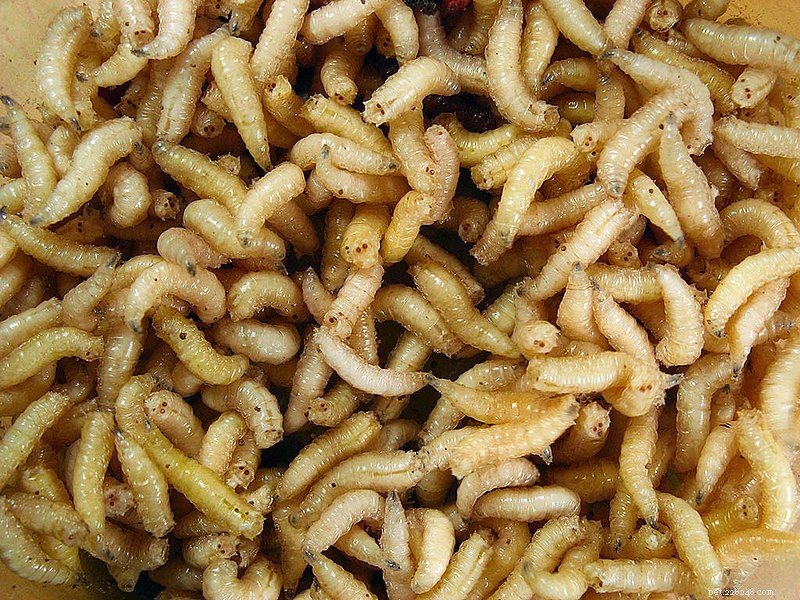
Housefly larvae, or maggots, are eaten with gusto by terrestrial salamanders, frogs, lizards and turtles. They are also worth trying on hard-to-feed serpents such as Ring-Necked, Green, Worm and DeKay’s Snakes.
The larger Blow and Bottleflies (Calliphoridae) are also useful, although their larvae are quite thick-skinned and rejected by some herps. Hover Flies (Syrphidae) may be collected by sweeping a net through wildflowers. You’ll need to remove bees that are incidentally caught, however (to complicate matters, many Hover Flies are bee mimics!).
Disease Concerns: Lab-Raised Flies
Although it would seem to “make sense” that Houseflies might pass on diseases to animals that consume them, I’ve not run across such. However, Houseflies, Bottleflies and Blowflies do pose a definite human health hazard so, despite my early experiences, I urge the use of commercially-raised flies only.
Internet-based breeders sell cultures of Houseflies and Bottleflies, along with rearing food and medium. There are even flightless strains available…these are easier to handle, but do not provide the hunting opportunities offered by those able to buzz about. Bait stores sometimes carry maggots, sold as “spikes”.
Freeze Dried Flies
Those not up to fly-rearing can still reap their benefits. Zoo Med Anole Food contains lab-raised flies (use in nectar or feed as is to Newts and Clawed Frogs).
Quick Fly Facts
 Most of the 250,000+ fly species are not pests but rather innocuous or even helpful. Nearly all 6,000 Hover Flies (Syrphidae) are important pollinators, and their larvae attack crop pests.
North America’s 1,000+ Robber Flies prey upon insects, including injurious flies. Even Blowflies have their good points… their larvae eat the maggots of disease-bearing species and play a vital role in decomposition.
Flies feature importantly in Forensic Entomology. By studying the types of larvae present upon a corpse, investigators gain insights into circumstances surrounding the death.
Flies have mastered extreme environments…certain Shore Fly larvae (Ephydridae) live in the 112 degree waters of geysers, while others inhabit crude oil!
- Comprehensive Guide to Foods for Saltwater Fish & Invertebrates
- The Ultimate Guide to Selecting the Perfect Substrate for Reptiles, Amphibians & Invertebrates – Part 1
- Choosing the Ideal Substrate for Reptiles, Amphibians & Invertebrates: Expert Guide – Part 2
- Live Bloodworms: The Essential Protein for Small Amphibians and Their Larvae
- Calciworms: Premium Black Soldier Fly Larvae for Reptile & Amphibian Nutrition
- Amphipods: Essential Calcium‑Rich Food for Amphibians & Reptiles
- Why Earwigs Are a Nutritious, Low‑Risk Food Choice for Pet Reptiles and Amphibians