

Amphipods: Essential Calcium‑Rich Food for Amphibians & Reptiles
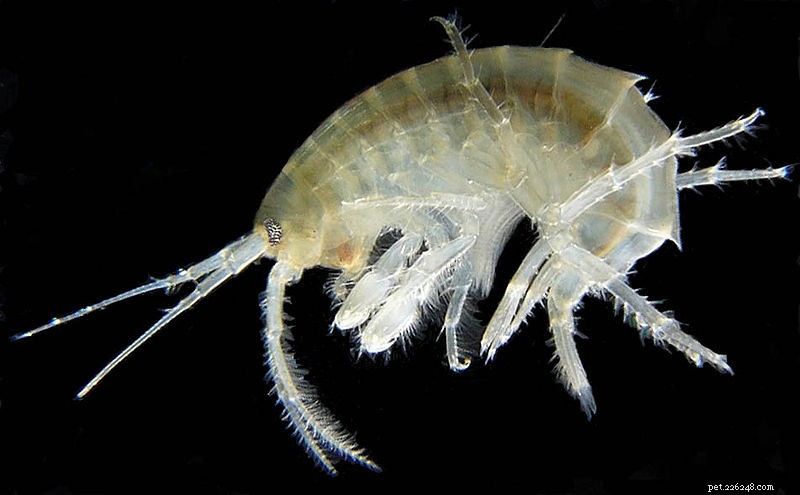 Like sowbugs (isopods, pillbugs), Amphipods are crustaceans that feature prominently in natural diets of many reptiles and amphibians. They contain nutrients not found in insects, and are likely a rich source of calcium. Several species are easy to collect and breed in captivity, but, unlike sowbugs, they rarely attract much attention from hobbyists (please see the article below for information on breeding sowbugs). Whether you know them as Rock-Hoppers, Sand-Hoppers, Lawn Shrimp or any of the names above, one Amphipod or another likely makes its home near yours, and may be worth investigating as a food source for your pets.
Natural History
Amphipod diversity is astounding…over 7,000 species have been identified, and experts concede that they have no idea of the actual number in existence.
Found from pole to pole, Amphipods reach their greatest abundance in colder oceans. Most live in marine environments, but a number have colonized fresh water and land; of the known terrestrial species, 45% dwell in caves or other subterranean environments. They range in size from 0.8 to 1.6 inches long, and may be omnivorous, carnivorous or herbivorous.
Amphipods in Captive Diets
Amphipods are readily accepted by newts of all types, Mexican Axolotls, many turtles, and aquatic frogs such as African and Dwarf Clawed Frogs and Surinam Toads. Salamander larvae and carnivorous tadpoles relish smaller species.
They can also be offered to terrestrial salamanders and frogs; in these cases, confining the Amphipods to a bowl is usually the best feeding method. The Zoo Med Turtle Pier makes an ideal platform on which to present Amphipods to Fire-Bellied Toads and other semi-aquatic frogs; please see this article for further information.
I have also fed Amphipods to sunfishes, perch and other native and tropical species. The eager reactions exhibited by many fishes and herps are hard to describe, but very different than that given to their usual food items.
Precautions: Marine Species and Parasites
I avoid using marine Amphipods (or fish, for that matter) as a dietary staple for captive herps, focusing instead upon freshwater species. However, I’ve not had any problems using either as a supplement to regular diets.
The possibility of transferring parasites from wild-caught fresh water Amphipods has been raised (marine species would not likely be a concern in this regard), but I have not experienced this in my own or zoo collections. If you are concerned about parasites, consider captive-bred cultures or methylene blue pre-treatments; please write in for further information.
Collecting Amphipods
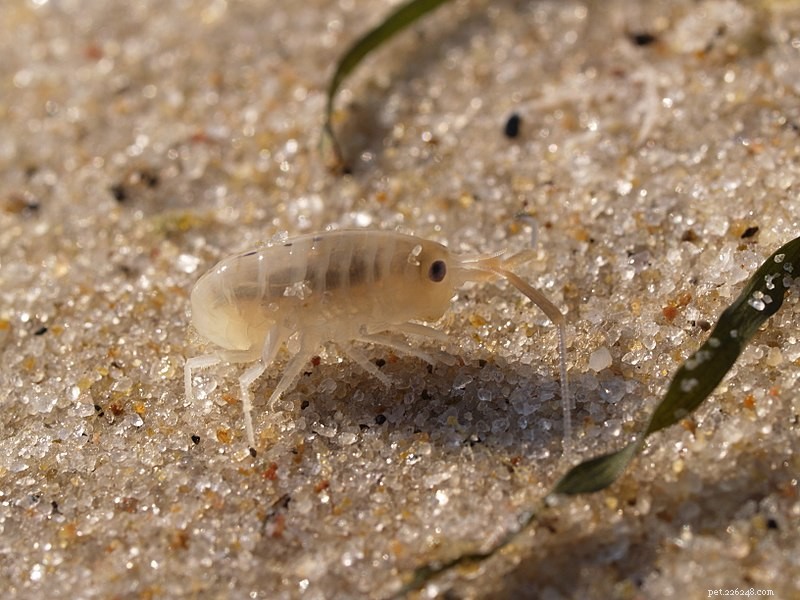 Fresh water and marine Amphipods are most easily collected by pulling a seine or hand net through shoreline aquatic plants or seaweed. I’ve also occasionally taken larger species in minnow traps baited with fish.
Beached seaweed at the high tide line is usually home to huge populations of terrestrial Amphipods collectively known as Rock Hoppers or Sand Hoppers (Taritrus spp.). Eel Grass beds along the USA’s eastern coast support Amphipods that resemble this unique marine plant in shape and color. One, Gammarus mucronatus, is large and quite interesting, and provided me with a great introduction to marine aquarium keeping decades ago.
Gammarus fasciatus, a fresh water Amphipod that reaches ½ inch or so in length, is sometimes common on fish farms. I believe this to be the species that I found in tropical fish shipments when I worked for an importer years ago. I saw the same or a similar Amphipod on fish farms in Florida and in aquatic plant greenhouses in NY. If you have access to such places, look into the possibility of doing some collecting, as G. fasciatus is hardy and easy to breed (please see below).
Keeping and Breeding Amphipods
Fresh-water Amphipods may be kept in a well-lit aquarium stocked with Elodea, algae, Java Moss and other aquatic vegetation. A corner filter will provide adequate filtration and aeration; strong currents should be avoided. Water quality may be managed as for tropical fishes (please write in for further information). A temperature range of 60-75 F suits most.
While dietary specialists exist, those Amphipods I’ve kept proved to have easily-satisfied appetites. Fish food flakes, shrimp pellets, spirulina disks, boiled kale and bits of fish were all accepted. A healthy growth of algae appears to be important to their survival as well.
Female Amphipods carry their 10-50 eggs in a brood pouch; depending upon the species, 4-6, or perhaps more, clutches may be produced each year.
Marine species can be kept as above; please write in if you need information on establishing a salt-water aquarium.
Amphipods as “Pets”
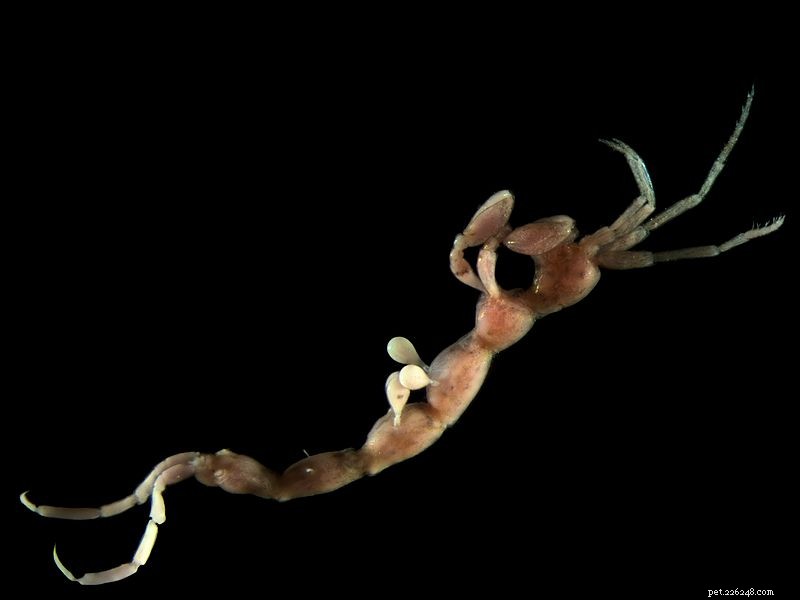 Amphipods are active, interesting creatures, and I thoroughly enjoy observing their behaviors. When established in an aquarium, they also perform useful scavenging services. Don’t be surprised if you find yourself keeping them for “their own sake”, and please be sure to write in to share your experiences.
- The Essential Role of Houseflies and Maggots in Reptile, Amphibian, and Invertebrate Nutrition
- The Ultimate Guide to Selecting the Perfect Substrate for Reptiles, Amphibians & Invertebrates – Part 1
- Choosing the Ideal Substrate for Reptiles, Amphibians & Invertebrates: Expert Guide – Part 2
- Live Bloodworms: The Essential Protein for Small Amphibians and Their Larvae
- Driftwood Submerged Platforms for Aquatic Reptiles & Amphibians – Expert Guide Part 2
- Calciworms: Premium Black Soldier Fly Larvae for Reptile & Amphibian Nutrition
- Why Earwigs Are a Nutritious, Low‑Risk Food Choice for Pet Reptiles and Amphibians