

Affordable Terrarium Designs for American Toads & Relatives
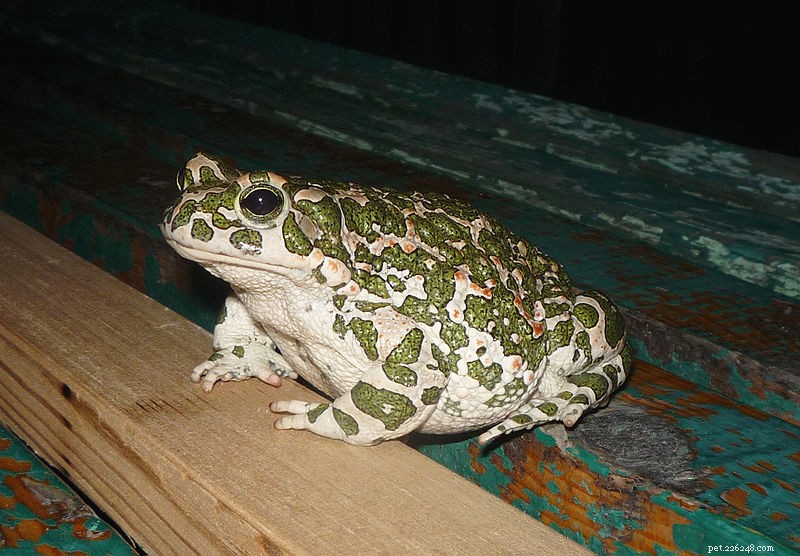 From simple, easily-cleaned habitats to complex environments, herp enthusiasts have many options when it comes to setting up terrariums for reptiles and amphibians. Today I’ll cover everything you’ll need to create an ideal habitat for American, Fowler’s, Southern, Great Plains and Green Toads. With a bit of modification, your set-up will also accommodate Red-Spotted, Colorado River and Marine Toads, and others with slightly different needs. I’ll also mention money-saving alternatives to certain products, along with non-essential “extras” that can be added if you wish.
Enclosure
Toads spend their time on and below the ground, so floor space is the most important consideration.
Recommended
A 15 gallon aquarium for a single toad or a 20 gallon long style tank for a pair. Be sure to use a fitted screen cover, as feeder insects are escape artists.
Plastic Terrariums work well for young toads.
Low Cost Alternative
Plastic storage boxes can be transformed into “luxury toad suites”. Simply cut out a section of the top and use aquarium sealant to secure screening for ventilation. The extra room provided by such containers is especially useful for prospective toad breeders.
Substrate
Toads usually create their own burrows in which to shelter, and appreciate a substrate that allows them to dig.
Recommended
Eco Earth, Plantation Soil and Sphagnum Moss work well for toads; moss may be rinsed and re-used several times.
Low Cost Alternative
A mixture of top soil, dead leaves and sand is an easily-prepared alternative to commercial substrates; just be sure to collect your materials from a pesticide-free area.
Hiding Spots
Toads will accept cave-like shelters in lieu of burrows. Most individuals are very selective and if given options will choose one shelter and occupy it for years.
Recommended
Plastic and wooden Caves and artificial Hollow Logs will be readily occupied by home-hunting toads.
Low Cost Alternative
Broken clay flowerpots (watch sharp edges), curved sections of tree bark and small hollow logs all serve well as toad hideaways.
Water Bowl
Your toad will need a shallow, easily-exited water bowl in which to soak. If not sunk into the substrate, the bowl should be of sturdy construction so that it will not tip over. Be sure to remove chlorine and chloramine from your water with Tap Water Conditioner.
Recommended
Naturalistic Ponds and Crockery Bowls are available in a wide assortment of sizes and shapes.
Low Cost Alternative
 Butter dishes, plastic jar lids, frozen dinner trays and similar non-toxic items will do nicely. Use a small stone to make lightweight containers tip-proof.
Non-Essential Items
Toads seem not to need UVB radiation, but they do receive limited sun exposure in nature. UVA, while not essential, encourages natural behavior. The Reptisun 2.0 Bulb, specifically designed for amphibians, emits UVA and low levels of UVB. It is also suitable for live plants.
A Night-Viewing Bulb will help you to observe your pet’s nocturnal activities.
Live Pothos, Snake Plants, Chinese Evergreens and Cast Iron Plants will add greatly to your terrarium’s appearance. These species do well in dim light and will help detoxify ammonia and other waste products. Realistic artificial terrarium plants can also be used.
- Can Chickens Safely Consume Frogs and Toads? Understanding the Risks
- Live Bloodworms: The Essential Protein for Small Amphibians and Their Larvae
- Comprehensive Frog Diet Guide: Nutritious Foods for Popularly-Kept Frogs & Toads
- Optimal Frog and Toad Diets: Nutritious Foods for Common Amphibian Pets – Part 1
- Affordable, Expert-Approved Terrariums for Sliders, Painted Turtles & More – Part 1
- Affordable Turtle Habitats: Budget-Friendly Setups for Sliders, Painted Turtles & More – Part 2
- Boa Constrictors & Relatives: Natural History & Expert Captive Care