

Creating Optimal Poison Frog Breeding Sites with Artificial Bromeliads – Part 2
 In Part 1 of this article I introduced Hagen’s new Smart Plants, an exciting line of realistic artificial plants (Bromeliads and Scindapsis) that contain small water-holding pools at their bases. When properly positioned in a terrarium, they provide naturalistic sites into which female Poison Frogs can deposit their tadpoles. Today we’ll see how other amphibians and reptiles can make use of this new and much-needed innovation.
Arboreal Reptiles
In the wild, most highly arboreal snakes and lizards find all the water they need without ever setting foot or belly on the ground. Captives, especially high-strung or wild caught individuals, may be stressed if forced to do so.
Red-Tailed Ratsnakes and some Taiwan Beauty Snakes that I kept in large zoo exhibits rarely left the tree branches for water, but readily accepted bowls fastened to branches. Emerald Tree Boas, Green Tree Pythons and other tree specialists also prefer to drink while perched above the ground. One Scrub Python that I cared for was so “stubborn” about leaving her perch that I was forced to inject water into a dead rat offered on a long-handled tong.
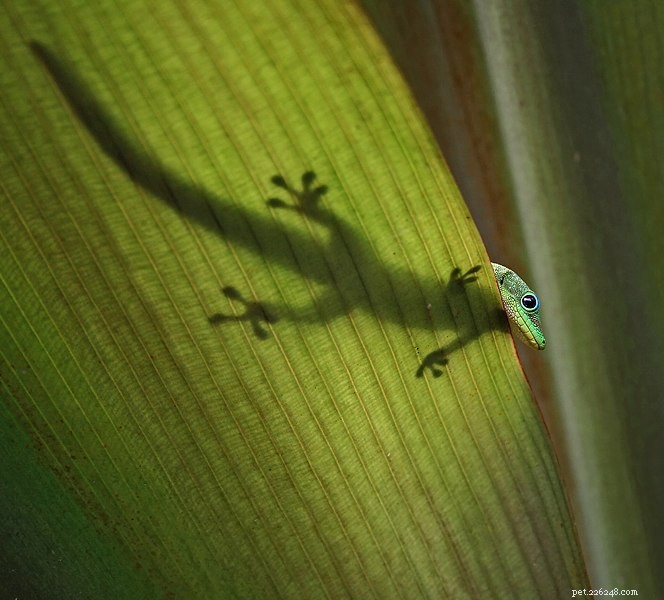
The pools within Hagen’s Bromeliads should serve well as above-ground water bowls, and could also be used to provide nectar to Anoles, Day Geckos, New Caledonian Giant Geckos and similar lizards.
Amphibians, Tarantulas and Others
Arboreal Salamanders (Bolitoglossa ssp.) are troublesome captives, and do best in rather arid terrariums provisioned with watery retreats among the branches. Wild specimens of several species are most commonly encountered hiding within Bromeliads.
I had serious problems maintaining confiscated Arboreal Salamanders in the past, mainly due to their unique habitat requirements (they dehydrate easily, but tend to shed their tails if over-watered). I had some success using live Bromeliads, but would perhaps have fared better had artificial ones been available as well.
Bromeliad leaves and pools are also the preferred retreats of a great many arboreal frogs, including Red-Eyed and Cuban Treefrogs. Pink-Toed and other tree-dwelling Tarantulas, along with some snails, mantids and other invertebrates, may also put artificial Bromeliad pools to good use.
Crowded Ponds in the Treetops
 Hundreds of animal species rely upon the water contained within Bromeliads and similar plants that grow above-ground (in nature, they attach themselves to trees). Tropical forest canopies are among the least studied habitats on earth, and full of surprises – one Smithsonian researcher found 100 new beetle species in a single tree in Panama, while another study showed that the Bromeliads in 2.5 acres of rainforest can hold as much as 13,0000 gallons of water.
Spiders that dive into minute pools to catch mosquito larvae, crabs that never descend to earth, tadpoles that are fed eggs by their mothers, salamanders observed nowhere else – the list of Bromeliad-dependent creatures is endless, and can provide a lifetime of interest to those who wish to study and keep them.
- Bumblebee Poison Dart Frog (Dendrobates leucomelas): Stunning, Toxic Amphibian
- Breeding Green Iguanas: Choosing the Ideal Indoor & Outdoor Nest Sites – Part 1
- Mastering Green Iguana Nesting: Indoor & Outdoor Strategies – Part 2
- Breeding the Green & Gold Bell Frog to Support Recovery of Australia's 'Extinct' Gold Spotted Bell Frog – Part 1
- Breeding Green and Gold Bell Frogs & Reviving the Presumed Extinct Gold‑Spotted Bell Frog – Part 2
- Introducing Hagen’s Smart Plants: Artificial Bromeliads for Poison Frog Breeding
- Mastering African Clawed Frog Breeding: Proven Techniques & Care