

Boa Constrictors & Relatives: Natural History & Expert Captive Care
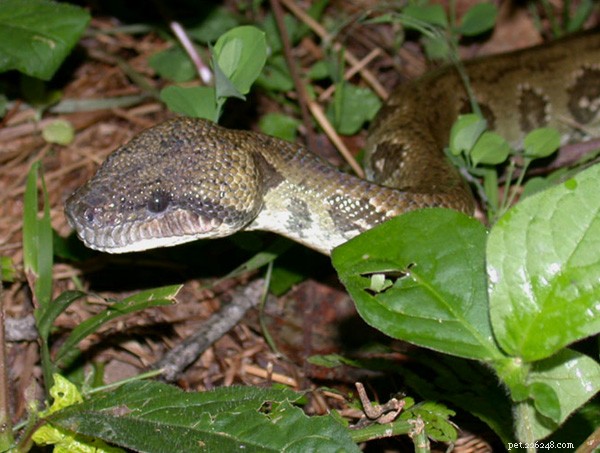 The 53 species in the family Boidae are an amazingly diverse group of snakes that have colonized habitats ranging from rainforests to deserts, in countries as diverse as Canada and India. Among them we find treetop dwellers, aquatic species, confirmed burrowers and generalists equally at home in farmland, savannas, desert fringes and forests. I’ve had the good fortune of studying Anacondas, Rosy Boas and others in the wild, and remain fascinated by all. Please be sure to post some thoughts about your favorites below.
Classification and Terminology
The family Boidae is divided into 3 subfamilies. Most boas are placed in the subfamily Boinae. The ten Sand Boas of southern Europe, Africa and Asia, the Calabar Ground “Python” and North America’s Rubber and Rosy Boas are classified in the subfamily Erycinae. Ungaliophiinae is comprised of the Oaxacan, Isthmian and Panamanian Dwarf Boas.
The term “boa” usually refers to the Common Boa. A short “first name” is applied to others, i.e. Rough-Scaled Boa, Rainbow Boa, Malagasy Tree Boa, Pacific Boa.
Size
Many species average 2-5 feet in length, but the Common Boa Constrictor, can exceed 13 feet in length. The family giant, the Green Anaconda, is also the world’s heaviest snake.
The record-sized Common Boa is said an 18.5 foot specimen killed on Trinidad in 1944. However, a recent investigation into the incident established that an Anaconda, and not a Common Boa, was described in the original account (please see this article for details). The longest individuals I’m aware of were taken in Surinam, and measured 13 feet, 6 inches and 14 feet.
Range
Boas reach their greatest diversity in that portion of the American tropics stretching from central Mexico to Argentina. Rosy Boas range into the southwestern USA; Africa, Asia and the South Pacific are home to numerous others. Two species live in “unexpected” places – the Rubber Boa reaches southern Canada and the Javelin Boa inhabits Greece and the Balkans.
Note: The following information can be applied to many pet trade species. However, details will vary. Please see my species-specific articles and also post a comment below if you would like further information.
Behavior
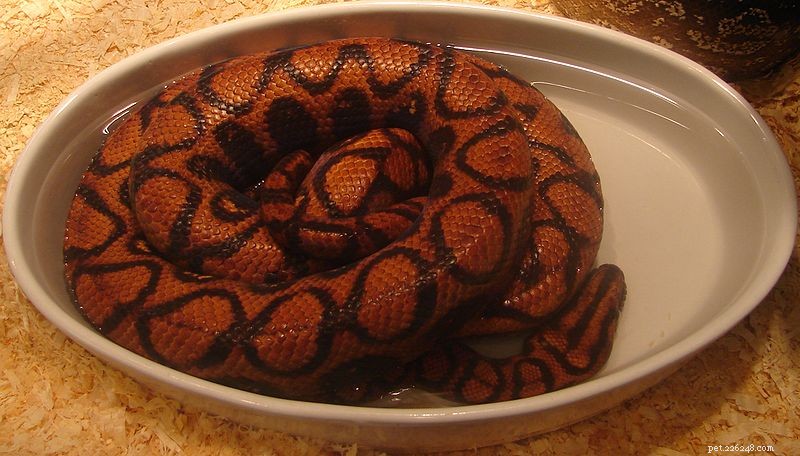 Rosy and Common Boas vary widely in personality, with many being calm and well-suited to captive life, while arboreal species may remain high-strung and “snappy”.
Boas are not domesticated animals and must never be handled carelessly, as even long-term pets may react to scents or vibrations that people do not perceive. Bite wounds can be severe. Two experienced adults should always be on hand when specimens over 6 feet in length are fed, cleaned or moved.
Housing
Setting up the Terrarium
Hatchlings may be started-off in 10 gallon aquariums. Larger species usually require custom-built cages, but some, such as Sand, Dwarf and Rosy Boas, can be accommodated in a 30-55 gallon tank. The screen top must be secured with clips.
Appropriate cage furnishings will vary by species. For example, Rubber Boas need to burrow while Cook’s Tree Boas require stout branches on which to perch. A hide box should always be available for terrestrial species; hanging plastic plants will provide security for tree-dwellers. Sand Boas and other fossorial species must be provided with substrate that allows them to burrow out of sight. Being forced to remain in the open is stressful, even for long-term pets.
Substrate
Newspapers and washable terrarium liners may be used as substrates for terrestrial boas. Sand Boas and other burrowers must be provided a deep substrate, the nature of which varies by species; please post questions below.
Cypress and aspen bedding lend a naturalistic touch, and are especially good for Emerald Tree Boas and others requiring humid surroundings. However, wood chips can lodge in the mouth during feeding; terrestrial species should be moved to bare-bottomed enclosures at feeding time.
Light
Boas do not require UVB light, but may benefit from the provision of a UVA bulbs.
Heat
Temperature should be maintained at a range of 79-88 F for most species. Incandescent bulbs may be used to create a basking site of 90-95 F. Ceramic heaters or red/black reptile “night bulbs” may be employed to provide heat after dark and will also help you to observe your pet’s nocturnal activities. Under-tank heaters should be used to create a warm basking surface for Sand and Rubber Boas (these heaters do little to warm air, however).
Provide your snake with the largest home possible, so that a thermal gradient (areas of different temperatures) can be established. Thermal gradients, critical to good health, allow reptiles to regulate their body temperature by moving between hot and cooler areas. In small enclosures, the entire area soon takes on the basking site temperature.
Humidity
R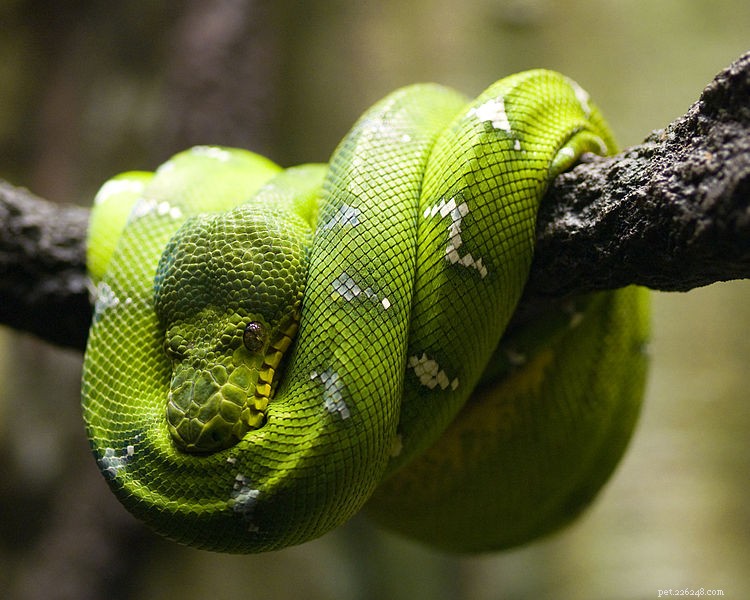 ainforest species generally favor humidity levels of 65-75%, but must be able to dry off as well. The terrarium should be misted twice daily. Airflow is also important, so the screen top should not be covered-over to increase humidity levels.
Sand Boas and other desert dwellers must be kept dry.
Feeding
Most species accept pre-killed mice and rats; hatchlings can handle pink or fuzzy mice. However, the youngsters of smaller species often prefer lizards and frogs, and must be coaxed into accepting rodents. Rubbing a natural prey item over a rodent (“scenting”) will often induce feeding. Emerald Tree Boas and other arboreal species may favor chicks, but will usually accept scented rodents. Gerbils, guinea pigs and other rodents may tempt reluctant feeders, but snakes may then refuse other food items.
Several Brazilian Rainbow Boas under my care would go through “phases” – refusing rats but taking mice, and vice-versa. Green Anacondas, which I do not recommend for private collections, can be notoriously “picky”, with ducks being a favorite. I recall one that would accept only muskrats, while another took wild but not lab-raised Norway rats.
In the wild, boas do not feed during the breeding season or when temperatures are unfavorable; captives may refuse food in the winter, even if kept warm.
Hatchlings should be fed once weekly; adults do fine with a meal each 10-14 days. Vitamin/mineral supplements are not necessary if whole animals are provided.
Water should always be available. Bowls should be filled to a point where they will not overflow when the snake curls up within. Arboreal boas arrange their coils in a way that traps rain and dew, and prefer to drink water sprayed onto their bodies; most adjust to water bowls in time.
- Mastering Newt Care: Natural History & Captive Management – Part 1
- Fire Skink (Mochlus fernandi): Natural History & Expert Care Guide
- Rhinoceros Iguana: Natural History, Care Guide, and Habitat Insights
- The Ultimate Guide to Chameleon Care: Natural History & Home Habitats
- Corn Snakes: A Comprehensive Guide to Their Natural History and Care in Captivity
- Rosy and Sand Boas: Complete Care, Breeding, and Natural History Guide
- Collared Lizard Care & Natural History: Expert Guide for Enthusiasts