

Urban Herping: Uncovering New York City’s Snake Diversity
 Inspired by fellow Bronxite John Kiernan’s wonderful book A Natural History of New York City, I have searched for reptiles and amphibians in just about every corner of the Big Apple. An amazing array of species manage to hold on here and in other cities around the world (Reticulated Pythons are regularly encountered in Singapore and Bangkok) – in fact, I cannot cover all of NYC’s species in a single article. Today I’ll take a look at big city snakes.
Snakes of NY State
New York State is home to 17-18 species of snakes, most of which once dwelled within NYC limits. Three of these – the Copperhead, Timber Rattlesnake and Eastern Massasauga – are venomous.
Snake diversity increases when you travel just a bit north or east of NYC. Fifteen years ago I had the amazing good fortune to search for snakes with legendary herpetologist Rhom Whittaker (who, although based in India, is a former New Yorker). We found 6 snake and 4 salamander species in a single day at Westchester’s Ward Pound Ridge Park!
The Ultimate Urban Snake
The only species that one might “almost reliably” expect to find within the city is the DeKay’s Snake (or Northern Brown Snake, as it is now more commonly known). This secretive little serpent was my first wild snake sighting – but, at age 5, I was not quick enough to catch it. However, I’ve taught my 3-year-old cousin better, and just last week he made his first capture (please see photo; please note that all NYS herps are now protected, and may not be collected).
As a child, I found Brown Snakes to be quite common in small, overgrown lots in a few Bronx neighborhoods, where they were easier to find than in the more “snake-friendly” environs of Van Courtlandt Park. While a student at the Bronx High School of Science, I surprised a well-known herpetologist who, on a visit there, overheard me talking about collecting snakes near my home. He later visited the dead-end street site I mentioned, and published a note about it in a local herp society newsletter. Each year I still take in and release a few Brown Snakes that are uncovered by folks in NYC, so it seems they are here to stay.
Urban Snake Habitats
It’s difficult to provide guidelines for urban snake viewing. Cities provide unique opportunities and challenges to snakes and snake hunters, and so what works in the countryside often has little bearing in the city.
For example, Black Racers and Smooth Green Snakes have long been absent from NYC’s largest stretches of woodland (i.e. Van Cortland Park). However, they managed to hold on for a time in abandoned lots in the South Bronx. Blighted by fires in the 1970’s, these lots and the ruined buildings on them provided me with many non-herp surprises as well, such as Barn Owl nests and roosting Little Brown Bats. However, such areas were and still are very dangerous places (due to human, not reptile-related threats) and should be avoided.
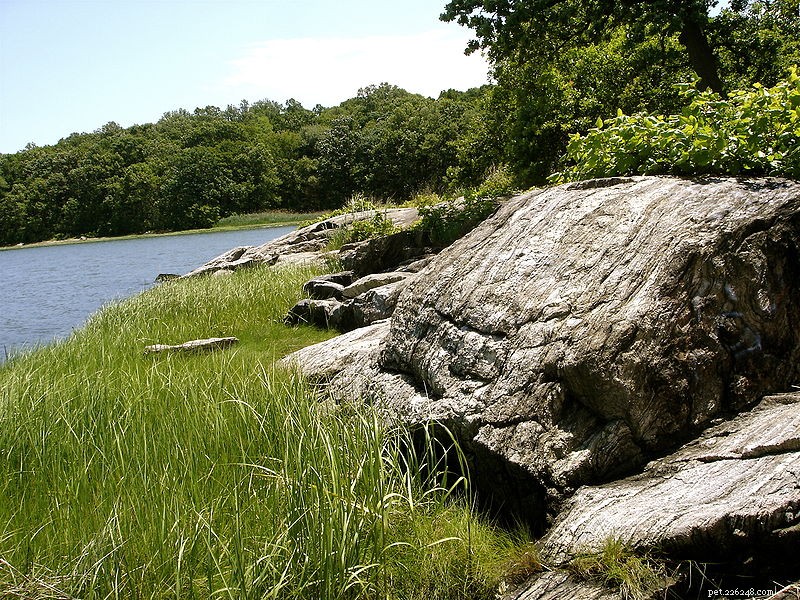 Given the unique nature of urban snake habitats, I’ll describe some of the places I’ve found various species, rather than attempt a review of likely sites. As anywhere else, large undisturbed areas are always worth a look. NYC host a surprising number of such places, including Van Cortlandt Park, the further reaches of Central Park, Staten Island’s Greenbelt and many more. As a child, my favorite collecting sites for herps of all kinds were the grounds of the Bronx Zoo and the NY Botanical Gardens. With the exception of the highly-specialized Eastern Hognose Snake, any of the species mentioned here may be encountered in such habitats.
Regular Residents
Eastern Garter, Northern Red-Bellied and Northern Ring-Necked Snakes can turn up anywhere, even on unused lots in Manhattan, but are nowhere common.
Eastern Milk Snakes
When I first began working at the Bronx Zoo, I was astonished to learn that Eastern Milk Snakes could still be found along one stretch of Pelham Parkway. The presence of a horse stable and a private mouse breeder (this a unique story in itself!) seemed to assist the snakes in their battle to survive alongside millions of people and 24/7 traffic. In fact, some of the largest specimens I know of came from this site. Sadly, all has now changed for the worst, but one never knows where the next surprise population will emerge.
Copperheads
Until recently, Copperheads dwelled right beneath the George Washington Bridge, on the NJ side. I haunted the grounds of the Cloister’s Museum, on the NY side of the river, where they were also found in days past. I was rewarded with a Ring-Necked Snake and plenty of Browns, as well as Red-Backed Salamanders – venomous snakes were never on my “must catch list” anyway!
Northern Water Snakes
Recently I was happy to observe Northern Water Snakes on the grounds of the NY Botanical Gardens. Some years ago I re-introduced this species to the grounds of the Bronx Zoo, and they are now breeding there, but are uncommon. Unfortunately, these feisty beasts seem extirpated from the rest of the city, with the possible exception of Staten Island.
Hognose Snakes
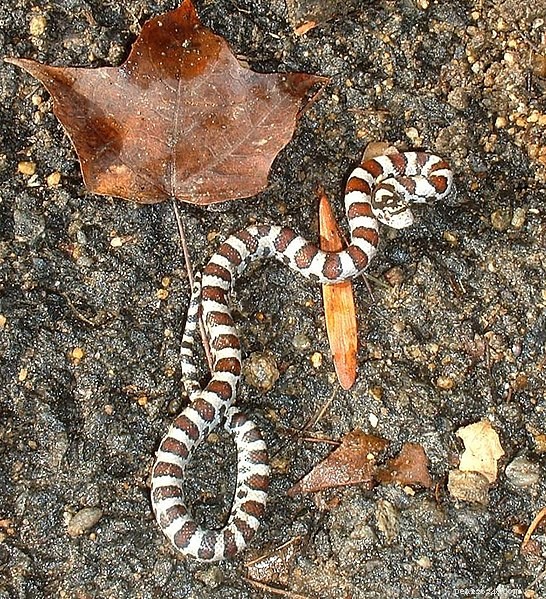 Ten or so years ago I was involved in a herp reintroduction program based in Gateway National Park, along Jamaica Bay. A huge population of Fowler’s Toads suited the area for Eastern Hognose Snakes, and the species did surprisingly well there. These unique specialists are to be found nowhere else in the city.
- Pit Bull Laws in New York: City Ordinances and Ownership Restrictions
- Finding a New Normal: Rebuilding Life and Well-Being After Uncertainty
- 17 Snake Species in New York: Venomous, Endangered, and More – With Photos
- 12 Common Spiders in New York: Identification & Safety Guide
- Urban Turtle Fest: NYTTS Annual Show Celebrates NYC’s Chelonian Community
- New Skinks, Sea Snakes, and Caecilians: Unexpected Discoveries Reshape Herpetology
- New Leopard Frog Species Unveiled in New York City