

New Cockroach Species Discovered at Tourist Resort Can Leap Like a Grasshopper
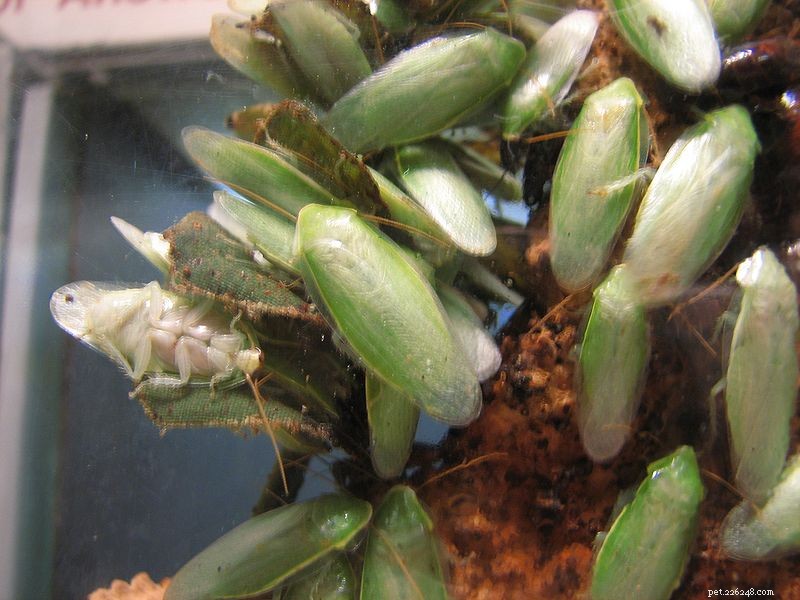
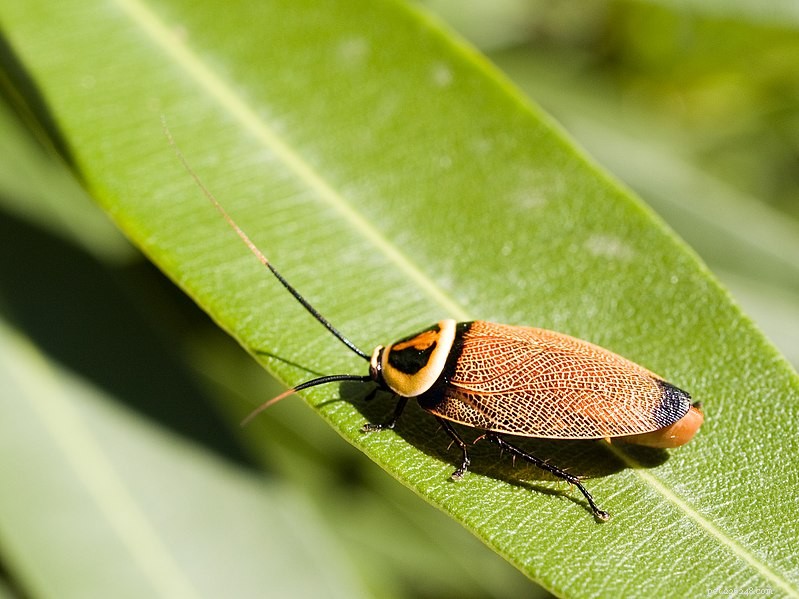 Roaches are best known to herp enthusiasts as food for captive reptiles and amphibians. However, these very interesting insects are increasingly being valued as display animals in their own right, and are appearing in the pet trade (I find the lime-green Banana Roach, Panchlora nivea, to be among the most beautiful of all insects…please see photo and article below for information on keeping roaches). Recently, entomologists were surprised to discover a new species on the grounds of a famous South African resort. Christened the Leaproach, Saltoblattela monistabularis, it is the only one of its nearly 5,000 relatives known to jump, and on first glance looks much like a grasshopper.
A New Species at a Tourist Attraction
The Leaproach was first collected on the grounds of South Africa’s Table Mountain National Park, a mere 10 minute drive from Cape Town (please see photo). The park is visited by over 4 million people each year.
Biologists studying flies found it while sweeping through tall grass with nets. The slender beast, which measures 1/3 of an inch in length, sports large, powerful rear legs and bulging eyes (please see photos in article linked below). Interestingly, the long antennae are used to help stabilize the insect while airborne during leaps. Entomologists describe it as “quite athletic”.
Roach Diversity
Roaches first appeared over 300 million years ago, and since then have evolved to fill an incredible variety of ecological niches. There are semi-aquatic and wood-eating roaches, and some are the main scavengers in caves and ant colonies. The largest, Latin America’s Megaloblatta baberoides, sports a 7 inch wingspan while the heaviest, Macropameothia rhinoceros of Australia, weighs in at 1.5 ounces (more than a House Mouse). The newly discovered Leaproach is adapted to grasslands, and seems to be the ecological equivalent of small grasshoppers – yet another roach “first”.
Misunderstood Insects
 Although widely despised, only 12 roach species (a mere 0.3% of the total) are household pests. The rest live outdoors, where they are vitally important as pollinators, decomposers, predators and prey. In some habitats, roaches form 60-85% of the invertebrate biomass – a clear indication of their ecological value.
Roaches are also important laboratory animals. Studies of several species have led to advances in human molecular and cell biology, neuron function, heredity, pharmacology, epidemiology and hormone activity. Even the pesky German (“House”) Cockroach has contributed to our welfare. Studies of it have shed light on invertebrate evolution, neurobiology, taxonomy, conservation and pest control strategies…and Bedbugs are a favorite food!
Madagascar Hissing Roaches, widely kept in classrooms, have introduced millions of students to insect behavior, and also served as a model for a robot which was used to study human mobility.
- Can Dogs Eat Roaches? Health Risks & Safety Tips
- How to Keep Your Waterproof Dog Coat New and Lasting Longer
- New 6‑Foot Red‑Headed Monitor Lizard Discovered in Indonesia
- New Skinks, Sea Snakes, and Caecilians: Unexpected Discoveries Reshape Herpetology
- New Leopard Frog Species Unveiled in New York City
- Discover 2012’s New Invertebrate Species: Spiders, Roaches, Millipedes & Wasps – Find Your Favorite
- Scientists Discover New Leaf‑Tailed Gecko Species in Australia's Cape Melville