

Optimal Feeding Strategies for African Clawed Frogs: Two Proven Diets for Longevity and Breeding
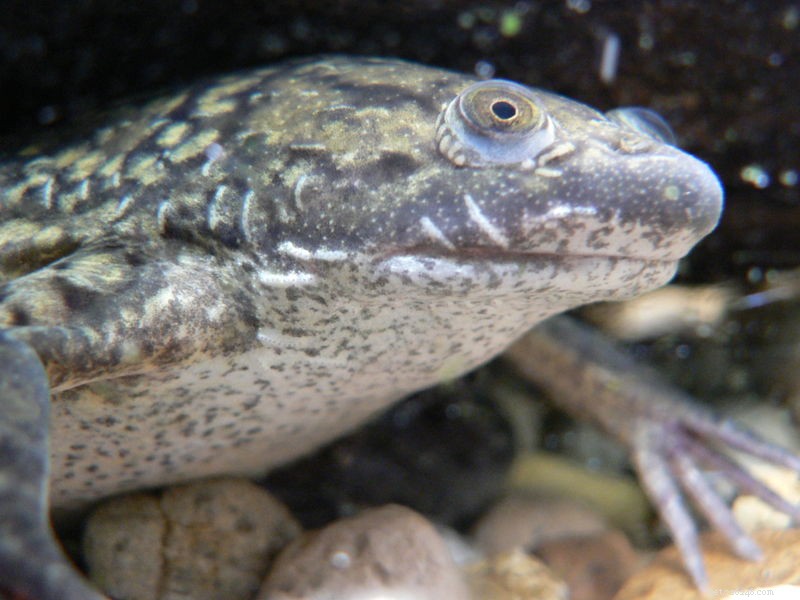 Providing a wide variety of live foods is one of the main stumbling blocks to keeping most frogs healthy in captivity. African Clawed Frogs (Xenopus laevis, and several related species), however, take non-living foods (i.e. carrion) in the wild, and therefore are quite easy to accommodate in captivity. Today I’d like to highlight two different diets that have enabled some of my African Clawed Frogs to reach 20+ years of age, and to breed as well.
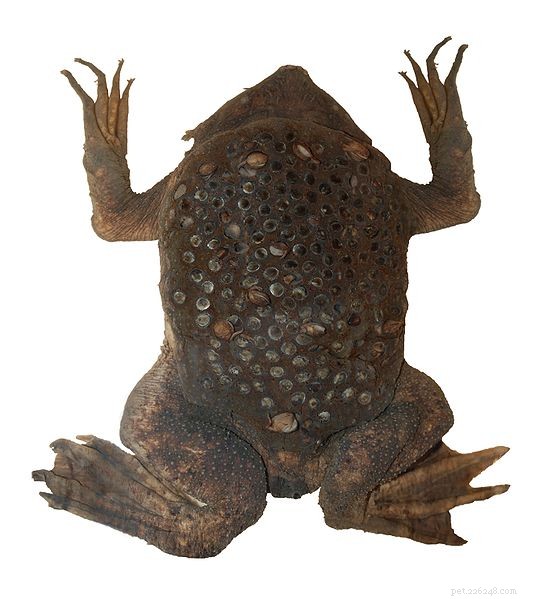
Note: Dwarf African Frogs, Hymenochirus spp., require an entirely different diet comprised of small live invertebrates. Please see this article for details. Another relative, the bizarre, skin-brooding Surinam Toad, Pipa pipa, is also a live food specialist (please see photo and this article.
Strange Food…No problem!
African Clawed Frogs are among the world’s most adaptable amphibians. Escaped pets and lab animals have established huge populations in such far-flung locales asJapan,California,England,Braziland elsewhere.
These introduced frogs feed upon prey that is not found in their native habitat, southernAfrica, yet they thrive and often out-compete (or consume!) local species. This innate toughness simplifies the feeding of captives…several of mine have lived into their 20’s, and the published longevity record is just over 30 years
Reptomin-Based Diet
Reptomin Food Sticks are my first choice as a commercial food for Clawed Frogs. I have used it as a staple diet for many years, and find that it meets most of this species’ needs. Reptomin Select-A-Food contains small shrimps and plankton as well as food sticks, making it perhaps the best option of all. If convenience and safety are your main concerns, this diet is the way to go.
You can use Reptomin for at least 75% of your frog’s diet. To this you should add Freeze Dried Shrimps or Prawn and some live food. The best live foods to use are earthworms, blackworms and guppies or minnows.
Alternative foods and treats that can be offered on an occasional basis include crickets, waxworms and any aquatic turtle pellet.
Live Food Diet
This diet is the reverse of the above – approximately 75% live/natural food and 25% Reptomin. As wide a variety of live prey as possible should be used, but be sure to concentrate on a few well-proved frog “health foods”. These include earthworms, guppies, minnows and other small fishes, blackworms and, to a lesser degree, crickets. Mealworms are not ideal, although newly-molted (white) grubs and pupae are fine. You can also offer wild-caught insects – please see the article below for more info.
 Feeding live food in a large, well-planted tank is a great way to observe your frogs’ natural hunting abilities. The Clawed Frogs that I kept in outdoor ponds were among my best breeders. They caught their own food all summer, and when brought indoors displayed hunting abilities that were noticeably different from those of their tank-raised cousins…they would even come almost completely out of the water to snatch insects from the shore.
Other Options for Tadpoles and Adult Frogs
The diets covered here were chosen because they are simple and have worked well over many years. There are many other options – please write in with your own and I’ll highlight them in the future.
The filter-feeding tadpoles are much “fussier” than adult Clawed Frogs, but with them there are several possibilities. Please see the article below for a great diet provided by a reader, and some notes on my own experiences.
- Top‑Rated Pet Feeding Mats: Keep Your Floors Clean and Your Pet Happy
- African Clawed Frogs: Complete Care & Species Guide
- Feeding Dwarf African Clawed Frogs: Expert Tips for Healthy Nutrition
- Salmonella Risks in African Dwarf Clawed Frogs: What Pet Owners Need to Know
- Mastering African Clawed Frog Breeding: Proven Techniques & Care
- Optimal Chameleon Nutrition: A Comprehensive Guide to Healthy Diets
- Expert Guide: Breeding Dwarf African Clawed Frogs (Hymenochirus)