

Eastern Diamondback Rattlesnake Facts: North America's Largest Rattler Explained
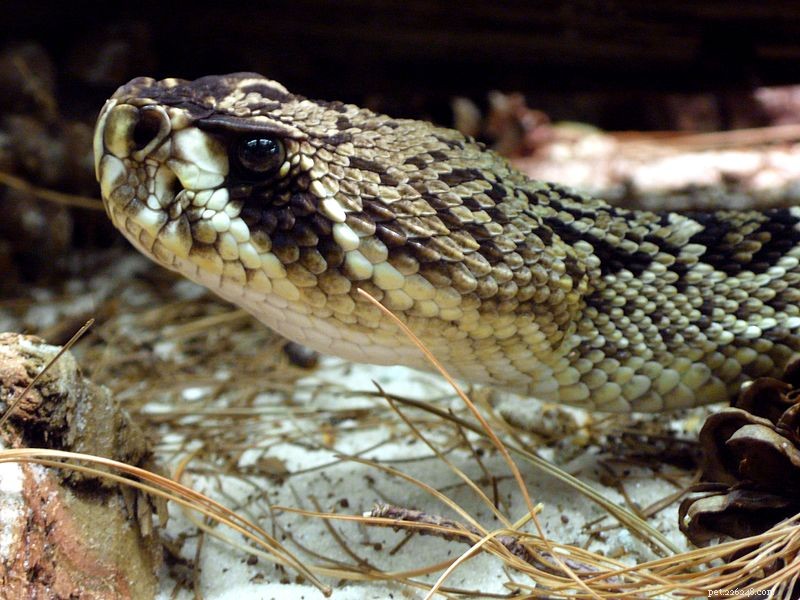 Today I’d like to cover a snake that, while not suitable as a pet, stands out in the minds of many as North America’s most impressive serpent – the Eastern Diamondback (Crotalus adamanteus). In my youth, the nearby Staten Island Zoo’s Reptile House was under the direction of the legendary Carl Kauffeld. The collection contained every known rattlesnake species but, somehow, a massive pair of Eastern Diamondbacks stood apart. Several years ago, I was thrilled to be chosen as consultant for the renovation of this building , and Rattlesnakes, including the Eastern Diamondback, again take center stage there.
Description
The record length of this largest of the world’s 33 rattlesnake species is 8 feet, 3 inches; most adults top out at 3-6 feet. In the USA, only the Indigo, Bull, Gopher and Black Rat Snakes approach or, very rarely, exceed this measurement.
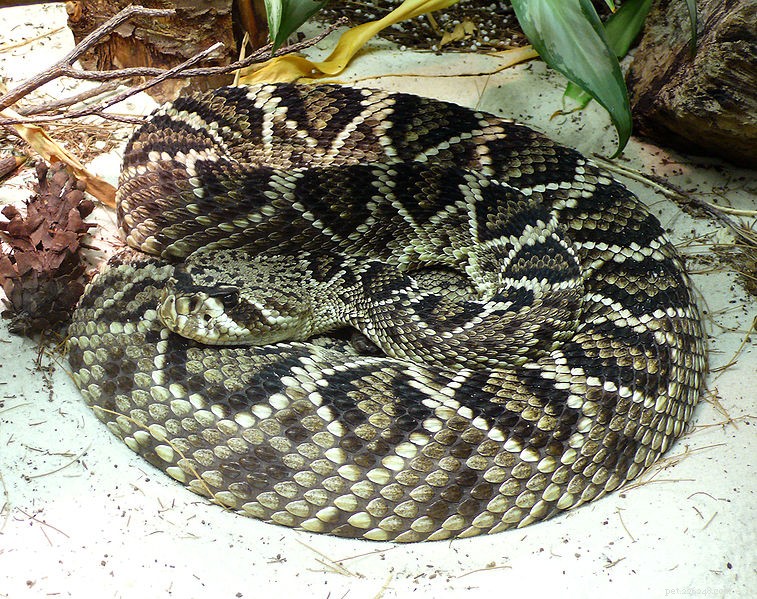
The background color of this heavy-bodied, venomous snake ranges from olive through brown to (rarely) near-black. The back is patterned in white-centered dark diamonds that are sharply outlined in cream or yellow.
Captives have lived in excess of 22 years, but longevity in the wild has not been well-studied.
Range
 The Eastern Diamondback is confined to the Southeastern United States, along the lower Atlantic Coastal Plain. It has been recorded in southeastern North Carolina, South Carolina, Mississippi, Alabama, Georgia, Louisiana and Florida (including the Florida Keys).
Habitat
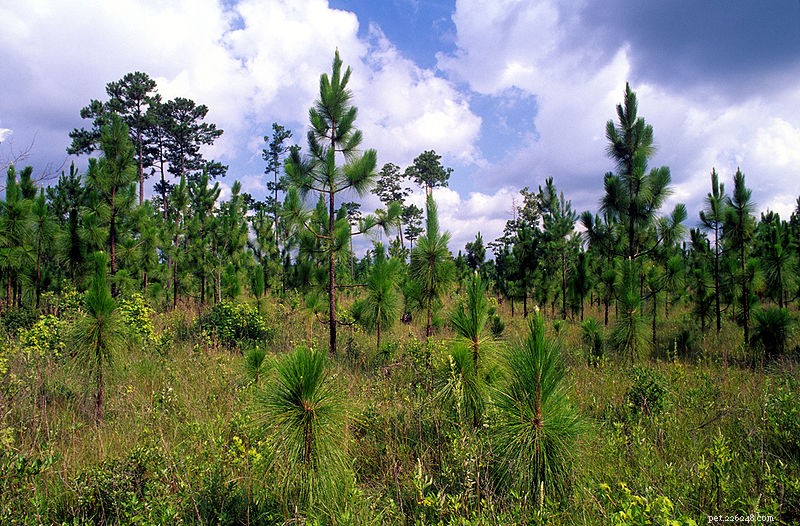
Longleaf pine and sand-hill ecosystems, palmetto and wiregrass prairies and open pine-oak forests are essential to this species’ survival. Unfortunately, only an estimated 2-3% of its original natural habitat remains; consequently, abandoned farms and citrus groves are sometimes utilized. The Eastern Diamondback Rattlesnake shares the longleaf pine (“Flatwoods”) ecosystem with other rare creatures, such as the Flatlands Salamander, Gopher Tortoise, Gopher Frog, Bachman’s Sparrow and Red-Cockaded Woodpecker.
Individuals shelter in Gopher Tortoise burrows, saw palmetto thickets and beneath tree stumps, and may establish home ranges of up to 500 acres.
Except at the southern tip of its range, the Eastern Diamondback Rattlesnake retreats underground as winter approaches. It often utilizes Gopher Tortoise burrows, and emerges to bask on warm days.
Status
 This species is in severe decline due to habitat loss and collection for the skin, novelty and meat trade. Untold numbers have been killed during “rattlesnake roundups”, which are still a tradition in some areas. Gasoline is often poured into burrows (which are also critical habitat for Gopher Tortoises, Gopher Frogs and other species) to facilitate snake collection. Gasoline renders the burrows unusable for several years. Fortunately, there has been at least some movement towards stopping these events; please see the article below.
The Eastern Diamondback is not federally protected. However, spurred by a Center for Biological Diversity lawsuit filed in 2011, the US Fish and Wildlife Service is currently evaluating the species for inclusion on the Endangered Species List; please see article below.
North Carolina protects the Diamondback, but it may already be extinct there. Several states consider it “Of Special Concern”, but offer no legal protection. A CITES listing has been proposed, and the IUCN designation is “Least Concern”.
Reproduction
The young, 7-29 in number, are born alive from July through October, and measure 12-15 inches at birth. Females generally give birth every 2-3 years, depending upon their diet and condition. Sexual maturity is reached in 2-4 years.
Diet
This “sit-and-wait” predator consumes rice rats, pocket gophers, cotton rats, squirrels, deer mice, chipmunks, rabbits, raccoons, opossums, feral cats and other mammals; birds are also taken on occasion.
Rattlesnake Biology
 Rattlesnakes and other “pit vipers” are placed in the subfamily Crotalinae, along with palm vipers, copperheads, cottonmouths and related species. Considered to be the most highly evolved of the snakes, pit vipers possess a highly sophisticated organ that detects the infra-red rays produced by birds and mammals. Located in a depression between the eye and nostril, it is far more sensitive than similar organs possessed by boas and pythons, and may be considered more of an “imaging device” than mere heat receptor.
Rattlesnakes, confined to the Western Hemisphere, reach their greatest diversity in the American Southwest and Mexico, with 13 of the 33 known species occurring in Arizona alone.
The rattle, unique among snakes, is composed of a series of loosely-connected segments. Specialized muscles in the tail vibrate the rattle so as to produce the characteristic warning sound. The Santa Catalina Rattlesnake, confined to the island of the same name, is the only species that lacks a rattle.
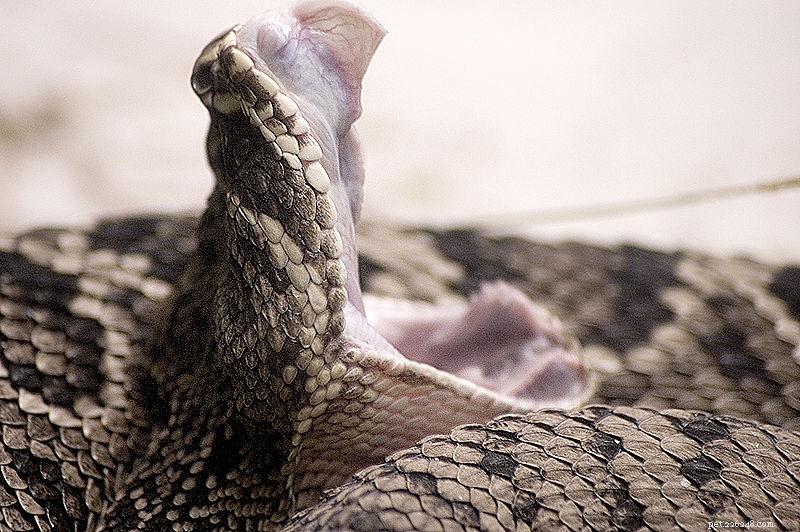
Rattlesnakes and other vipers have evolved hinged fangs that fold back against the roof of the mouth, within a sheath, when not in use (please see photo). Venom is injected in the manner of a hypodermic needle.
All rattlesnakes bear live offspring, and several species appear to provide a degree of parental care. The Black-Tailed Rattlesnake has been shown to recognize siblings after a 2 year separation. Please see the article below for further information on rattlesnakes.
- Green Anaconda: Inside the World’s Largest and Most Powerful Snake
- The Green Anaconda: Inside the World’s Largest Snake – A Natural History (Part 1)
- Explore the World's Largest Dinosaurs: A Groundbreaking Exhibit at AMNH
- Captive Care for the World’s Largest Snake: Managing the Green Anaconda
- Discover the Aruba Island Rattlesnake: The World's Rarest Viper
- Giant Turtles: Insights from Working with the World’s Largest Freshwater Species
- The Goliath Frog: Inside the World’s Largest Amphibian