

Halloween’s Most Eerie Creatures: From Orange Crabs to Goblin Sharks
 Herp and invertebrate enthusiasts are never at a loss for frightening, even “ghoulish” (to “regular” people) stories. With Halloween just around the corner, I’d like to highlight some creatures whose names or habits associate them with this holiday. Some, such as Thailand’s fanged, bird-eating frog and the skin-feeding Caecilian, are relatively new discoveries. I’ve taken the liberty of extending beyond our usual subjects to include a parrot-eating bat and the well-named Goblin Shark.
Halloween Crab, Gecarcinus quadratus
Bright orange color and brilliant “eye-spots” on a round carapace lend this crab a pumpkin-like appearance. Highly terrestrial, it lives along forest edges from Mexico to southern South America, returning to the sea only to reproduce. Studies have shown that Halloween Crabs recycle vast quantities of dead leaves, acting as the “earthworms” of their ecosystems.
I’ve kept Halloween Crabs in zoo exhibits for years, and couldn’t resist purchasing a few at a recent reptile expo. They make interesting terrarium subjects, and often give up their nocturnal ways to forage by day. Please post a comment below if you would like information on their care.
Ming’ori (Skin-Eating) Caecilian, Boulengerula taitana
Caecilians are the least-studied of the amphibians, so surprises are to be expected as we learn more about them. But even seasoned herpetologists were shocked by what can only be described as the “nightmarish” feeding behavior of this species. Young Ming’oris feed upon their mother’s skin, which is re-grown every few days. The feeding frenzy exhibited by these savage, legless amphibians is difficult to believe…but you can see it in the video linked below!
False Vampire Bat, Megaderma lyra
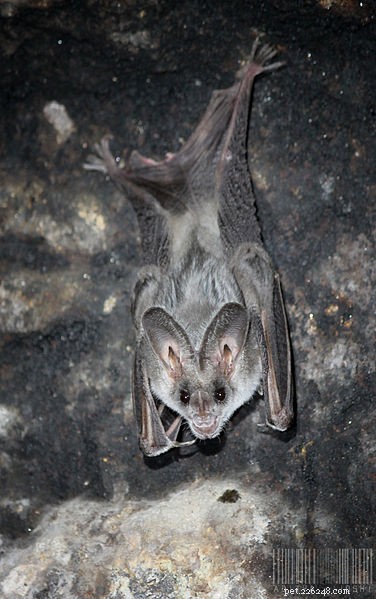 I’ve worked with True Vampire Bats in captivity, and have slept beneath nets to avoid their “attention” in the tropics…but they are, in reality, very shy. Not so the massive False Vampire Bat, which swoops out of the night to carry off mice, frogs, birds and smaller bats (Australia’s Spectral Bat has similar habits, please see photo).
I missed the chance to see this amazing predator while working in Costa Rica, but did find a hollow tree where one roosted. The floor below was littered with parrot feathers and frog skulls. Shortly thereafter, one of our resident Amazon Parrots disappeared overnight, and many suspected that a False Vampire was the culprit. You can read about this incident here.
Thailand Fanged Frog, Limnonectes megastomias
Horned and African Bullfrogs are well known for using their tooth-like odontoid processes (extensions of the jaw bone) to inflict wounds on careless owners. But a recently-discovered frog in Thailand sports even longer “teeth”, and uses them to ambush a unique food – birds! Males also employ the teeth to slash at one another during mating disputes. You can see a photo of their 2-inch-long weapons in the article linked below.
Fire Salamander, Salamandra salamandra
This brilliantly-colored salamander was rarely seen by people, as it stayed within dead logs save for rainy nights. When logs were burned for fuel, the salamanders emerged, seemingly “from the fire”, and crawled away. In time, Fire Salamanders became associated with witchcraft, and are likely the species people had in mind when telling of “witches’ brews” (their skin toxins do contain a complex mixture of unique chemicals…maybe these were “sampled”?).
Fire Salamanders make very personable pets, being far more responsive than many amphibians. My pair is nearly 18 years old, and others have kept them for over 5 decades. Please see this article for further information.
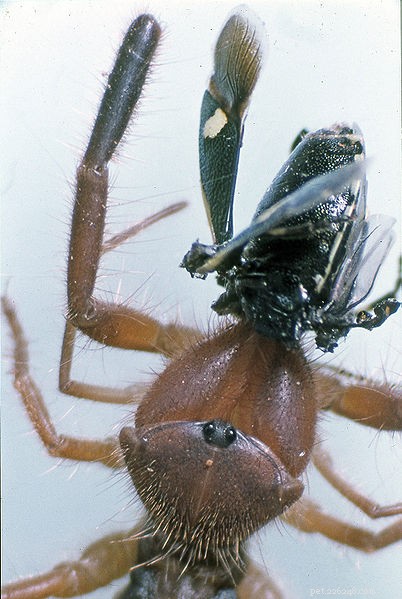
Camel Spiders or Windscorpions (Order Solifugae) and Tailless Whipscorpions, Damon variegatus
Neither spiders nor scorpions, these arachnids are an arachnophobe’s nightmare. In their natural habitat, the diurnal Windscorpions have the unnerving habit of following people so as to stay in their shadow. This, and their ragged, out-sized jaws (see photo) render them quite “un-loved” – to say the least! Tailless Whipscorpions are more secretive, but their immense pinchers give pause to even the most die-hard arachnid enthusiasts.
Both make interesting terrarium subjects for those with some experience. Please see these articles on Windscorpions to learn more.
Goblin Shark, Mitsukurina owstoni
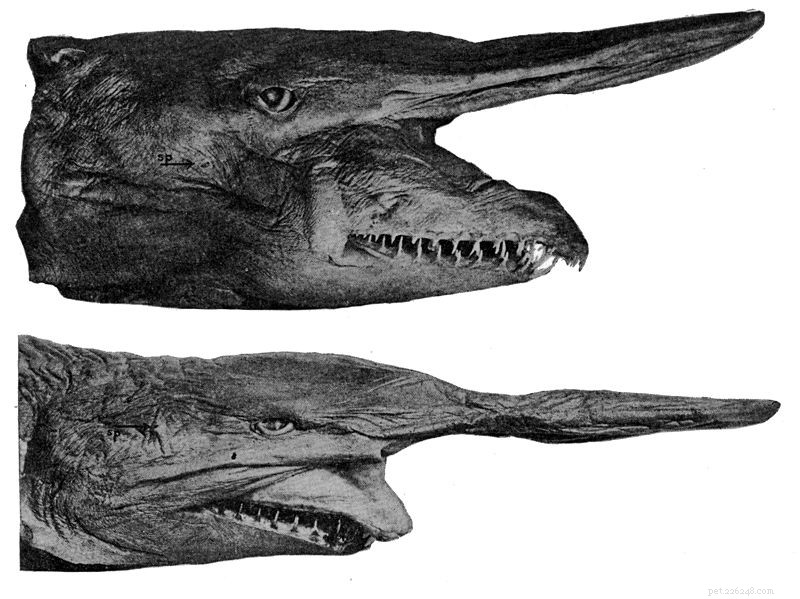 The huge, extendible jaws of this deep sea predator, and the odd muscle that sucks food towards them, seem to have sprung from the imagination of a science fiction writer (please see photo). Living at depths of 600 – 4,000+ feet, the Goblin Shark has been found in far-flung locations; little is known of its natural history.
Rose’s Ghost Frog, Heleophrynidae rosei
Nothing scary about this little fellow…except for the fact that it lives only within several miles of habitat on South Africa’s Table Mountain, and is in rapid decline! Ghost Frogs are the most ancient of the “modern” Anurans, having diverged from their closest relatives some 160 million years ago. Large toe pads and extra skin folds (for oxygen absorption) suit the Ghost Frog for life near fast-moving streams. Its eggs have never been found.
Hellbender, Cryptobranchus alleganiensis
As a child, I was fascinated by this heaviest of North America’s salamanders, and couldn’t imagine why grown men considered it “from hell” and would reportedly cut a fishing line rather than reel one in. Years later, I had the good fortune to work with Hellbenders, and even to see their 5-foot-long relative, the Japanese Giant Salamander, in its native land. I wonder what reaction this behemoth would cause in the average angler!
- 12 Native Wisconsin Frog Species – Identification, Habitats, and Photos
- Halloween Crested Gecko: Vibrant Orange-Striped Reptile – Care Guide & Facts
- Strawberry Pacman Frog: The Charming South American Amphibian Pet
- Halloween’s Most Eerie Creatures: From Orange Crabs to Goblin Sharks
- Essential Halloween Safety Tips to Protect Your Pets
- Japanese Tree Frog’s Astonishing Defense: Ejecting Its Entire Stomach to Avoid Poison
- The Life Cycle and Biology of Frogs: From Eggs to Adult