

Giant Centipedes: Bat Hunters, Survivors, and Safety Tips – Part 1
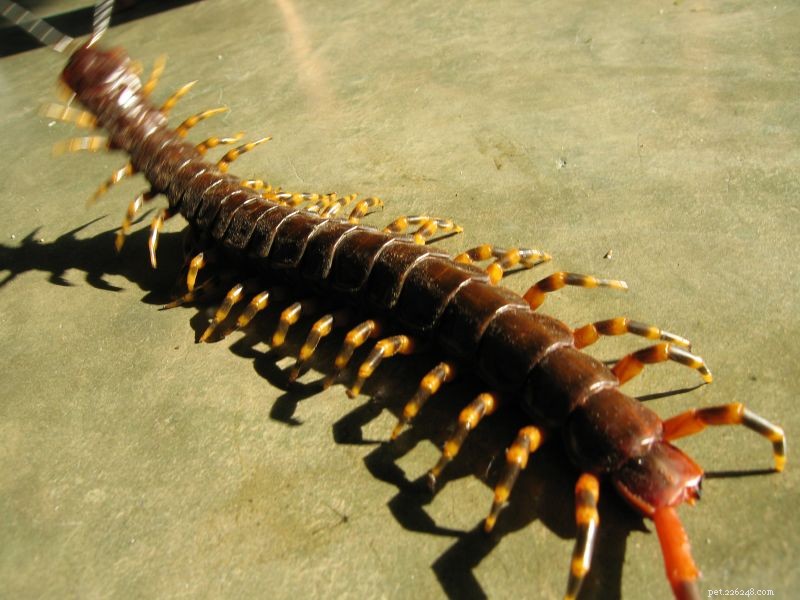 I’m told that bats feature in many people’s nightmares (I’ve kept several species, including Vampire Bats, and have found all to be quite calm, and even trainable in some cases, but that’s just me!). If bats themselves have nightmares, then surely the Amazonian Giant Centipede, Scolopendra gigantea, must make numerous appearances…the video linked below of one hunting bats in a cave will illustrate my point. Another of these aggressive beasts gave me more than a few sleepless nights, and stress-filled days, as well.
Escaped Leopard Dealt with, Escaped Centipede…
My own Giant Centipede nightmare began when an 11-inch-long specimen destined for a zoo exhibit escaped in a holding room. Among the animal keepers working there at the time was a woman who had lost several fingers to a Gorilla, a man who had been gored by a Gaur (a giant relative of the cow), and another who had been chased by a Kodiak Bear and carried an Anaconda tooth buried in his wrist (yours truly).
Each of us had also helped round-up formidable escapees, including Spitting Cobras, Cassowaries and Snow Leopards, yet to the person we were terrified of picking up anything without first checking that the savage little invertebrate was not lurking below!
A Near-Perfect Defense
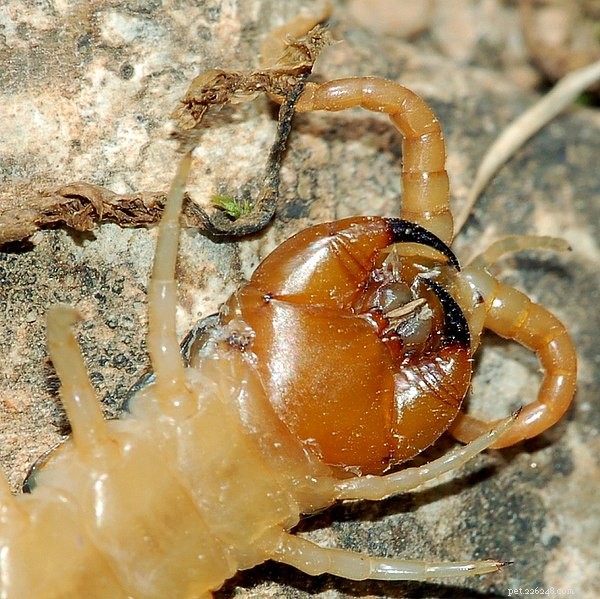 Such is the reaction of many who have witnessed first-hand an agitated or hungry Giant Centipede in action. The head rears up and whips violently back and forth, drawing attention to the huge, sharp, venom-injecting fangs (known as the forcipules, or maxillipeds), which seem almost impossible to avoid. Those who have seen the vicious wounds that these fangs can inflict on even large prey animals steer well clear of these ultimate invertebrate predators.
There is simply no place to grab a centipede, as its flexibility is unrivaled in the animal kingdom – most snakes pale in comparison (the animal being held in the photo is dead). Even if one succeeded in reaching the area just behind the head, the hard, pointed rear legs would be brought to bear on the skin, causing intense pain not only from trauma but also via irritating chemicals that are released in stressful situations…most enemies let go of the head, and are immediately bitten.
Centipedes belong to the Invertebrate Class Chilopoda, which contains over 3,000 species. Actually, we have no idea how many exist – several years ago a new species was discovered in NYC’s Central Park, in an area trod daily by thousands of people (please see article below)…imagine what lurks deep below tropical forest floors!
- Are Giant Centipedes and Millipedes Suitable Exotic Pets?
- Mastering Newt Care: Natural History & Captive Management – Part 1
- Herpetology Societies & Journals: Spotlight on Emerging Groups & New Publications – Part 2
- Premier Herpetology Societies & Journals—Open to All (Part 1)
- Assassin Bugs: Captive Care & Spider‑Hunting Tactics – Part 2
- Giant Centipedes: Bat Hunters, Escape Tales & Safety Tips – Part 2
- Giant Centipedes: A Professional's Guide to Care, Bites, and Behavior