

Venomous Snakebites: Expert Responder Shares Real-World Experiences and Notable Cases
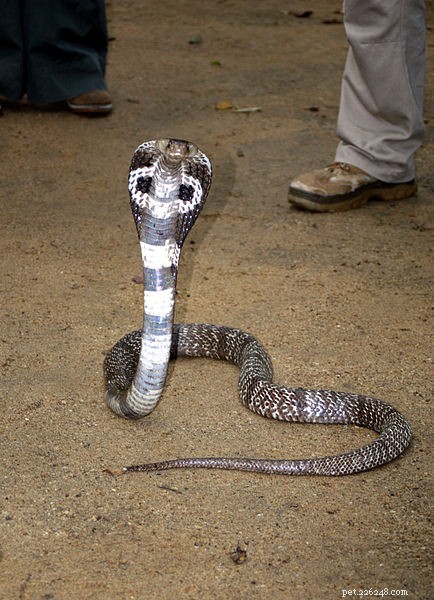 TV personality Mark O’Shea’s recent King Cobra bite brought to mind the many experiences I’ve had as a snakebite responder for the Bronx Zoo. Mr. O’Shea survived, but venomous snakes claim a surprising number of lives worldwide (4.5 million bites, possibly 100,000 deaths; please see article below). Some bites, as you’ll see, occur in a most unlikely place –New York City! As is fitting for my fair city, few were “routine” – guns, odd characters, suicides, and drug dealers all made appearances.
Zoos and Snakebite Emergencies
The Bronx Zoo cooperates with health authorities in the treatment of venomous snakebites. Antivenin is typically stored at the zoo, not in hospitals. A doctor called upon to treat a bite might not be able to identify the snake involved, and hence would be unable to administer the correct antivenin. In the event of a bite, Bronx Zoo reptile keepers and other staff are summoned by zoo security, a hospital, or the NYPD. Usually, NYPD transports us to the hospital.
In years past, the Bronx Zoo reptile staff was trained to inject antivenin on site. However, we now know that many people are allergic to antivenin, and the resulting anaphylactic shock can kill more quickly than many bites.
Today zookeepers learn emergency first aid, and if bitten would be taken to the hospital via police car. Snakebite alarms are located near each appropriate cage. I once had venom enter my eye when an Eastern Diamondback Rattlesnake struck the screen top of its enclosure. This is normally not a concern, as only Spitting Cobra venom affects eye tissue, but there were stitches in my eye due to a recent cornea transplant. Thinking this might allow venom into my bloodstream, I activated the emergency system. Putting myself in the NYPD’s capable hands, I arrived at Jacobi Hospital in record time.
Big Apple Snakebites
Late nights, men in their 20’s, and alcohol were involved in many of the bites I responded to while working at the Bronx Zoo. Yet several especially “bizarre” (being diplomatic here!) incidents lacked these common elements. For example, one young man decided to determine the sex of an illegally-captured Copperhead while driving – with his dog in the car! Needless to say, he was bitten.
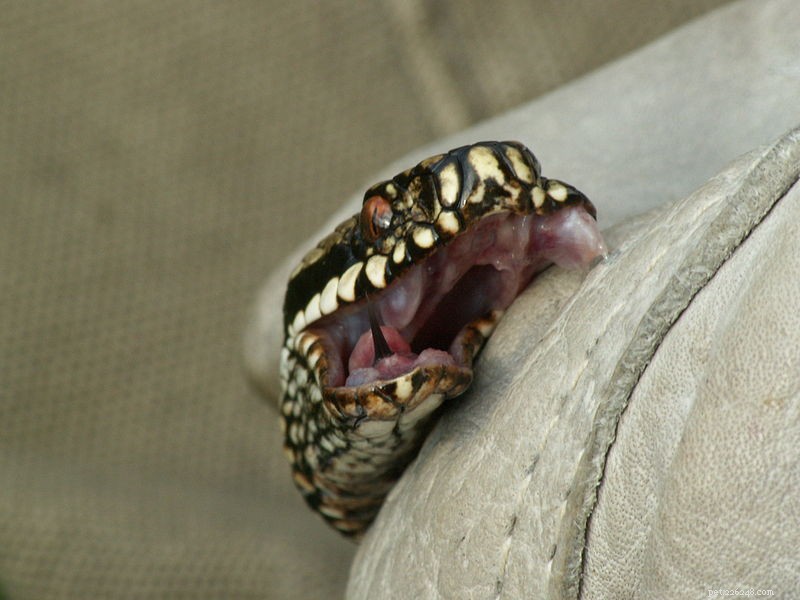
Another man, aged 45 or so, routinely carried snakes in his robe pocket, and was said to shower with a cobra! He was bitten on 4-5 occasions, and several times arrived at the hospital via private chopper (he was wealthy with, some have suggested, a bit too much free time on his hands!). His closest brush with death came when he grabbed an electrified cattle fence during a rainstorm, after a Timber Rattlesnake bite. Believing he could “de-nature” the venom, he instead succeeded in “de-naturing” his blood! The attending doctor commented that his blood was “not really blood anymore” – it lacked all clotting factors, and resembled that of someone struck by lightning.
I was sometimes called to Kennedy Airport to assist US F&W Service inspectors with imports. On one occasion, an importer was bitten by an Indian Cobra and barely escaped with his life. However, he then spent a chunk of that life in jail, as illegal weapons were found secreted below the snakes.
The two snake-related deaths that occurred during my tenure had unusual twists. In one sad incident, a distraught young man committed suicide, apparently by inducing his “pet” rattlesnake to bite repeatedly. In the other, a suspected drug dealer was bitten by a small cobra that he was planning to use as a guardian of sorts. Believing the bite to be “minor”, he decided to “monitor it”. He passed away in his sleep that night.
A most interesting call came from the NYPD late one night. In the course of investigating the burglary of a food store in Flushing, they encountered 40 or so live, poorly-caged Western Diamondback Rattlesnakes; others were cooked and steeping in various liquids.
In the course of my career, I and/or my co-workers responded to 30-40 snakebite calls. I recall only one that involved a person being bitten while working outdoors. The culprit was a Massasauga or “Swamp Rattler” (Sistrurus catenatus), a rare species that I have yet to observe in the wild.
Venomous snakes may not legally be kept in private collections in NYC, but people can purchase them in nearby areas have no such laws. Unfortunately, many do not realize that the process of getting antivenin to a victim can be quite lengthy, and even if one survives, permanent damage, including tissue and limb loss, may result.
Those at Greatest Risk
The overwhelming majorities of snakebite victims live in the rural tropical regions, and encounter snakes in the course of their daily activities. Up to 1.5 million people are bitten in Sub-Saharan Africa alone, with over 7,000 deaths and 14,000 limb amputation resulting (only 10% receive antivenin). Please see this article for further information.
The USA presents a very different picture. Here, pet owners and people disturbing wild snakes are the typical victims. Bites to people working outdoors are not common – in 21 years of responding to snakebites in the Northeast, I dealt with but one such incident.
I know of two NYPD officers who were bitten by snakes while poking through rubble during investigations. Fortunately, one involved a Kingsnake and the other, if it was delivered by a venomous species (the snake escaped) was a “dry bite”. As often occurs, both victims were so nervous that several classic signs of envenomation appeared. This reaction is not limited to those unfamiliar with snakes. I’ve attended several bites that involved, shall we say, insecure young men with a misplaced sense of machismo – none held up the “tough guy act” after being bitten!
Zoo-based reptile keepers handle many snakes in the course of their careers (via snake hook – hands are for TV personalities!). Bites occur, but are rare, all things considered. However, working closely with dangerous animals is a risky business, and even the most retiring of creatures can surprise the most experienced of herpetologists…witness Steve Irwin’s tragic death while filming a stingray (possibly a Cowtail Ray, Pastinachus sephen) in 2006.
“Well-Known” Snakebites
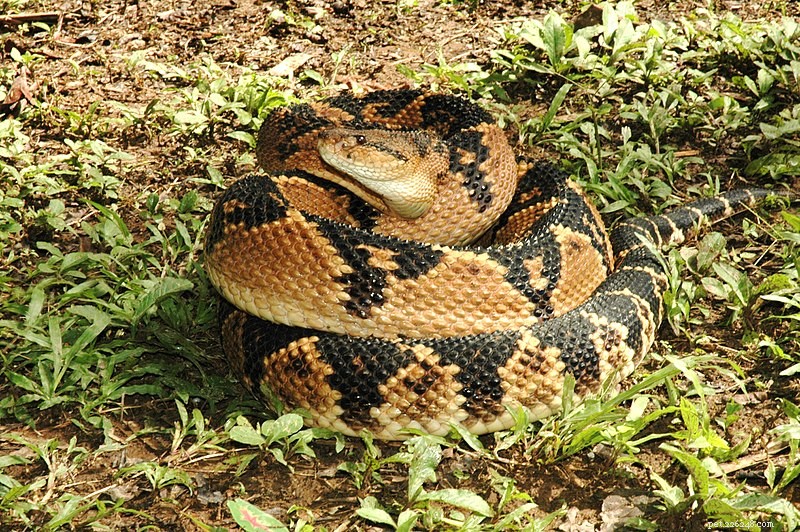 Of course, not all bites occur under the unusual circumstances I’ve described. Well respected biologists are not immune. In fact, two snake species were not known to be venomous until they killed prominent herpetologists! (Please write in for details). More recently (2001), noted herpetologist Joseph Slowinski was killed by a Multi-banded Krait (Bulgaris multicintus) while on field research in Myanmar in 2001.
The recent King Cobra bite to Mr. O’Shea occurred during a feeding accident at a UK zoo. Mr. O’Shea, believing that the fangs had not broken his skin, continued his presentation until becoming dizzy (Marlin Perkins, of Wild Kingdom fame, actually took notes on the progression of his symptoms after being bitten by a Gaboon Viper at the St. Louis Zoo! Luckily, he was found, unconscious, by a keeper. I’m in no position to criticize such an accomplished man, but….!). Mr. O’Shea is expected to make a full recovery. I’ve dealt with captive and escaped King Cobras – they are in a class by themselves; please see A Close Call with a King Cobra for details.
Legendary snakeman Bill Haast was bitten hundreds of times, and routinely injected venom into his body in hopes of building up immunities. His unique story is related here.
- Spot the Hidden Venomous Snake: A Brain Teaser from a Snake Biologist
- Understanding Dog Separation Anxiety: Causes, Symptoms, and Solutions
- Painted Turtle Care & Natural History: Expert Tips for Owners
- Dwarf Chameleons: Expert Care Tips & Natural History Insights
- Assassin Bugs: Care, Spider-Hunting Behavior, and Expert Insights – Part 1
- Venomous Snakebite: New Global Study Reveals 4.5M Annual Cases & Expert Insights
- Coral Snakes: Vividly Banded, Deadly Venom—What You Need to Know