

Unlocking Human Spinal Cord Repair: Lessons from the Mexican Axolotl
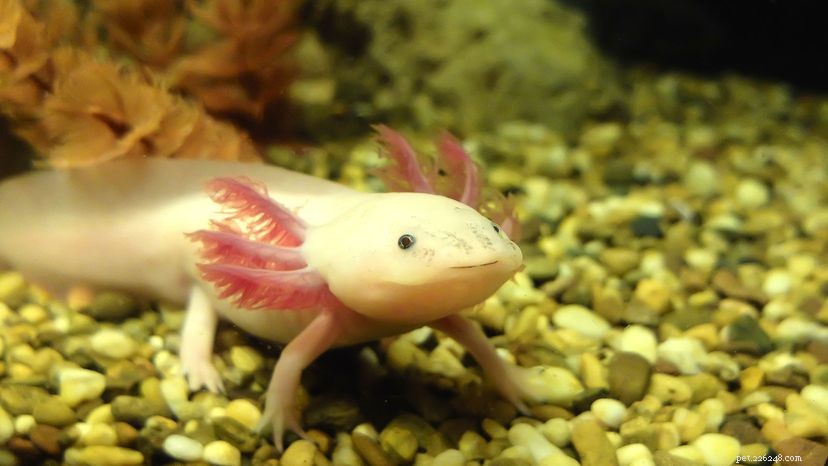 The axolotl, also known as a Mexican salamander or Mexican walking fish, is closely related to the tiger salamander.
 The axolotl(pronounced ACK-suh-LAH-tuhl) is a superhero of tissue regeneration. These foot-long creatures, which live in an array of lakes outside of Mexico City, often repair or regrow limbs, tails, hearts, spinal cords, eyes and even parts of their brains. Researchers at the University of Kentucky announced in January 2019 that they'd assembled the axolotl's genome, a major step toward more in-depth studies that could impact human health in years to come.
With its smiling countenance and frilly gills, an axolotl's genome (32 billion base pairs) is 10 times larger than a human's (3 billion base pairs), a fact that complicated scientists' efforts to unravel the animal's healing capabilities. However, they were able to do it using a technique called linkage mapping. This is the first time a genome of this size has been mapped and could be a template for other animals with large genomes.
When human beings experience spinal cord injuries, cells nearest the damage tend to result in scar tissue. In the axolotl (or Mexican salamander or Mexican walking fish), however, those cells often repair much of the worst nerve damage, restoring function in ways that human bodies just can't. But what if the amazing regenerative properties of this animal's physiology could somehow be translated into human medicine?
It turns out that salamanders don't have some sort of miraculous healing genes; they actually share many genes with humans. It's just that their bodies control the gene expression to repair injured nerves differently. If scientists can figure out how to manipulate those genes, they may be able to trigger those healing properties in people and find ways to rebuild damaged spinal cords or address any number of other neurodegenerative diseases, like Parkinson's and Alzheimer's that afflict millions of people.
The scientists hope that their genome studies will be cause for greater conservation efforts on the part of Mexico's government for the critically endangered axolotl. The amphibian is a close relative of the better-known tiger salamander, though the axolotl lives continuously in the water. It is suffering in the wild due to habitat loss, urban pollution, hunting, invasive species, as well as the effects of climate change. Fortunately, the species tends to thrive in laboratory tanks, but the degradation of wild populations limits genetic diversity and could ultimately impact the breadth of medical research, too.
NOW THAT'S INTERESTINGA specific type of axolotl called the achoque is found in just one place — Mexico's Lake Pátzcuaro. These endangered species have found allies in local nuns, who tend to hundreds of them in tanks. The nuns use the creatures' skins to make a natural cough remedy called jarabe.
- Recognizing Dog Spinal Cord Injury: Key Signs & Symptoms for Prompt Care
- Understanding and Treating Hind Leg Weakness in Dogs
- Do Tarantulas Pose a Threat to Humans? Understanding Their Aggression Levels
- Mexican Fireleg Tarantula (Brachypelma boehmei) Care Guide
- Axolotl (Mexican Walking Fish) – Comprehensive Species Guide
- California Tiger Salamander: Habitat, Threats, and Conservation
- Understanding Spinal Cord Injuries in Cats and Kittens: Causes, Symptoms, and Care