

The Black Mamba: Africa’s Most Lethal Snake Revealed
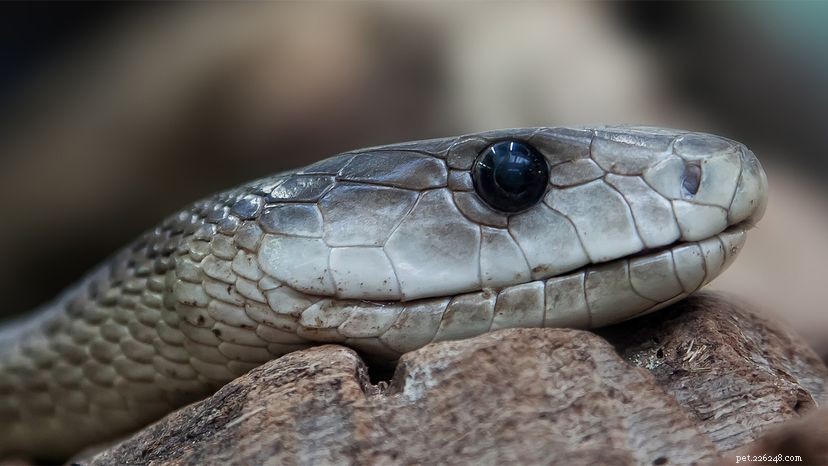 The black mamba (Dendroaspis polylepis) may look all sweet and cuddly (just kidding), but its venom can kill a human being in about 20 minutes.
 "Coffin-shaped." That's how writers tend to describe the head of Africa's black mamba (Dendroaspis polylepis). It's a deliciously ominous label. After all, we're talking about one of the most feared serpents in the Eastern Hemisphere. Armed with potent venom, this creature can kill a human being in under 20 minutes.
The reptile is also renowned for its size. Of all the venomous snakes alive today, only the king cobra grows longer. Mature black mambas have an average length of around 7 to 9 feet (2 to 3 meters). However, exceptionally big ones — measuring just under 14 feet (over 4 meters) long in some cases — have also been documented.
"Honey Badger Don't Care"
Besides eagles and crocs, black mambas have to avoid Africa's celebrity snake-slayers: Mongooses and the internet-famous honey badgers.
Let's start with the latter. James Stevenson-Hamilton — the first game warden of what's now South Africa's Kruger National Park — reported seeing a wild honey badger kill a black mamba in 1947. Snakes in general happen to be a major food source for these badgers.
Unlike badgers, mongooses are very fleet of foot. To subdue a venom-wielding snake, they'll dance around it and egg the creature on until fatigue sets in. Then, bam! The furball goes in for the kill with its strong jaws and sharp little teeth.
Turns out both mammals have a molecular ace in the hole: They've independently evolved a natural resistance to certain snake venoms.
Human beings aren't so fortunate.
The Dangerous Chemistry of Neurotoxins
Naturalists classify mambas as proteroglyphous snakes. This means the reptiles have fangs located at the front of their upper jaw bones that aren't very mobile. Whereas the timber rattlesnake (for example) can fold its fangs against the roof of its mouth, proteroglyphs — like mambas and cobras — can't follow suit.
Black mambas are normally shy around people. Given the opportunity, Dendroaspis polylepis will zip away from humans, mongooses and other animals that might try to hurt it.
Unfortunately, mambas are a common sight in rural farmlands, where they'll shack up in barns. Such proximity puts both mambas and humans in harm's way.
According to the African Snakebite Institute, a rearing mamba can lift up to a third of its body length off the ground. That gives the serpent a huge strike range.
Neurotoxins — substances that harm or impair the victim's nervous system — are a major component of black mamba venom. People who've been bitten by the snakes may experience paralysis, abdominal pain, slurred speech and other delightful symptoms like vomiting and vertigo.
In extreme cases, it can take less than 20 minutes for the mamba's bite to kill a human being. (Though some victims hang on for several hours before expiring.)
Needless to say, anyone who's been struck by one of these snakes should be immediately hospitalized.
The good news is there's an antivenom available. When properly treated, many victims survive. We should also note that black mambas sometimes deliver harmless "dry bites," in which they strike their target without administering any venom. No need to waste the stuff.
Now That's InterestingThe late NBA All-Star Kobe Bryant nicknamed himself the "Black Mamba" after hearing about these snakes in Quentin Tarantino's 2004 movie, "Kill Bill: Volume 2."
- Engaging Your Pet Snake: Safe Play & Bonding Tips
- 2013: The Year of the Snake – Traditions, Traits, and Fortune
- How to Choose the Ideal Pet Snake: A Comprehensive Guide
- Boelen's Black Python: Discover the Majestic Constrictor
- Love the Dog You Have: Embrace Today, Strengthen Your Bond
- The Black Mamba: Africa’s Most Lethal Snake Revealed
- All Newfoundland Coat Colors Explained – With Stunning Pictures