

African Clawed Frog (Xenopus laevis): From Pregnancy Test Pioneer to Global Invasive Threat
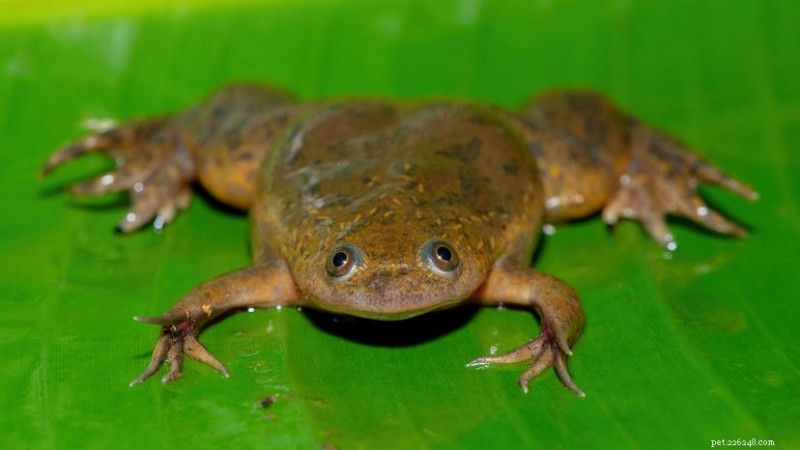
Meet the African clawed frog, a fully aquatic amphibian that blends the allure of a living fossil with a storied legacy in scientific research and a reputation as an ecological wildcard.
Native to southern Africa, these amphibians have spread worldwide through scientific research, the pet trade, and accidental releases, making them one of the most successful invasive species in modern history.
What Makes African Clawed Frogs So Unique?
Female African clawed frogs grow larger than males, reaching up to 5 inches (12 cm). Their dark brown skin, visible cloacal opening, and distinctive black claws on the front feet set them apart from most other frogs.
Unlike typical frogs, they lack a tongue and true ears, but possess a sophisticated lateral line system that detects water movement—an adaptation that aids in hunting.
These amphibians use their claws to tear prey or push food into their mouths, feeding opportunistically on aquatic invertebrates, small mammals, fish, other amphibians, and even organic waste.
They can burrow into mud during droughts, tolerate polluted waters, and thrive in both still and flowing environments. Their characteristic slow ticking sound is believed to serve as underwater communication during mating.
Habitat and Behavior in the Wild
In their native range, African clawed frogs occupy shallow, stagnant water bodies such as ponds and ditches, preferring soft mud where they can burrow during dry periods.
Being fully aquatic, they rarely leave the water unless forced by environmental changes.
Without vocal cords, they produce sounds by snapping muscles around their larynx, enabling underwater communication.
When feeding, they create a powerful vacuum by dropping the floor of their mouth, sucking prey directly into their jaws.
From Lab Bench to Lakes: A Global Amphibian
First described in 1836, Xenopus laevis gained international acclaim as a model organism in developmental biology. It was the first vertebrate to be cloned (1962) and remains a cornerstone of genetic and embryological research. Its smaller cousin, Xenopus tropicalis, is also widely used in laboratories.
Laboratory use and the pet trade led to accidental releases and escapes, establishing populations in non‑native areas such as Southern California, where they spread via irrigation systems and floodwaters.
Ecological Impacts of an Ongoing Invasion
In invaded habitats, African clawed frogs outcompete native species and prey on amphibians, fish, and even small birds. Their presence can force native amphibians to abandon suitable habitats.
Tadpoles act as filter feeders, competing with native filter feeders, while adults displace less aggressive native frogs.
They also carry and spread the chytrid fungus (Batrachochytrium dendrobatidis), a pathogen that has devastated amphibian populations worldwide.
Controlling the Spread of Clawed Frogs
Management strategies include trapping, public education, and habitat modification. Environmental agencies strongly advise against releasing pet frogs into the wild.
Research published in journals such as Amphibia‑Reptilia, the South African Journal of Science, and the Zoological Society of London has documented their impact on biodiversity and native habitats.
Regulating the pet trade, monitoring wild populations, and preventing accidental releases are essential to mitigate their long‑term threat to conservation efforts.
This article was co‑created with AI and thoroughly fact‑checked by a HowStuffWorks editor to ensure accuracy and reliability.
- Why Dachshunds Lick Other Dogs' Mouths – Insights Into Their Friendly Behavior
- Prevent Mold in Dog Food Containers: Proven Tips & Tricks
- Pitbull‑Lab Mix: The Ultimate Owner's Guide to Bullador Care
- Essential Pet First Aid Kit Guide: Must-Have Items for Your Pet’s Safety
- 10 Small Cat Breeds: Compact, Charming, and Perfect for Apartment Living
- Master Australian Shepherd Grooming: Expert Brushing Tips
- Why Dogs Love Peanut Butter: Science & Safety Guide