

Rain Frogs: The Hidden Amphibians That Emerge Only After Storms
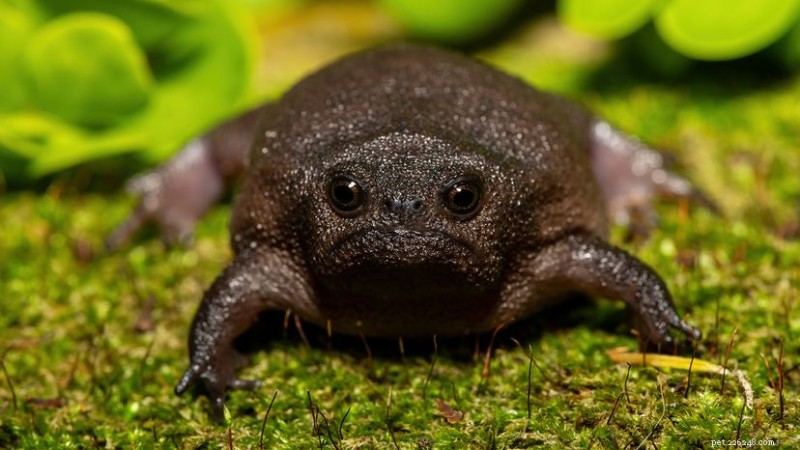
If you’re in a desert region during a sudden rainstorm and hear a high‑pitched squeak, it’s likely a rain frog calling to its mate or warning predators. These tiny, burrowing amphibians spend most of their lives underground, surfacing only when moisture arrives.
“Rain frog” is a collective name for several species in the Brevicipitidae family, all characterized by their compact bodies, short limbs, and a habit of remaining hidden beneath the surface. Though they share common traits, each species has distinct features and ecological preferences.
What Makes a Rain Frog a Rain Frog?
Rain frogs are adapted to arid environments. Their stout bodies and powerful forelimbs are designed for digging, not hopping. Unlike most frogs that rely on jumping, rain frogs tunnel into the soil to escape heat and conserve moisture.
They lack strong hind legs and are generally non‑swimming. Instead, they absorb water directly through their skin and rely on burrows to maintain a humid microclimate. Surface activity is triggered by rainfall, which signals a window for mating and egg‑laying.
Where Do Rain Frogs Live?
These amphibians are endemic to sub‑Saharan Africa, with a concentration in South Africa, Namibia, and surrounding regions. Their habitats include sandy soils and coastal dunes, where fog and occasional showers provide essential moisture.
Depth of burrows varies by species and local conditions: some dig only a few centimeters, while others descend deeper to access more stable humidity levels.
Weird and Wonderful Adaptations
Rain frogs have evolved several remarkable strategies to survive dry periods. When threatened, many species inflate their bodies and emit a squeak that can startle predators—a defense mechanism more effective than escape.
Reproduction is uniquely adapted: eggs are laid in underground chambers and develop directly into miniature frogs, bypassing the free‑living tadpole stage. This strategy eliminates the need for standing water, a critical advantage in arid habitats.
Why Rain Frogs Are Hard to Study
Because they remain underground for most of the year, researchers have limited opportunities to observe rain frogs in the wild. Their cryptic coloration—ranging from pale to dark—further blends them into their surroundings, making visual identification difficult.
Population estimates remain uncertain, and behavioral studies are constrained by the infrequency of surface activity. Most knowledge comes from acoustic monitoring during rain events.
The World Is Paying Attention
Social media has turned rain frogs into viral curiosities, with videos of their squeaks and puffed‑up displays amassing millions of views. However, popularity alone has not yet translated into robust conservation measures.
Habitat loss, climate change, and shifting rainfall patterns threaten these specialized amphibians. Even minor alterations in precipitation can disrupt their breeding cycles and reduce survival rates.
Scientists are working to gather more data before irreversible losses occur. Increased public awareness and targeted habitat protection are essential steps to ensure their continued existence.
We created this article in conjunction with AI technology, then made sure it was fact‑checked and edited by a HowStuffWorks editor.
- Can Dogs Recall Locations? Exploring Canine Spatial Memory
- 17 Unintentionally Stunning Pet Photos That Will Melt Your Heart
- Dogs See a Rich Spectrum of Colors, New Study Reveals
- Tracing the Evolution of Dog and Cat Breeds Through History
- How to Feed Your Dog When Its Stomach is Upset – Safe Foods & What to Avoid
- Rastreador Brasileiro: Portugal’s Rare Scenthound Revival
- Celebrate International Animal Rights Day – Dec 10: Honoring the Rights of All Creatures