

The Rare Spirit Bear of British Columbia: Genetics, Habitat, and Conservation
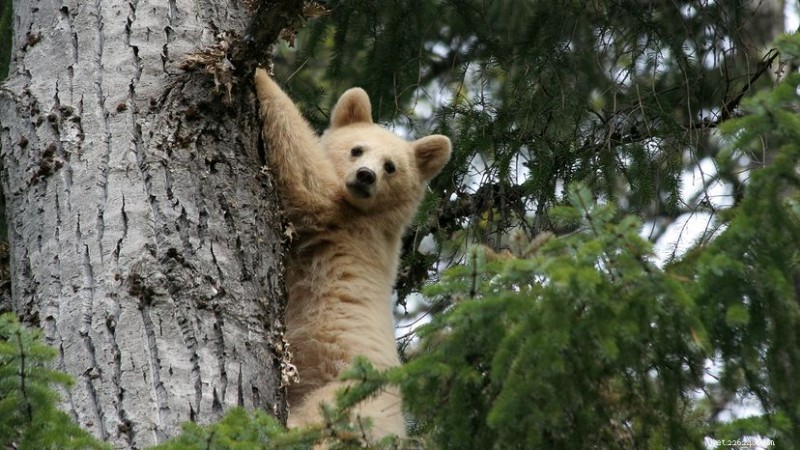
A spirit bear, a rare white form of the Kermode bear (Ursus americanus kermodei), graces the salmon‑rich rivers of the Great Bear Rainforest with its creamy coat. Although often called a “spirit bear,” it is not a separate species; it is simply a color variation of the American black bear.
What Gives the Spirit Bear Its White Coat?
Spirit bears carry a recessive gene that modifies the MC1R pigmentation pathway. When a cub inherits the gene from both parents, its fur turns white or creamy rather than the usual black. Unlike albinos, the bear’s eyes remain dark and its skin is fully pigmented.
Only a small fraction of the Kermode population carries this gene, which explains why the white bears are so elusive.
Where They Call Home
These bears exist exclusively in the Great Bear Rainforest, a 6.4‑million‑hectare (15.8‑million‑acre) coastal ecosystem along British Columbia’s north‑central coast. Many white bears live on islands such as Princess Royal Island and Gribbell Island—about 800 km (497 miles) north of Vancouver—and are accessible only by air or sea.
The rainforest’s towering trees, salmon‑laden rivers, and nutrient‑rich soil create a perfect habitat for the bears and the plants they feed on.
Fishing for Survival
While spirit bears are omnivores, salmon are their primary food source. During the fall spawning run, they gather along rivers, and studies suggest that the lighter coat may help them catch fish up to 35 % more efficiently by blending into the water’s surface.
In summer, they forage on berries, roots, and nuts to build fat reserves for hibernation.
Life Cycle of a Spirit Bear
Spirit bears are solitary, roaming wide territories except during mating season or when mothers raise cubs. Females reach sexual maturity between 2 and 9 years; males mature at 3–4 years.
After mating, females give birth during winter hibernation. Cubs are born blind and stay in the den while the mother hibernates for roughly five to seven months. A female may produce a litter every two years, though some wait three to four years.
Adult bears range from 135 to 600 lb (61–272 kg), with males generally larger.
Cultural Significance
For thousands of years, Indigenous peoples of the coast—such as the Kitasoo/Xaiʼxais and Tsimshian—consider the spirit bear sacred. In many stories, the bear is called moskgm'ol, meaning “white bear,” and is said to be a reminder of the last Ice Age.
Because of this reverence, Indigenous communities traditionally kept the bears hidden from hunters. Seeing a spirit bear is believed to bring good fortune and spiritual insight.
The animal has become a symbol of the Great Bear Rainforest and the delicate balance between humans and nature.
Why Conservation Matters
Scientists estimate the wild population at only 100–400 individuals. Their survival hinges on protecting old‑growth forest and salmon rivers. Logging, habitat loss, and declining salmon runs threaten their food supply and denning sites.
Hunting of black bears in the region can inadvertently reduce the frequency of the white‑coat gene, further endangering the species.
Organizations such as the Raincoast Conservation Foundation and Valhalla Wilderness Society work to safeguard the rainforest ecosystem, ensuring that this rare bear continues to thrive.
© 2026 HowStuffWorks. This article was produced with AI assistance and subsequently fact‑checked and edited by a HowStuffWorks editor.
- Pork Bones and Dogs: Safety, Risks, and Alternatives
- Decoding Dog Licking: 4 Expert-Backed Reasons Behind Their Affectionate Licks
- Why Cats Sleep So Much: The Dawn and Dusk Activity Mystery
- Puppy Bloat: Causes, Symptoms, and Urgent Care
- Caring for a Blind Cat: Tips for a Healthy, Happy Life
- Azawakh Temperament: Traits, Training, and Care for West African Sighthounds
- Can Parakeets Safely Eat Blackberries? A Complete Guide