

Sea Angels: Tiny, Transparent Predators That Glide Like Angels
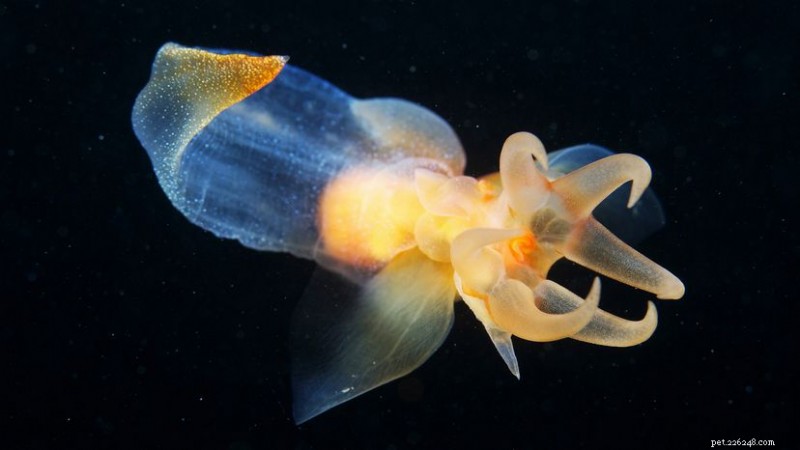
At only 2 inches (5 cm) long, sea angels may look like a whimsical Pixar character, but their graceful, wing‑like movements conceal a predatory lifestyle. These free‑swimming molluscs drift through the open ocean, hunting other pteropods such as sea butterflies, and play a critical role in marine food webs.
What Are Sea Angels?
Sea angels belong to the clade Gymnosomata within the larger mollusc group Heterobranchia, and are part of the order Pteropoda—the same order that includes sea butterflies. Unlike their shelled relatives, sea angels shed their embryonic shell within days of hatching, resulting in a translucent, gelatinous body that reaches a maximum length of about 2 inches (5 cm).
Habitat and Distribution
These pelagic creatures are found worldwide, predominantly in cold and temperate seas. They occupy the water column from the surface down to roughly 600 m, with some species recorded as deep as 1,805 m (5,921 ft). Their transparent bodies and offshore distribution make them rarely seen in the wild; sightings typically come from specialized research expeditions or large marine aquariums such as the Monterey Bay Aquarium.
Locomotion and Morphology
Sea angels evolved from terrestrial snails that used a muscular foot to glide along surfaces. In the ocean, that foot transformed into paired wing‑like structures called parapodia. By rhythmically beating these parapodia, sea angels achieve an almost buoyant, “flying” glide through the water column, giving them their angelic appearance.
Predatory Behavior
Despite their delicate appearance, sea angels are efficient predators. The most studied species, Clione limacina, specializes in preying on sea butterflies of the genus Limacina. When encountering prey, a sea angel extends two buccal cones—appendages tipped with hook‑like structures—to seize and extract the snail from its shell. A toothed radula then scrapes the soft tissue, a process that can take between two minutes and forty‑five minutes, depending on conditions. Some species adopt an ambush strategy, while others actively chase their targets.
Life Cycle and Reproduction
Sea angels are protandrous hermaphrodites: they begin life as males and later transition to females. During mating, two individuals may engage for several hours, after which they release eggs into the ocean within a gelatinous, floating mass. The embryos develop tiny shells that vanish within a few days, after which the juveniles enter the pelagic predatory niche. Their dual role as predators and prey makes them integral to oceanic energy flow.
Scientific Significance
Researchers monitor sea angels alongside sea butterflies because the latter are highly sensitive to ocean chemistry changes. Ocean acidification weakens sea butterfly shells, potentially disrupting the food chain that depends on these organisms. By studying sea angel behavior and population dynamics, scientists gain insights into the broader impacts of climate change on marine ecosystems.
This article was produced with AI assistance and subsequently fact‑checked and edited by a HowStuffWorks editor.
- Paw Wax Explained: How to Safely Protect Your Dog's Paws
- Cockatoos: 20+ Majestic Birds – Care, Personality & Tips
- Apple & Carrot Limited-Ingredient Dog Treats – Healthy Homemade Recipe
- Preventing Nitrite Poisoning in Aquarium Fish: A Practical Guide
- Top 10 Dog Breeds Least Suitable for First‑Time Owners
- Are Air Fresheners Harmful to Cats? What You Need to Know
- Kitten Arrival Checklist: Must-Have Essentials for a Smooth Welcome