

The Blue Dragon Sea Slug: A Tiny Predator that Harnesses Venom for Survival
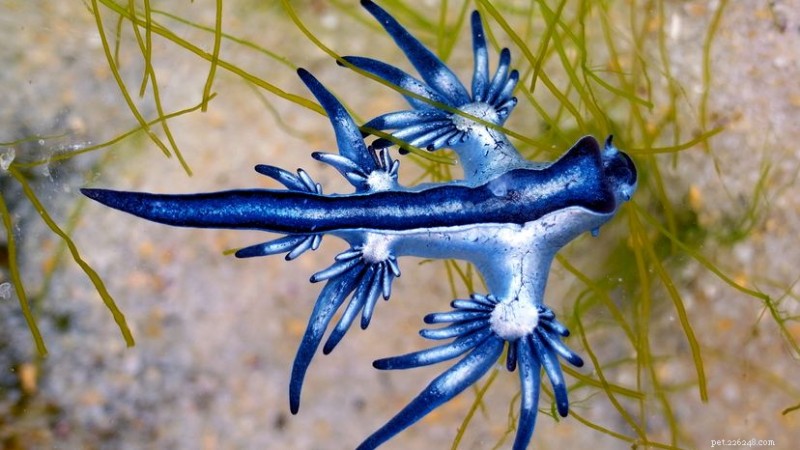
The blue dragon sea slug (Glaucus atlanticus) looks like a miniature marvel from a fantasy illustration, yet it is a potent predator that floats across the world's oceans, feeding on some of the sea’s most venomous creatures.
This tiny nudibranch, only about 3 cm (1.2 in) long, belongs to the family Glaucidae and inhabits the pelagic surface waters of the Atlantic, Pacific and Indian Oceans. Unlike most sea slugs that crawl along the seafloor, the blue dragon lives as part of the neuston—organisms that occupy the thin boundary layer between water and air.
What Is the Blue Dragon Sea Slug?
Also known as the blue sea dragon or blue angel, Glaucus atlanticus drifts upside‑down at the ocean’s surface. A small gas bubble in its stomach keeps it buoyant, allowing it to ride currents and winds. The animal’s blue upper side blends with the blue sea, while the silvery lower side mirrors the bright surface, providing effective counter‑shading camouflage.
Where Blue Dragons Live
Blue dragons are found in temperate and tropical waters across the Atlantic, Pacific and Indian Oceans. They often gather in floating groups called “blue fleets.” The species follows ocean currents, and sightings have been recorded near floating debris, other surface dwellers such as the Portuguese man‑o‑war, the by‑the‑wind sailor, and the violet snail.
Climate change and shifting currents are influencing their range. In recent years the species has been observed moving northward by roughly 93 mi (150 km) in the Gulf of California, and strong winds can carry them to unexpected coastlines, including parts of the U.S. Gulf Coast.
Feeding on Venomous Prey
Despite its size, the blue dragon is a voracious predator. It feeds on siphonophores such as the Portuguese man‑o‑war, as well as other pelagic organisms that drift near the surface. The slug uses serrated teeth to bite and swallow portions of its prey. Remarkably, it stores the prey’s stinging cells—nematocysts—in specialized sacs within its own tissues.
By concentrating these stinging cells, the blue dragon converts its prey’s venom into a powerful defense mechanism. The stored nematocysts can deliver a sting that produces symptoms similar to those of a Portuguese man‑o‑war, including intense pain. When food is scarce, blue dragons have been observed cannibalizing conspecifics.
Why Blue Dragons Can Be Dangerous
Handling a blue dragon can result in a painful sting. The venom retained from siphonophores remains active even after the slug has died. Beachgoers should avoid touching any small marine organism that washes ashore, as the bright colors of blue dragons make them easy to spot but also potentially hazardous.
Reproduction and Life Cycle
Glaucus atlanticus is hermaphroditic, possessing both male and female reproductive organs. However, two individuals must mate to produce fertilized eggs. During copulation, the slugs align their ventral sides and exchange sperm. After mating, each can lay egg strings—up to dozens per hour—containing around 20 eggs each.
The eggs hatch after about three days into planktonic larvae that begin their life drifting in the open ocean.
Conservation and Scientific Interest
The conservation status of Glaucus atlanticus remains uncertain. Because these slugs live in open water, scientists find it challenging to estimate population sizes accurately. Researchers study the species to advance understanding in invertebrate systematics, marine ecology, and surface‑dwelling ecosystems (neuston). Such studies illuminate how life adapts to extreme ocean environments.
Pollution, habitat degradation, and climate change may alter the distribution of blue dragons in the future. Ocean currents and strong winds can shift where these predators appear worldwide.
This article was produced with the assistance of AI technology and was subsequently fact‑checked and edited by a HowStuffWorks editor.
- Are Red Peppers Safe for Dogs? Pros, Cons, and Feeding Tips
- Keep Your Cat’s Water Bowl Separate From Food: Expert Advice
- Master Puppy Leash Training: Proven Steps for Smooth Walks
- Fox Terrier Health Guide: Common Conditions & Prevention Tips
- Traveling with Pets: A Comprehensive Guide to Safe, Stress‑Free Journeys
- Safe Alternatives to Steroids for Dogs: Managing Itching & Inflammation
- Claire Nicklin's 100-Mile Challenge Raises £300 for Cats After Welcoming Two New Feline Family Members