

Spotting Red‑and‑Black Snakes: Identification, Venom Status, and Safety Tips
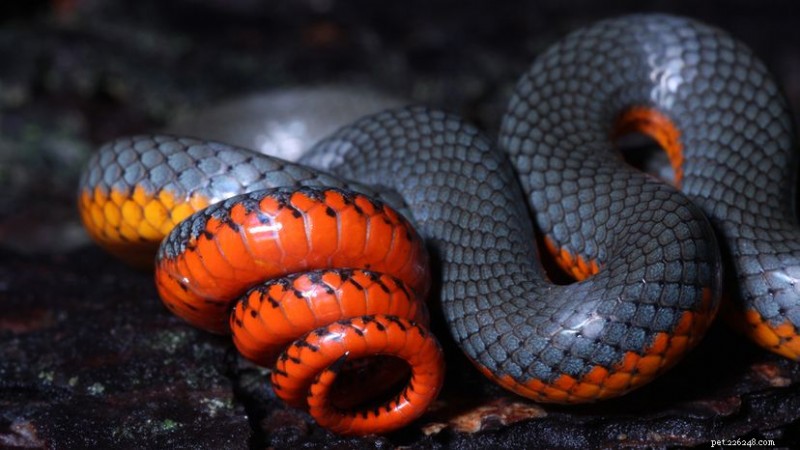
While hiking along the East Coast or the Midwest, you might encounter a striking red‑and‑black snake. Determining whether it’s harmless or dangerous is essential for your safety and the well‑being of local wildlife. This guide reviews the most common species, explains their venom risk, and offers practical advice for handling an encounter.
Common Red‑and‑Black Snakes in North America
The following species are frequently reported by herpetologists and park rangers. Each description includes size, habitat, and a brief overview of their venom.
1. Black Swamp Snake (Storeria dekayi)

The black swamp snake is almost entirely black on top, with a distinct red‑orange belly. It is native to Florida and typically reaches 15 inches (38 cm) in length—roughly the size of a human hand. This nonvenomous species poses no threat to humans.
2. Ring‑Necked Snake (Diadophis punctatus)

Found along the eastern seaboard and into the Midwest, the ring‑necked snake has a dark gray back and a bright red or yellow belly, capped by a distinctive colored collar. It feeds on earthworms and small vertebrates. Although its saliva contains a mild paralytic toxin, bites are rare and usually cause only a sting‑like discomfort.
3. Red‑Belied Black Snake (Australia)

Endemic to eastern Australian wetlands, this snake mirrors the black swamp and ring‑necked snakes in appearance. It carries a low‑potency venom used to subdue prey. Human bites are uncommon but can result in swelling, nausea, and abdominal pain if the snake is provoked.
Red, Black, and Yellow Snakes: Venomous or Not?
1. Eastern Coral Snake (Micrurus fulvius)

The eastern coral snake is among North America’s most venomous pit vipers. It inhabits sandy soils, grasslands, and swamps in the southeastern United States. Its iconic banding—black, yellow, and red—follows the rhyme, “Black touches yellow, kill a fellow.” The venom is a potent neurotoxin that requires immediate medical attention.
2. Milk Snake (Lampropeltis triangulum)

Milk snakes are widespread across North America and are favored by herpetoculturists. They occupy burrows, barns, and dense vegetation. While some subspecies display red, black, and yellow bands that mimic coral snakes, the red and black bands never touch. Milk snakes are harmless; their bites are rarely felt and never penetrate skin.
3. Scarlet King Snake (Lampropeltis elapsoides)

Found in eastern pine forests, the scarlet king snake resembles banded milk snakes. It uses constriction to subdue prey and rarely bites humans. When it does, the bite is mild and usually harmless.
Using the “Red‑Touches‑Yellow” Rhyme Safely
The familiar mnemonic—“Red touches yellow, kill a fellow. Red touches black, you’re ok, Jack”—helps hikers differentiate coral snakes from nonvenomous mimics. However, it is not infallible. Some species, especially in desert regions, may have brown or olive bodies with minimal banding. The safest practice is to observe from a distance and avoid handling any snake, regardless of coloration.
Steps to Take After a Venomous Bite
If bitten by a venomous snake, seek emergency medical care immediately. Hospitals stocked with antivenom for local species can reduce or reverse systemic effects. While waiting, gently wash the wound with clean water (and soap if available), apply a clean bandage, and remove tight jewelry or clothing that could constrict circulation. Rest in a cool environment to slow toxin spread.
For further reading, consult the American Herpetological Society or the Nature Conservancy for region‑specific snake identification guides.
- Train Your Dog to Greet Guests Calmly and Courteously
- French Bulldog Puppy Causes Bathroom Mayhem—Caught Red-Handed in Viral TikTok Clip
- Do Bearded Dragons Safely Eat Carrots? Health Benefits & Feeding Tips
- Leonberger – The Gentle Giant: Breed Profile & Care Guide
- Can Dogs Safely Eat Curry? What You Need to Know
- Safely Managing a Dog’s Milk Production After Weaning
- Celebrate National Puppy Day: Expert Tips for Choosing & Training Your New Companion