

Tiny Titans: The World’s Smallest Lizards and Their Vulnerable Habitats
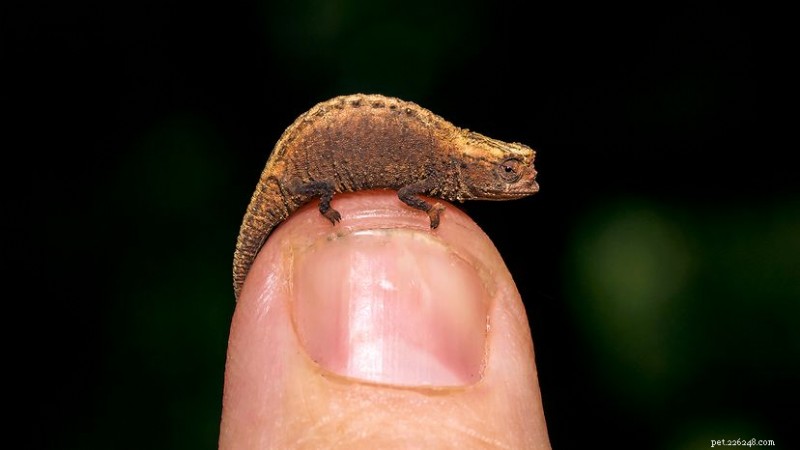
Scientists define a lizard’s size by measuring its snout‑to‑vent length (SVL), the distance from the tip of the snout to the cloacal opening beneath the tail. This metric eliminates tail length bias and provides a consistent basis for comparing species.
Until recently, the Jaragua dwarf gecko (Sphaerodactylus ariasae) held the record for the smallest lizard, with adults measuring 14–18 mm SVL (0.55–0.71 in) and weighing only 0.13 g. The species was first described in 2001 by Blair Hedges and Richard Thomas and is confined to the limestone‑based dry forests of Jaragua National Park and Beata Island in the Dominican Republic.
In 2021, researchers led by Frank Glaw—alongside Oliver Hawlitschek and Miguel Vences—published the formal description of Brookesia nana, a miniature chameleon from northern Madagascar, in Scientific Reports. With an SVL of about 12.7 mm (0.5 in), it is widely recognized as the world’s smallest lizard and, by extension, the smallest reptile.
Why Measurement Matters
Using SVL prevents distortion caused by disproportionately long tails, which can inflate total length measurements. By focusing on the body alone, researchers obtain a reliable comparison across taxa. This method keeps the Jaragua dwarf gecko as a key reference point and allows new discoveries, like Brookesia nana, to be accurately contextualized.
The Jaragua Dwarf Gecko’s Fragile Habitat
The gecko’s niche is the thin layer of leaf litter that accumulates on the forest floor of dry limestone woodlands. This microhabitat provides moisture, shelter, and a rich source of invertebrate prey. Unfortunately, the region’s forests are declining rapidly due to deforestation driven by economic pressures and weak enforcement of environmental regulations.
Caribbean ecosystems are biodiversity hotspots; many species, including the Jaragua dwarf gecko, are endemic and highly vulnerable. When the forest floor is stripped away, microclimatic conditions shift, and small organisms lose the humidity and temperature regimes they depend on.
Brookesia nana: A Nano Chameleon’s Conservation Story
Unlike its dry‑forest cousin, the nano chameleon inhabits humid rainforests on Madagascar’s northern slopes. Its diminutive size and specialized habitat make it especially susceptible to habitat loss. Conservation assessments often list it as Critically Endangered, underscoring the urgency of preserving its remaining forest patch.
Discoveries like Brookesia nana are crucial because they reveal the limits of reptilian miniaturization and highlight how rapid environmental change can threaten species that occupy very narrow ecological niches.
Life on the Forest Floor
Many of these tiny lizards are ectothermic, relying on external heat sources rather than high metabolic rates. Their compact, dorsally flattened bodies allow them to slip beneath leaf litter, bark, and rocks, while cryptic coloration and tail autotomy serve as defensive adaptations.
Because they occupy isolated microhabitats, even a small change—such as a single tree removal—can have outsized impacts on their survival. This fragility underscores the importance of meticulous field research, precise measurements, and continued documentation of biodiversity.
Our article was developed with AI assistance and subsequently fact‑checked and edited by a HowStuffWorks editor to ensure accuracy and clarity.
- Explore the All-Inclusive Whole Dog Journal Online Hub
- Mastering Dog Training: The Power of Clear Cues
- Why Dogs Smell Wet After Rain: The Science & How to Keep Your Pup Fresh
- How a Senior Golden Retriever and Cat Became Unbreakable Friends
- Top Tadpole Foods: Expert Picks & Suggestions for Optimal Growth
- Why Ferrets Steal: 4 Key Reasons & How to Stop the Habit
- Identifying Cattle: How to Distinguish Cows, Bulls, Heifers, and Steers (Illustrated Guide)