

The Brown Tree Snake: How an Invasive Reptile Devastated Guam’s Avifauna
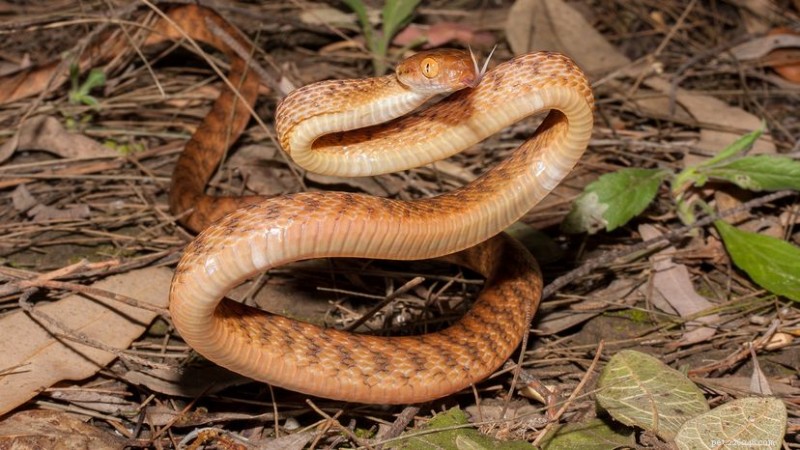
The brown tree snake (Boiga irregularis) is a master of camouflage in its native habitats across Northern Australia, the Solomon Islands, and Papua New Guinea. Yet, when it was inadvertently introduced to Guam during World War II, it became a catastrophic invasive predator.
Physical Characteristics
Typical adults range from 0.9 m to 1.8 m, with some exceptional individuals reaching 3 m. Their reddish‑brown to yellowish-brown skin features darker crossbands that blend seamlessly into tree bark and forest floor. Although not large, their slender bodies enable agile climbing, allowing them to hunt both in trees and inside human structures.
They possess mild venom delivered via rear fangs. While their bite is rarely lethal to humans, it can cause swelling and discomfort. Their primary prey includes small mammals, reptiles, and most devastatingly, birds and eggs.
Regional Variations
While Boiga irregularis is considered a single species without formally recognized subspecies, individuals from different parts of its native range exhibit subtle variations in size and band prominence. These differences are negligible compared to the species’ ecological impact when introduced to new environments.
In places like Guam, the snake has adapted to local conditions, outcompeting native predators and thriving on abundant prey.
Behavior and Habitat
Brown tree snakes are nocturnal and solitary, with the exception of the breeding season. Their nighttime activity and reluctance to confront humans have historically made detection difficult.
On Guam, they inhabit a wide array of locations—from power lines and attics to dense forests. Their presence has even caused frequent power outages by climbing electrical infrastructure.
Diet and Ecological Impact
In their native range, they maintain ecological balance by preying on small mammals, reptiles, and bird eggs. In Guam, the absence of natural predators has allowed their numbers to explode, leading to the near extinction of several native bird species such as the Micronesian kingfisher and the Guam rail.
Their predation on eggs and nestlings has been the primary driver of the dramatic decline in avian populations, eroding the island’s biodiversity.
Reproduction and Population Growth
Females lay clutches of 4–12 eggs, typically in concealed sites like rock crevices or hollow trees. Eggs hatch after roughly 60 days, and juveniles reach independence immediately. Rapid growth and a two‑year maturity period facilitate swift population expansion, especially in the absence of predators.
Conservation and Management Efforts
While the species is not endangered in its native range, its invasive status has prompted extensive control programs on Guam. Techniques include trap‑and‑kill operations, toxic baits, and the use of heat‑activated traps. Conservationists also protect remaining bird populations by isolating them in snake‑free zones and fostering captive breeding programs.
These initiatives continue to face challenges due to the snake’s pervasive presence and adaptability.
Note: This article was generated with AI assistance and subsequently reviewed and fact‑checked by a HowStuffWorks editor.
- Choosing the Right Aquarium Fish: A Beginner’s Guide to Compatibility & Care
- Kennel Cough in Puppies: Symptoms, Diagnosis, and Effective Treatment
- VitusVet: Secure, Real-Time Access to Your Pet’s Full Medical Records
- Understanding and Managing Your Puppy’s Sharp Teeth and Biting Behavior
- The Science of Kitten Sleep: How Many Hours They Rest
- Doggy Custody 101: How to Split Your Dogs After a Breakup
- Essential Vitamins & Minerals for Your Dog’s Health