

White’s Tree Frog: The Friendly Australian Pet—and Why Overfeeding Matters
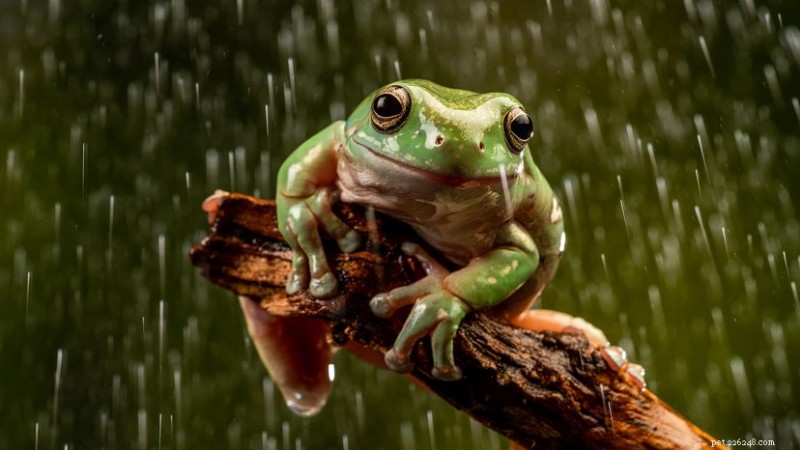
White’s tree frog (scientific name Ranoidea caerulea, formerly Litoria caerulea) is celebrated for its approachable nature and charming, plump physique. Contrary to the stereotype of frogs as shy or dirty, this species is one of the most sociable amphibians kept as a pet worldwide.
A Bright, Blue‑Green Body Built for Trees
These frogs display a striking palette of bright green to blue‑green, often with a subtle yellowish tint. Their robust bodies and large, suction‑pad toe discs give them remarkable climbing ability, allowing them to scale trees, walls, and even glass with ease. While they are primarily arboreal, they thrive in semi‑terrestrial settings that maintain high humidity and incorporate live vegetation.
Adult White’s tree frogs can reach up to 4 inches (10 cm) in length and, when kept in optimal captive conditions, can live up to 20 years. This longevity, coupled with a calm demeanor, explains why they are a staple in pet collections.
What Do White’s Tree Frogs Eat?
In the wild, their diet consists mainly of insects and other invertebrates—moths, beetles, and even smaller frogs. Captive frogs flourish on a variety of feeder insects such as live crickets, waxworms, dubia roaches, and black soldier fly larvae. These frogs are not selective feeders; however, overfeeding can quickly lead to obesity, a common health issue in this species.
Life Cycle and Mating Habits
White’s tree frogs begin their life as eggs deposited in water. Tadpoles hatch, grow, and eventually metamorphose into adult frogs. Breeding typically aligns with warm, rainy periods; males call out in a deep, croaky voice to attract mates. In captivity, reproducing these natural conditions requires careful control of temperature, humidity, and photoperiod to mimic the species’ native breeding season.
Conservation and Coexistence With Humans
Although habitat loss affects some local populations, the species is currently listed as “Least Concern” by the IUCN. White’s tree frogs remain common in suburban areas across eastern Australia and New Guinea. The species is protected in Australia, prohibiting wild collection for export. Consequently, the pet trade relies almost exclusively on captive‑bred individuals, helping safeguard wild populations.
We developed this article with the assistance of AI, and it was subsequently reviewed and fact‑checked by a HowStuffWorks editor to ensure accuracy and reliability.
- Potassium Bromide: Effective Seizure Management for Dogs
- Can Dogs Safely Snack on Nuts? A Guide to Protein-Packed Treats
- Understanding and Managing Dog Toenail Injuries: Quick Relief & Vet Care
- Why Do Cats Have Whiskers? + 50 Essential Kitten Questions Answered
- 127 Enchanting Cat Names Inspired by Myth, Magic, and Mystery
- How to Prepare Your Home for a Dog Recovering From Surgery
- Veteran Reunites With Retired Military Dog After Four-Year Separation