

The Sunbeam Snake: Southeast Asia’s Iridescent Rarity Revealed
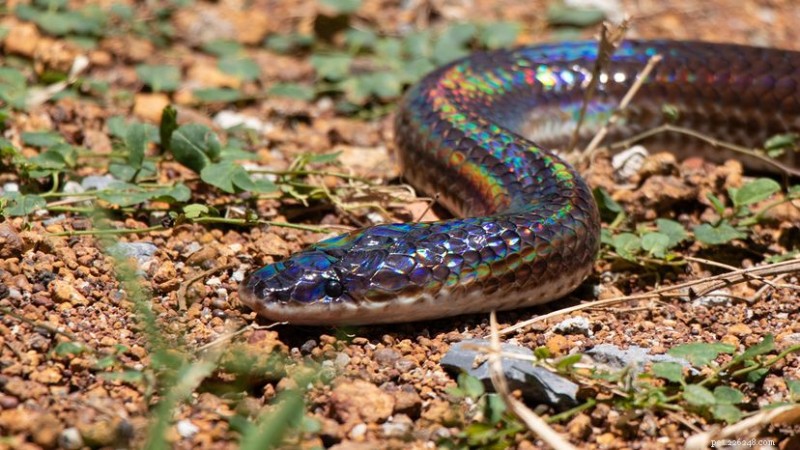
Sunbeam snakes (genus Xenopeltis) are among the most visually striking reptiles on the planet. Native to Southeast Asia, these medium‑sized snakes (3–4 ft, ~1 m) possess smooth, glossy scales that refract light into a spectrum of rainbow hues. Their dark, metallic black or brown base color creates a dramatic contrast, making them a favorite for herpetologists and dedicated snake keepers.
Physical Characteristics
Unlike the wedge‑shaped heads of many venomous species, sunbeam snakes have a uniformly rounded profile and no pronounced neck region. This streamlined form aids rapid, silent movement through leaf litter and loose soil. Their iridescent scales are the hallmark of the family Xenopeltidae, a group often regarded as a living link to early snake evolution.
Species and Distribution
The widespread Xenopeltis unicolor is found throughout Thailand, Vietnam, Malaysia, and parts of Indonesia. A close relative, Xenopeltis hainanensis, is confined to Hainan and the surrounding Nicobar Islands. Both species share identical iridescent scales and primitive anatomical traits, but differ mainly in geographic range.
Behavior and Ecology
Solitary and secretive, sunbeam snakes spend most of their time burrowing beneath soil or dense vegetation. They are nocturnal hunters, relying on ambush tactics to capture small mammals, frogs, and even other snakes. Though they are not aggressive, they will bite defensively if handled roughly. Importantly, they are non‑venomous and pose no danger to humans.
Diet and Captive Care
In the wild, they feed on rodents, amphibians, and reptiles. In captivity, appropriately sized rodents (e.g., mice or rats) provide a suitable diet. Wild‑caught individuals may require a period of adjustment before they accept captive food.
Habitat Preferences
Sunbeam snakes thrive in moist, humid environments—forests, lowland riverbanks, and rice paddies. They favor soft, loamy soils that facilitate burrowing and offer abundant cover in leaf litter or loose soil. Their distribution spans lowland coastal plains to inland forested areas across Southeast Asia.
Reproduction and Life Cycle
Females lay 5–10 eggs in concealed locations such as under logs or within burrows. Eggs incubate for several weeks; hatchlings emerge fully formed and independent, mirroring adults in appearance though with slightly less iridescence initially. Regular molting replaces old skin with new, highly reflective scales.
Conservation Status
Currently not listed as endangered, sunbeam snakes face threats from habitat loss due to deforestation and expanding agriculture, as well as unsustainable collection for the pet trade. Captive breeding programs are increasing, offering a potential buffer against wild population declines. Conservation efforts emphasize habitat preservation and responsible captive management.
Information sourced from peer‑reviewed herpetological studies and vetted wildlife databases. This article was drafted with AI assistance and subsequently reviewed and fact‑checked by a HowStuffWorks editor.
- Bronze Corydoras: Complete Care Guide for the Popular Freshwater Catfish
- Top Cat ID Tags of 2022: Keep Your Feline Safe & Secure
- 6 Expert Tips to Boost Your Cat’s Health and Happiness
- Boxer Dogs: Key Facts, Traits, and Care Guide
- Why Do Dogs Rub Their Muzzles After Meals? Understanding the Behavior
- 8 Proven Reasons Dogs Love Car Rides: Why Your Pup Can't Wait to Get in the Vehicle
- 9 Critical Signs of Diabetes in Cats You Must Spot