

The Longest Snakes on Earth: 9 Giant Species That Reign Supreme
The Guinness World Record for the heaviest snake belongs to the green anaconda, weighing over 500 lb—roughly the mass of a grand piano. When it comes to length, however, some ancient species outstretch a school bus. These slithering giants combine sheer size with formidable strength.
Let’s explore the nine species that claim the title of longest snake on Earth.
1. Reticulated Pythons (Up to 32 Feet)
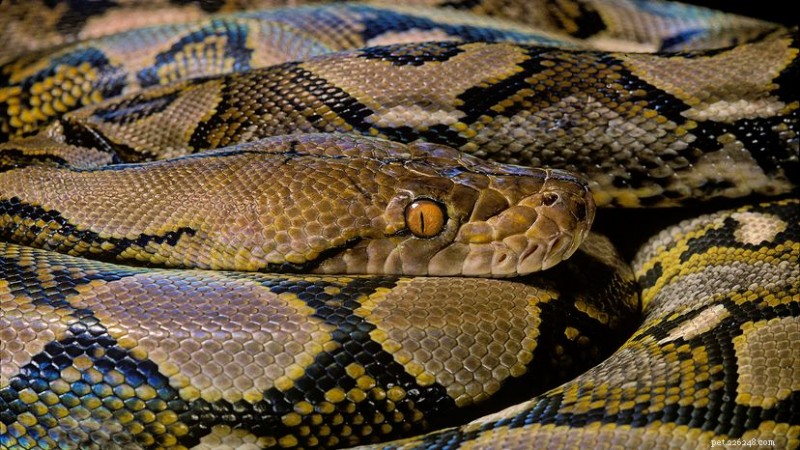
The reticulated python (Malayopython reticulatus) holds the record for longest snake. While the average adult reaches about 20 ft (6.1 m), the longest recorded individual measured 32 ft (9.8 m) in 1912. These pythons can weigh up to 350 lb (159 kg), but it’s their length that makes them stand out.
Native to Southeast Asia, the reticulated python is famous for its intricate, net‑like pattern that helps it blend into its natural environment. Recently, a large python was spotted chasing a rat through a warehouse in the Philippines. Security personnel intervened, rescued the endangered snake, and handed it over to local authorities for proper care.
2. Green Anacondas (Up to 30 Feet)
The green anaconda (Eunectes murinus) is one of the world’s largest and heaviest snakes. It can reach lengths of up to 30 ft (9.1 m) and weigh well over 500 lb (227 kg). Unlike many large snakes, the green anaconda’s size is driven by both length and a robust, muscular body, enabling it to constrict and overpower prey such as caimans, deer, and even jaguars.
These semiaquatic reptiles spend much of their time in water, using stealth and power to ambush prey.
Green Anaconda Subspecies
The green anaconda is divided into two subspecies. The southern green anaconda is found primarily in Paraguay, southern Brazil, and northern Argentina. Its counterpart, the northern green anaconda, inhabits the Amazon Basin, including parts of Venezuela, Colombia, and the Guianas.
Conservation Status
Conservation efforts for the reticulated python and green anaconda focus on protecting habitats—rainforests, swamps, and wetlands—from deforestation and human encroachment. Organizations such as Save the Snakes fight illegal hunting and trade, while breeding programs like Cobra Care preserve genetic diversity and support reintroduction into the wild. Education and community involvement are key to fostering coexistence with these remarkable reptiles.
3. Scrub Pythons (Up to 27 Feet)
The amethystine python (Simalia amethistina), also known as the scrub python, is one of the longest snake species. Some individuals reach lengths of up to 27 ft (8.2 m). Native to Australia, New Guinea, and parts of Indonesia, this python is prized for its iridescent sheen that gives its scales a shimmering, amethyst‑like appearance.
These giants hunt a wide range of prey, and a recent incident in Queensland saw a scrub python mistake a pair of golf balls for lunch. The balls were removed, saving the snake, but the event highlights the hazards that everyday objects can pose in human‑altered habitats.
4. African Rock Pythons (Up to 24 Feet)
The African rock python (Python sebae) is among Africa’s largest snakes. While adults typically measure 10–16 ft (3–6 m), the largest specimens can reach 24 ft (7.3 m). These robust, aggressive snakes inhabit savannas, grasslands, forests, and areas near water.
They are powerful predators, capable of taking down antelope, warthogs, and even crocodiles, underscoring their role as apex hunters in their ecosystems.
5. Indian Pythons (Up to 20 Feet)
The Indian python (Python molurus) is a large, nonvenomous species native to the Indian subcontinent. Most adults reach about 10 ft (3 m), but some grow up to 20 ft (6.1 m). Thanks to a slow metabolism, these snakes can go months without eating after a substantial meal, digesting large prey like deer over extended periods.
Indian pythons are also skilled swimmers, often found near rivers and swamps.
6. King Cobras (Up to 18 Feet)
The king cobra (Ophiophagus hannah) is the longest venomous snake, reaching up to 18 ft (5.5 m). Native to forests across India, Southeast Asia, and parts of China, it is known for its hood and potent neurotoxic venom.
King cobras primarily feed on other snakes, including venomous species, and are highly territorial. While they usually avoid humans, they will defend their nests aggressively. A recent 12‑ft (3.7 m) king cobra was captured in Assam, India, weighing over 15 lb (6.8 kg).
7. Boa Constrictors (Up to 18 Feet)
Boa constrictors typically grow between 6–10 ft (1.8–3.1 m), but some reach 18 ft (5.5 m). These adaptable, nonvenomous snakes thrive in rainforests, savannas, and agricultural areas. They are ambush predators, relying on camouflage to strike prey.
Although generally docile toward humans, there was a notable incident in 2022 when an 18‑ft boa strangled its owner.
8. Burmese Pythons (Up to 17 Feet)
The Burmese python (Python bivittatus) averages 15 ft (4.6 m) but can reach up to 17 ft (5.2 m). Native to Southeast Asia, its heavy build and distinctive brown‑tan‑black pattern make it a powerful predator of mammals, birds, and reptiles. It thrives near water in grasslands, marshes, and forests.
While a top predator in its native range, the Burmese python has become an invasive species in places like Florida’s Everglades, where it poses significant ecological challenges.
9. Yellow Anacondas (Up to 15 Feet)
The yellow anaconda (Eunectes notaeus) is a smaller relative of the green anaconda, typically 5–9 ft (1.5–2.7 m) long, but some individuals reach 15 ft (4.6 m). Native to South American wetlands, its yellow‑brown skin and semiaquatic lifestyle make it an adept swimmer.
While not aggressive toward humans, yellow anacondas are targeted by illegal wildlife trade. In April 2024, customs officials at Bengaluru’s Kempegowda International Airport intercepted a passenger attempting to smuggle 10 yellow anacondas hidden in checked baggage.
We created this article in conjunction with AI technology, then fact‑checked and edited by a HowStuffWorks editor.
- Top 10 Daily Toxins That Threaten Your Dog: How to Protect Them
- Top Dog Shampoo for Itching & Allergies – Soothing Relief & Safe Ingredients
- Do Pet Rabbits Experience Allergies? A Comprehensive Guide to Food, Seasonal, Hay, and Dust Triggers
- Choosing the Ideal Age for Your First Horse: A Beginner’s Guide
- PDSA Provides Expert Tips to Ease Fireworks Stress in Pets
- Do Animals Laugh When Tickled? The Science Behind Animal Ticklishness
- Abyssinian Cat Breed Profile: Traits, Care & Personality